Elizabeth Fabowale

Elizabeth Fabowale

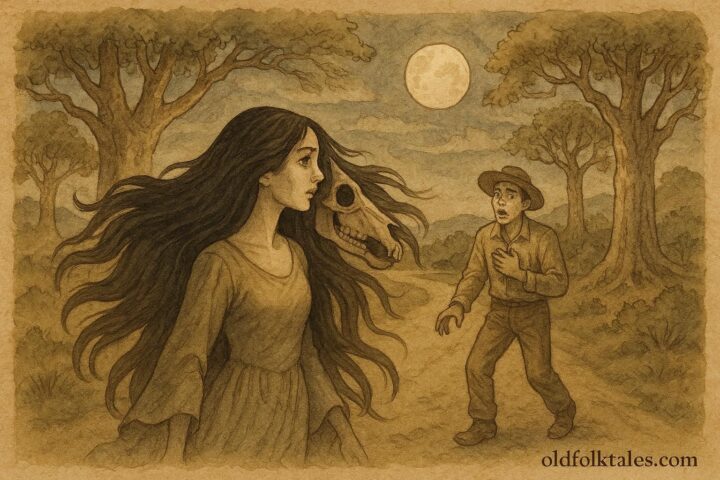
A wooden canoe flying across the moonlit sky with lumberjacks inside from French-Canadian folklore

La Chasse-Galerie (The Flying Canoe)

Long ago, in the deep frozen forests of Quebec, a group of lumberjacks worked through a bitterly cold winter. They lived far from home, surrounded by endless pines and the silence of snow. Their days were filled with hard labor, cutting trees from dawn to dusk. At night, they sat around the fire in their cabin, drinking and singing to
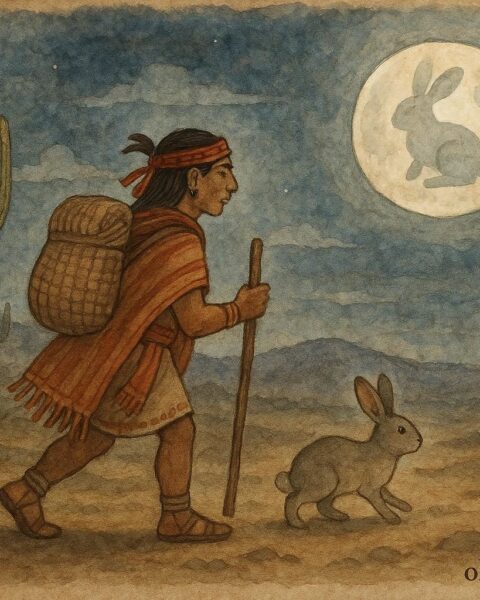
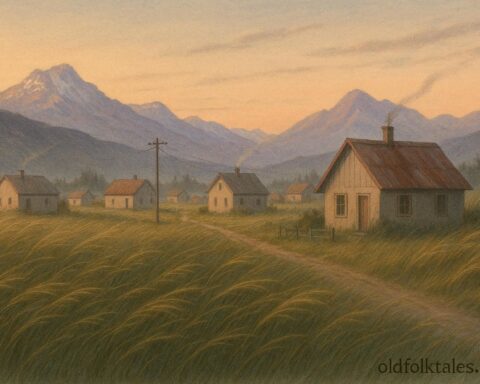
A quiet village touched by a whispering wind, Mapuche folklore from Patagonia.

The Wind That Spoke Only Once

In the wide southern lands where plains stretch toward distant mountains and the wind moves without obstruction, the Mapuche people learned early that sound itself carried meaning. The wind was not merely air in motion. It was a traveler. It arrived unannounced, lingered briefly, and departed without promise of return.
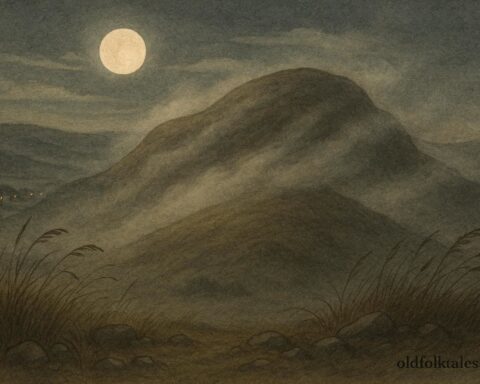
A sacred hill shifting under moonlight, Mapuche folklore from southern Chile and Argentina.

The Hill That Shifted at Night

In the southern lands where mist clings to the valleys and the earth rises gently into rolling hills, the Mapuche people lived close to the land and listened carefully to its movements. They believed the earth was not silent. Hills watched. Rivers remembered. Stones carried stories older than human voices.
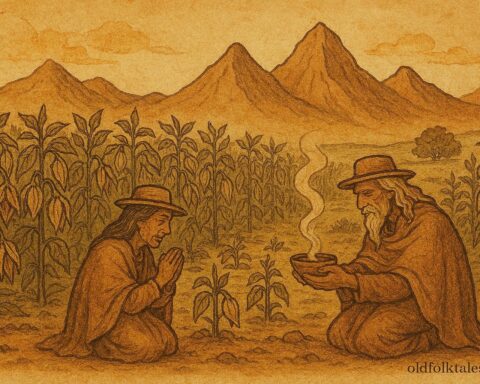
Andean farmers restoring ritual balance in a seedless garden, Quechua folklore, Ecuador.

The Garden That Withheld Its Seeds

High in the Andean valleys of what is now Ecuador, there was once a farming community that depended entirely on the rhythm of the earth. The Quechua people who lived there understood that planting and harvesting were not merely acts of labor but relationships built on respect. The land gave
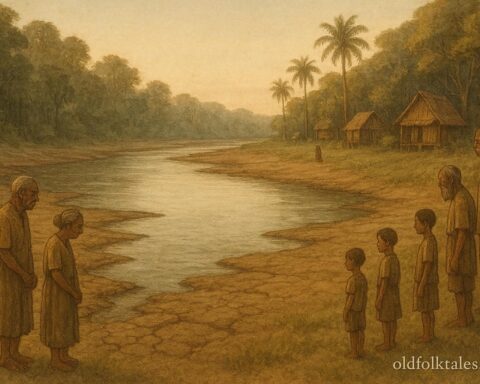
A silent river returning to life, Kayapó Indigenous folktale from Brazil.

The River That Closed Its Mouth

In the dense forests of central Brazil, where the land rose and fell with ancient rhythms, the Kayapó people lived beside a wide river that fed their lives. The river was not seen as water alone. It was known as a living presence, one that listened, remembered, and responded. The
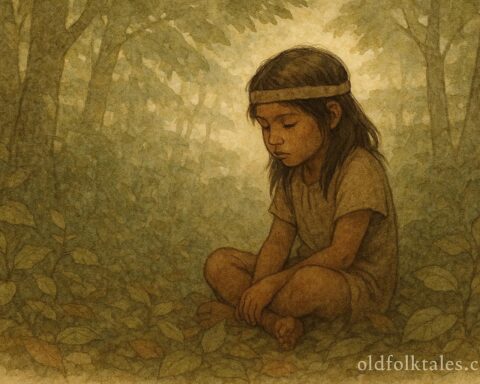
A child listening to forest leaves, Xavante Indigenous folktale from Brazil.

The Child Who Learned to Hear Leaves

Long ago, in the open woodlands of what is now central Brazil, the Xavante people lived close to the rhythms of the land. Their villages were built where grasslands met forest, where trees whispered with the wind and animals moved with purpose. Knowledge was not rushed. It was gathered slowly,
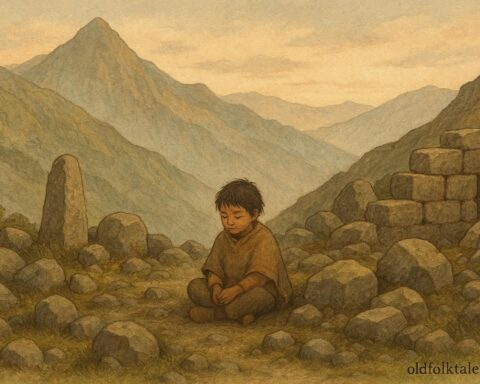
An Andean village avoided by rain clouds, Aymara folktale from Bolivia.

The Rain That Refused One Village

High on the Andean plateau, where the wind carried the voices of the mountains and the clouds moved low enough to touch, there once stood an Aymara village that depended entirely on rain. The people farmed quinoa and potatoes on narrow terraces carved into the earth generations before. Every planting
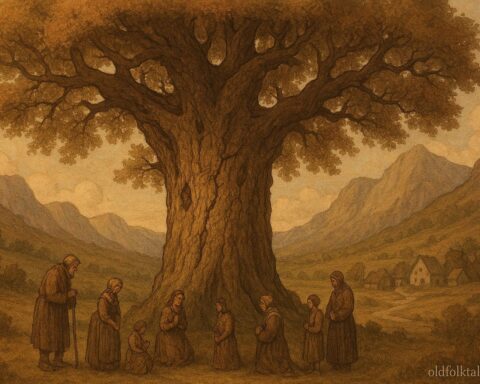
A scarred tree recording history, Zapotec folklore, Oaxaca.

The Tree That Counted Years

Long ago, in the high valleys of Oaxaca, the Zapotec people lived among mountains shaped by wind and rain. Their villages were built near forests that provided shelter, medicine, and memory. Among these forests stood one tree unlike any other. It was not the tallest, nor the widest, but it
1 3 4 5 6 7 15

Popular

Go toTop