Elizabeth Fabowale

Elizabeth Fabowale

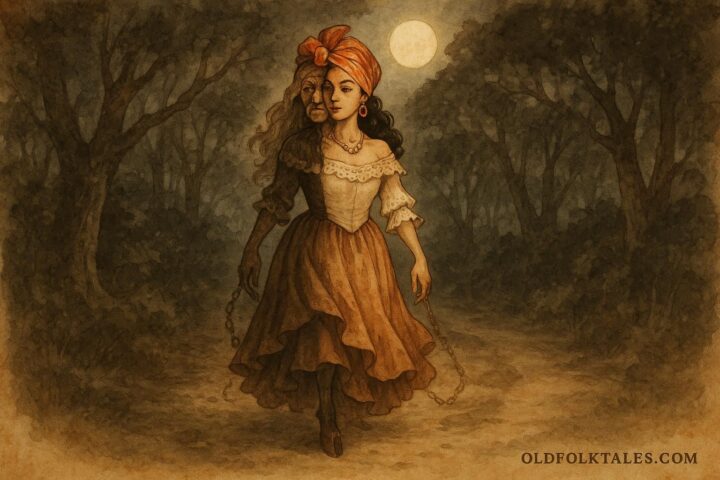
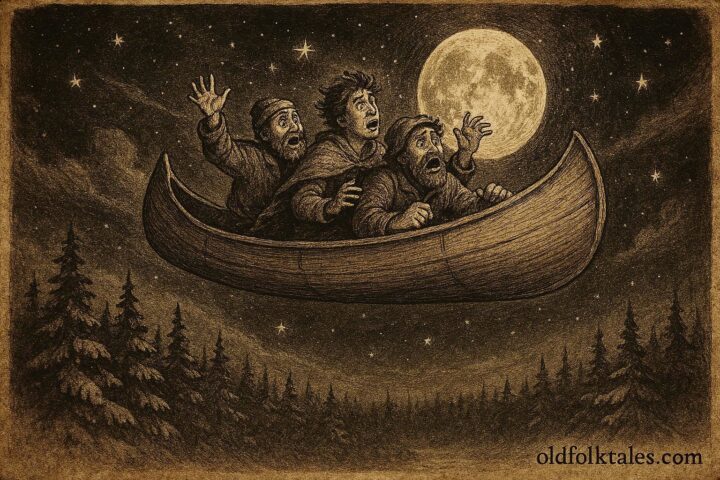
A wooden canoe flying across the moonlit sky with lumberjacks inside from French-Canadian folklore

La Chasse-Galerie (The Flying Canoe)

Long ago, in the deep frozen forests of Quebec, a group of lumberjacks worked through a bitterly cold winter. They lived far from home, surrounded by endless pines and the silence of snow. Their days were filled with hard labor, cutting trees from dawn to dusk. At night, they sat around the fire in their cabin, drinking and singing to
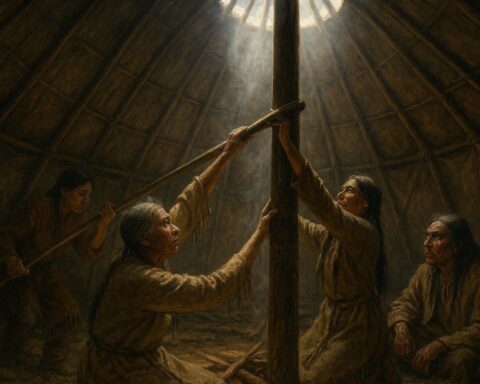
A Taíno ceremonial drum surrounded by dancers singing in a village clearing at dusk

The First Areíto Drum

Before the islands carried the weight of many histories, the Taíno remembered everything with their voices. Stories were not written. Laws were not carved in stone. Memory lived in breath, gesture, and sound. Elders spoke. Children listened. Songs carried the names of ancestors and the boundaries of rivers. But time
A woven hammock suspended between two trees in a Taíno village at dawn, symbolizing rest and balance

The First Hammock

In the early age of the islands, when people still learned directly from the land and the spirits walked close to human homes, the Taíno lived with tireless hands. They farmed from sunrise to dusk, fished through long tides, and built villages that grew with every generation. Work was praised,
An ancient stone ball court surrounded by forest, with a spiritual atmosphere suggesting unseen ancestral presence.

The Spirits Beneath the Ball Court

Long before written laws shaped the islands and before chiefs ruled by decree alone, the Taíno people believed justice did not belong solely to the living. Beneath the earth, within stone and soil, the ancestors remained alert. They listened to the words of the living, watched their actions, and intervened

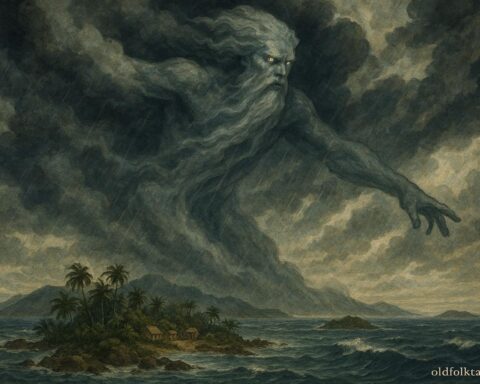
Juracán, Lord of the Storm

Before the islands learned the patience of the tides and before the forests learned how to bend without breaking, the people believed the sky was silent unless called upon. They cut trees without asking, fished beyond hunger, and built their homes as if the earth beneath them were endless and
Guahayona departing by canoe from a Taíno village after breaking a sacred covenant, symbolizing betrayal and separation

Guahayona and the Broken Covenant

Long before the islands of the Caribbean were separated by wide and restless waters, the Taíno people believed the land and sea listened carefully to human promises. Words spoken before elders, rivers, and the sky were not merely sounds. They were bonds. These bonds shaped how villages lived together and
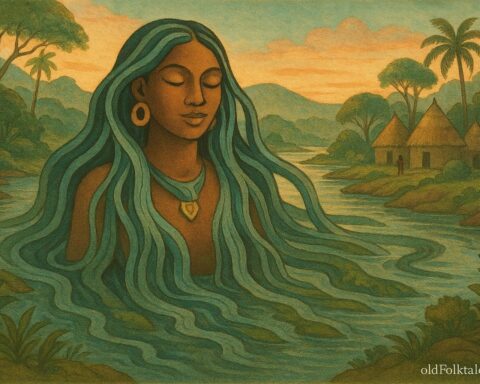
Atabey, Taíno mother goddess of water, rising from a river to watch over life and fertility

Atabey, Mother of Waters

Before rivers learned their paths and before rain knew when to fall, the world was dry and uncertain. The land existed, but it did not yet understand how to nourish life. Seeds slept beneath the soil without waking. Women carried children with difficulty. Streams appeared and vanished without warning, leaving
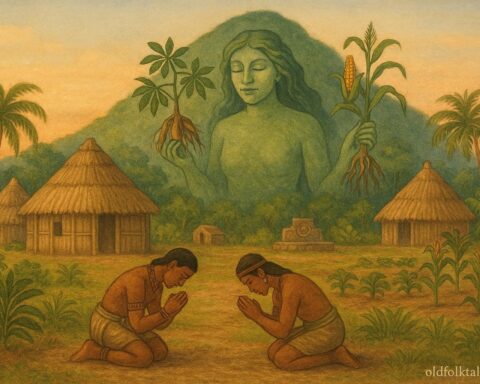
Taíno farmers receiving crops from the spirit Yúcahu at the foot of a sacred mountain

Yúcahu, Giver of Crops

Long before villages spread across the valleys and long before gardens followed the curve of the rivers, the Taíno people lived by wandering and waiting. They gathered what the forests offered and fished the waters when the tides were kind. Some seasons were generous. Others were lean and unforgiving. Children
A Taíno woman emerging from the earth as cassava plants grow around her, symbolizing sacrifice and renewal

The First Cassava Woman

Long before hunger learned to speak in loud voices, the Taíno people lived by the rhythms of rain, soil, and shared labor. Their villages rested between forest and sea, and their days were guided by planting, fishing, and ceremony. Food was not owned by individuals but held by the community,
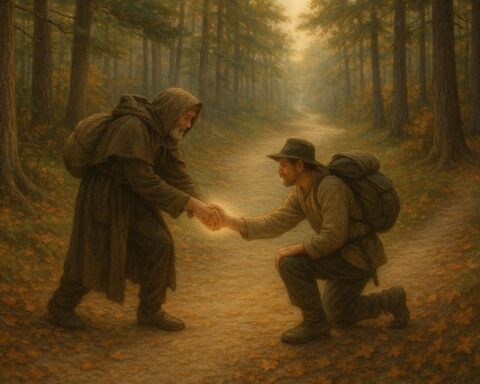
A forest trail expands as travelers assist one another, symbolizing reciprocity and kindness.

The path that widened for helpers

Long ago, in the rolling hills and dense forests of Secwépemc territory, there was a trail known to the elders as a narrow, twisting path connecting villages, hunting grounds, and sacred sites. Its passage was so tight that only one person could walk at a time. Travelers spoke in whispers
1 2 3 15

Popular

Go toTop