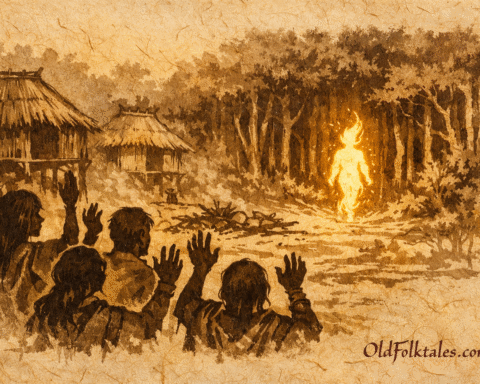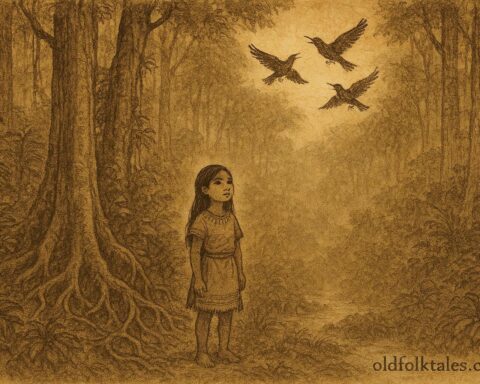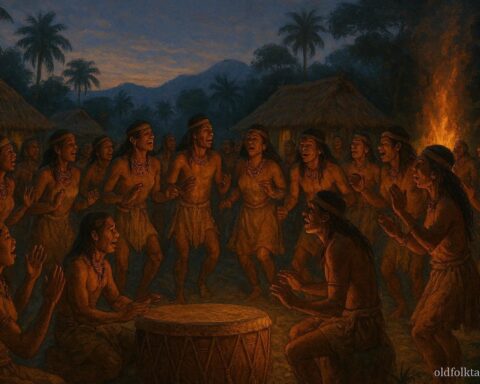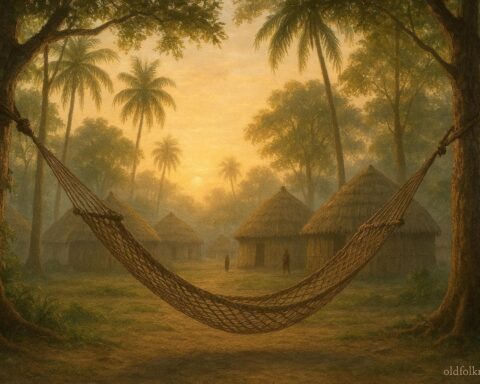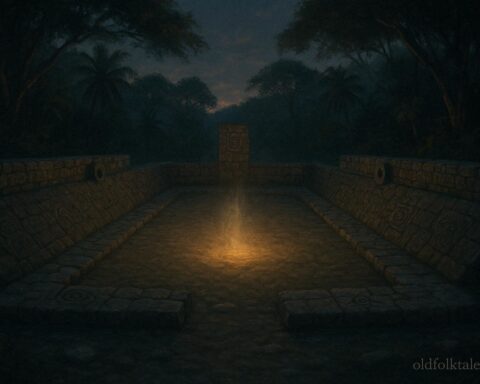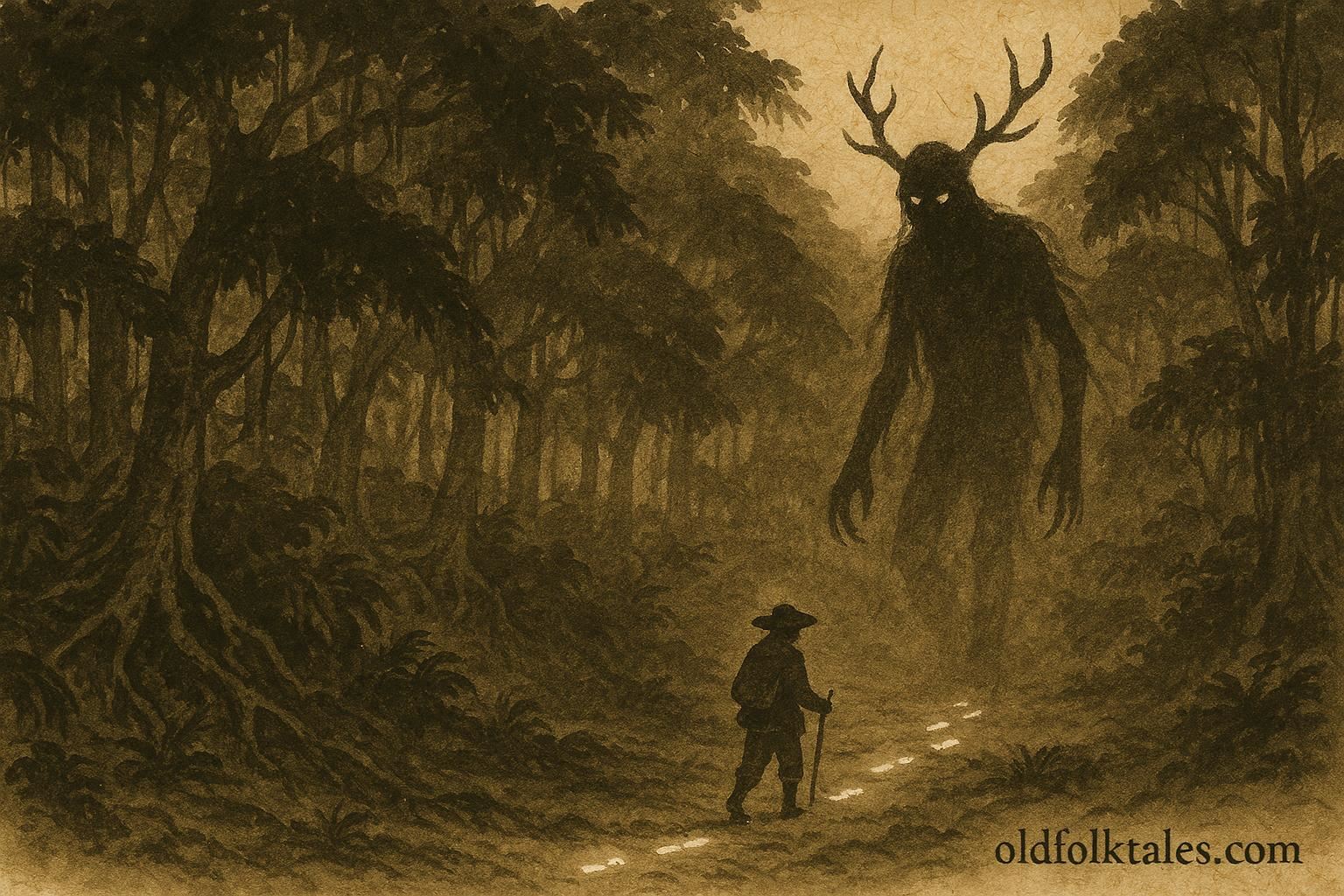
In the deep Upper Amazon, where the forest canopy stretches so wide that sunlight arrives in scattered fragments, the people believed the land was not silent. Every root, leaf, and winding path listened. Among the unseen beings of the forest was a spirit known not for fearsome power, but for quiet attention. This was the spirit who counted footsteps.
The elders said the spirit moved without sound beneath the canopy, measuring each human step taken on forest ground. No footfall escaped notice. Hunters, gatherers, and travelers alike walked beneath the spirit’s awareness, whether they believed or not.
Discover the vibrant legends of Guatemala, Honduras, and Costa Rica in our folktale collection.
Those who entered the forest with purpose felt it almost at once. Paths seemed clearer. Fallen trees formed bridges at the right moments. Game appeared where it was needed, never more. Hunters who took only what their families required returned safely, their baskets full but never heavy with excess. Travelers who spoke softly to the land found themselves guided by subtle signs, bent grasses, broken twigs, or the sudden opening of a trail where none had been seen before.
The people said this was the spirit’s guidance, granted to those whose footsteps were honest.
But not all who entered the forest walked with care.
Some wandered without thought, trampling plants and breaking branches for no reason. Others walked with greed, hunting more than they needed or cutting paths only to mark ownership. These footsteps weighed differently on the forest floor. The spirit counted them too.
Those careless walkers often found the forest shifting around them. Familiar paths twisted. Sounds echoed strangely. The sun vanished behind thick leaves, and the air grew heavy and still. No matter how far they walked, the way out remained hidden. Panic replaced confidence, and the forest closed in, not with violence, but with silence.
The elders warned that the spirit did not punish. It only reflected intention.
One story told of a hunter who entered the forest boasting of his skill. He walked loudly, chasing every animal he saw. Though he caught much, his load became too heavy. Before dusk, he realized he could no longer recognize the trail home. He wandered until exhaustion forced him to sit. Only when he released his excess catch back to the forest and spoke words of humility did he notice a narrow path beside him, leading safely out.
Another tale spoke of a traveler who walked carefully but without purpose, stepping wherever curiosity pulled him. Though not cruel, he showed no respect. His wandering steps led him in circles until night fell. He learned then that intention mattered as much as gentleness.
Over time, the people taught their children to walk with awareness. Before entering the forest, they stated their purpose aloud. Each step was taken with thought. They believed the spirit listened not only to feet on soil, but to the heart behind them.
The forest remained abundant, not because it was conquered, but because it was respected. And the spirit who counted footsteps continued its quiet work, reminding all who passed beneath the canopy that the land remembers every action.
Explore myths and legends from Brazil, Peru, and Argentina rooted in spirit and survival.
Moral Lesson
This folktale teaches that every action leaves a trace. Walking with intention and accountability brings guidance, while carelessness leads to being lost.
Knowledge Check
1. Who was the spirit said to watch over the forest?
A forest spirit that counted every human footstep.
2. How did the spirit treat those who walked with purpose?
They were guided safely and found what they needed.
3. What happened to careless or greedy travelers?
They became lost within the forest.
4. Did the spirit punish humans directly?
No, it reflected the intention behind their actions.
5. What lesson did hunters learn from the forest?
To take only what was necessary and respect the land.
6. What does the forest symbolize in this folktale?
Memory, accountability, and living balance.
Source: Indigenous oral tradition; recorded in Upper Amazon shamanic narratives
Cultural Origin: Amazon Basin (Indigenous folklore)