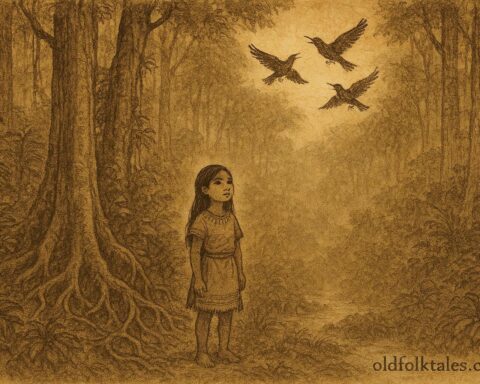
Long ago, in a peaceful village nestled within the dense forests of the western Amazon, life followed the steady rhythms of the land. The people planted crops beside winding rivers, gathered fruits beneath towering canopies, and trusted the forest to shelter them as it always had. Mothers taught children to respect the spirits of trees and animals, for the forest was not only their home but the tree, their ancestor.
That peace was broken when raiders began to move through the jungle.
Discover the sacred tales of llamas, condors, and gods who guard the Andes
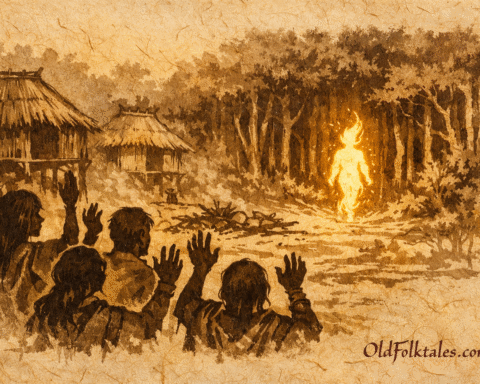
They came without warning, leaving smoke and fear in their wake. Villages were burned, families scattered, and captives taken deep into the unknown. When word reached the forest village, panic spread quickly. Some fled toward the rivers; others hid among the trees.
A young mother gathered her children and ran.
She carried the smallest against her chest and pulled the others by the hand, forcing her way through tangled roots and thorned vines. The forest closed around them, branches clawing at her skin, insects swarming in the heavy air. Still, she did not stop. Her breath burned, her legs weakened, but fear gave her strength.
Behind them, the sounds of pursuit grew louder.
At last, she reached a small clearing where the forest thinned and escape seemed impossible. Trapped and exhausted, the mother knelt, pressing her children close. She did not cry out for herself. Instead, she lifted her eyes to the towering trees and whispered a plea to the forest spirits.
“Protect my children,” she begged. “Let them live, even if I do not.”
The earth beneath her feet began to tremble.
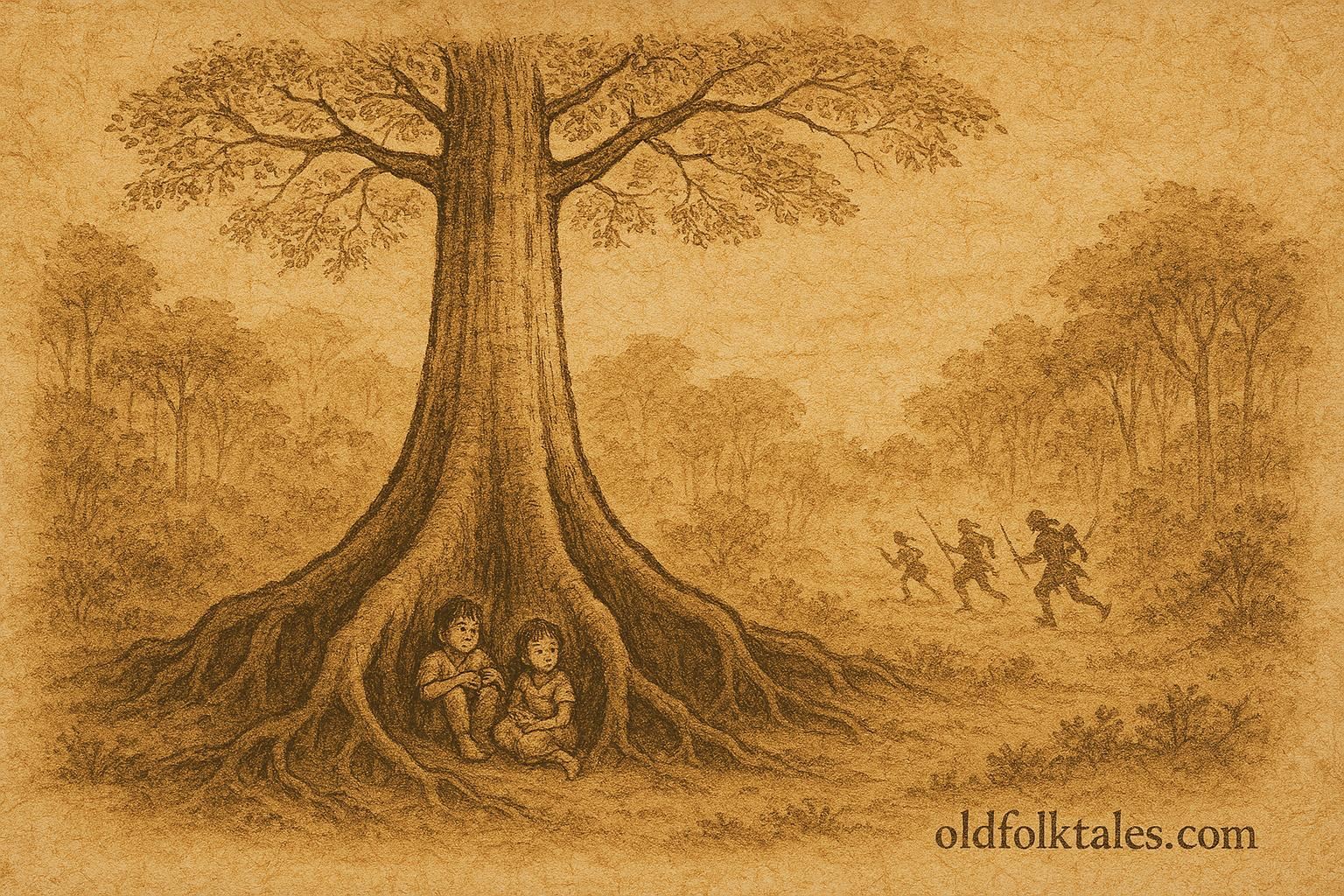
As the raiders closed in, her legs stiffened, rooting into the soil. Her arms rose upward without her will, stretching toward the sky. Her skin hardened, her breath slowed, and her body transformed into wood and bark. In moments, where the woman had knelt stood a towering ceiba tree, its massive trunk broad and unmovable.
Her children were hidden within its roots.
The ceiba’s branches lashed violently as the raiders entered the clearing. Its sudden height and furious movement frightened them. The ground seemed alive beneath their feet, and the tree loomed like a guardian spirit awakened by rage. Believing the forest itself had risen against them, the raiders fled.
Silence returned.
When the children emerged from the roots, their mother was gone. In her place stood the great ceiba, taller than any tree they had known. Its shade cooled the clearing, its trunk bore scars like memory, and its roots held the soil firmly, as if still protecting them.
The villagers later found the children and listened to their story. They believed the spirit of the mother lived on within the ceiba. From that day forward, the tree was treated as sacred. People gathered beneath its branches for shelter and prayer. No ceiba was ever cut without ritual permission, and many were never touched at all.
Over generations, ceiba trees came to be known as guardians of the forest. Their roots held the earth together, their height warned intruders, and their presence reminded the people that the forest was alive with ancestral sacrifice.
The mother was gone, but her protection remained.
Explore myths and legends from Brazil, Peru, and Argentina rooted in spirit and survival.
Moral Lesson
This folktale teaches that selfless sacrifice protects future generations and creates continuity beyond death. True strength lies in giving oneself for the survival of others.
Knowledge Check
1. Why did the mother flee into the forest with her children?
To protect them from raiders attacking nearby villages.
2. What did the mother ask the forest spirits for?
Not her own survival, but the safety of her children.
3. How did the ceiba tree protect the children?
Its roots hid them, and its branches frightened the attackers away.
4. Why are ceiba trees considered sacred in Amazonian belief?
They are believed to hold ancestral spirits and act as forest guardians.
5. What does the transformation symbolize?
Selfless sacrifice and continuity between generations.
6. What lesson does the story teach about strength?
That true strength is found in protection, not violence.
Source: Indigenous oral tradition; recorded in Western Amazon ethnographic studies
Cultural Origin: Amazon Basin (Indigenous folklore)