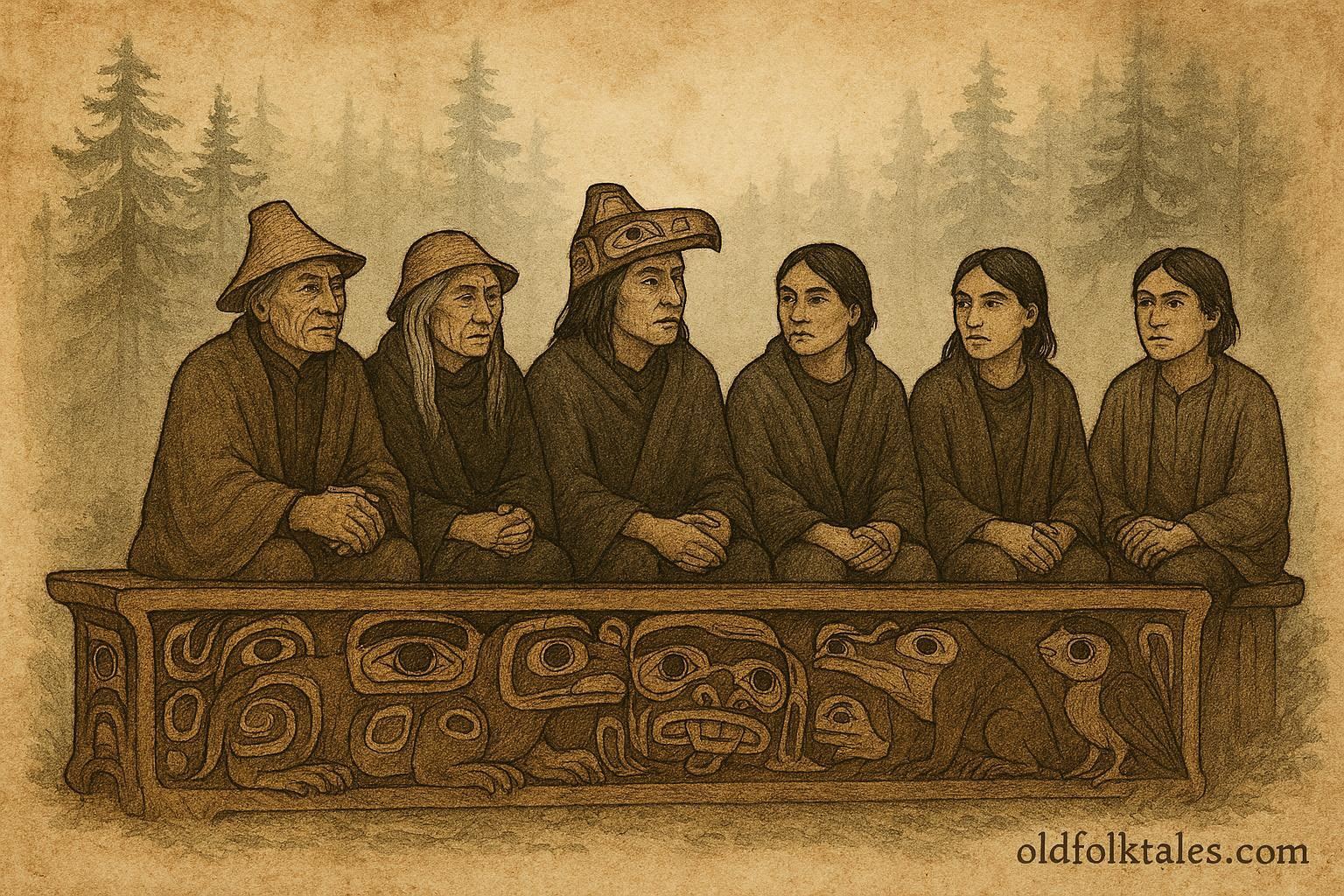
In the village of Haida Gwaii, long ago before the wooden council houses were covered with cedar shingles, there was a bench unlike any other. Crafted from a single, massive log, carved with figures of ravens, bears, and killer whales, the bench was placed at the heart of the council house. It was not just a seat but a guardian of community governance. The elders told the young that it had a spirit within it, one that ensured the people acted with wisdom, humility, and unity.
It was said that anyone who attempted to sit on the bench alone would find it surprisingly heavy, as if the wood resisted being used for selfish purposes. Those who tried to command the council from a solitary seat would slip, wobble, or feel a strange pull urging them to share their space with others. Only when the council came together, each voice heard and each person willing to cooperate, would the bench settle comfortably under them.
One season, the village faced a problem with neighboring communities. A decision had to be made regarding trade agreements and shared fishing rights. A young man, confident in his knowledge and eager to assert himself, stepped forward and tried to sit alone on the bench. Immediately, he felt the bench tilt beneath him. His legs shook, and the carved spirits seemed to murmur around him. “This bench is not yours alone,” whispered one elder. “It serves the council, not pride.”
Annoyed, the young man insisted that he knew what was best and that his judgment was sufficient. He tried again. This time, the bench felt heavier, almost immovable. Every attempt to lean back or lift his legs was resisted. Frustration grew, and he looked around at the council members, who were watching silently. The elders shook their heads but allowed him to learn the lesson on his own.
Hours passed, and the young man realized he could not succeed alone. Exhausted and humbled, he finally invited others to sit beside him. Slowly, as the council members joined, the bench relaxed, adjusting comfortably beneath them. The carvings seemed to gleam with approval. The group could now discuss trade agreements, listen to each other, and reach a decision that balanced the needs of all. The bench had not merely provided a seat; it had enforced the ethic of shared leadership.
The story spread among the young and old alike. Parents told children that the council bench was a teacher, not just furniture. It reminded everyone that authority carried responsibility, and no one person could govern or guide alone. The bench’s spirit enforced the understanding that the strength of a community came from consultation, compromise, and listening, not from the force of a single will.
Many generations later, the council bench continued to serve as a symbol. Even when the original log had weathered and the carvings softened, people remembered that the bench represented the enduring principle: no one could act in isolation when the welfare of the community was at stake. The tale reinforced the idea that leadership required collaboration, patience, and humility, qualities that ensured the village thrived over centuries.
Discover ancient tales passed down by the Indigenous peoples of the Americas.
Moral Lesson
The story teaches that leadership is not about asserting dominance but about fostering cooperation, listening, and sharing responsibility. Authority exercised alone leads to failure, while decisions made collectively reflect wisdom and respect for the community.
Knowledge Check
1 What happens to the council bench if someone tries to sit alone?
Answer: It becomes heavy and uncomfortable, resisting solitary authority
2 How does the bench enforce shared decision-making?
Answer: Only when multiple people sit and engage together does it settle, encouraging collaboration
3 What lesson did the young man learn from trying to sit alone?
Answer: Pride and solo leadership are ineffective; unity and consultation are essential
4 Why do the carvings on the bench matter in the story?
Answer: They symbolize the spirits of the community and approve or resist actions based on ethics
5 How does this story guide future leaders?
Answer: It teaches humility, patience, and the importance of collective governance
6 What broader principle does the bench illustrate?
Answer: True authority is balanced, ethical, and relies on the participation of all members
Source:
Adapted from Haida governance traditions, Haida Gwaii Museum
Cultural origin:
Haida First Peoples, British Columbia