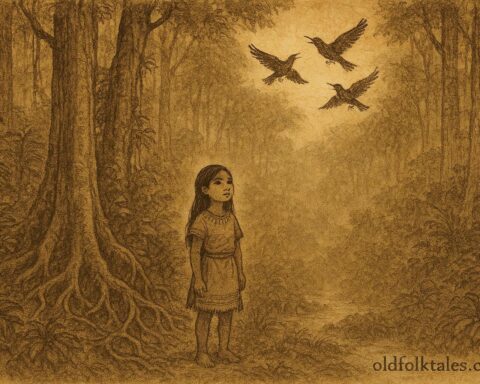
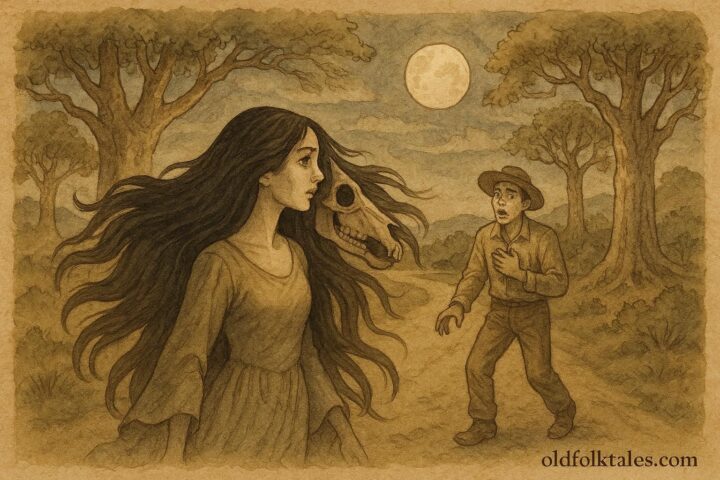
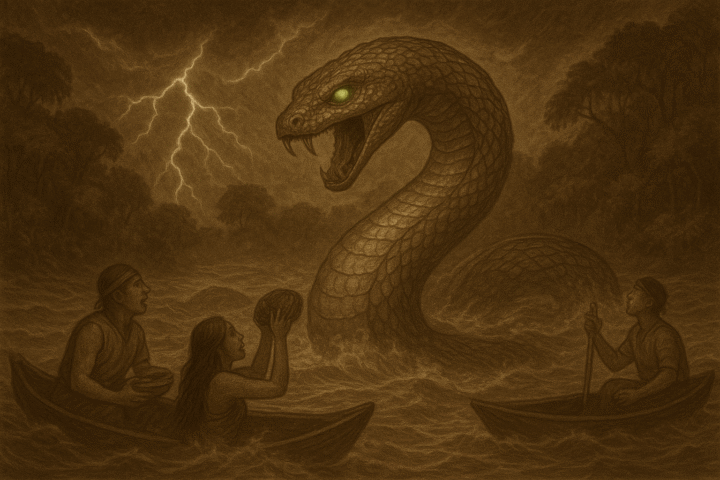
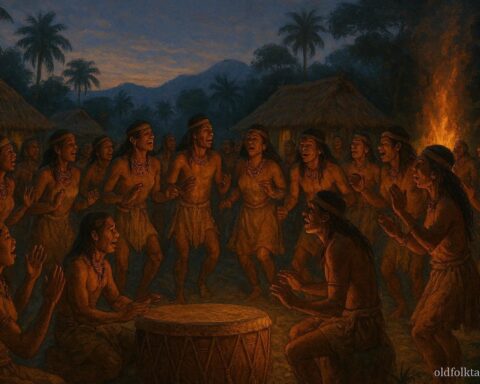
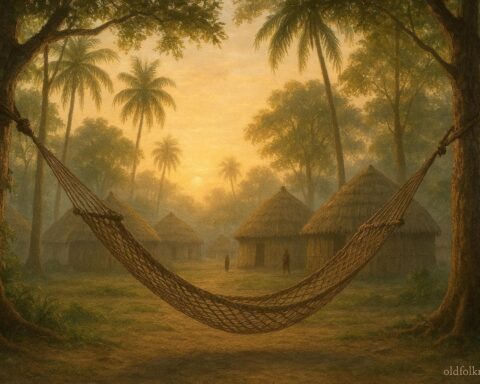
Long ago, along the winding rivers of the Central Amazon, children were sometimes born with a gift unlike any other. These children came into the world near the water’s edge, and from their earliest days, it was clear they belonged to both river and land. They could swim as easily as they walked, breathe calmly beneath the surface, and move between currents and forest paths without fear.
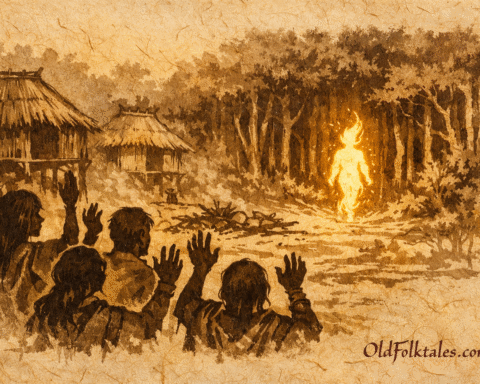
The villagers raised them as their own, teaching them to farm, hunt, and gather. Yet the river called to these children in ways others could not hear. At dusk, they lingered at the water’s edge. At dawn, they returned wet-haired and quiet, carrying the scent of the river with them. Elders watched carefully, knowing the old stories.
Discover the vibrant legends of Guatemala, Honduras, and Costa Rica in our folktale collection.
They said the river children carried a dual nature. Until a certain age, they could belong to both worlds. But when the time came, each child would be forced to choose, river or land, spirit or human. The choice could not be undone.
As the children grew, the signs became stronger. Some felt peace only when submerged, drifting with the current, listening to the deep language of water. Others felt rooted to the forest, to family, to firelight and soil beneath bare feet. The time of choosing approached, heavy with silence and uncertainty.
When the season arrived, the elders gathered the river children at the riverbank. No commands were given. No pressure applied. Each child was told only this: Where you choose to live is where you must remain. Every belonging carries sacrifice.
One by one, the children stepped forward.
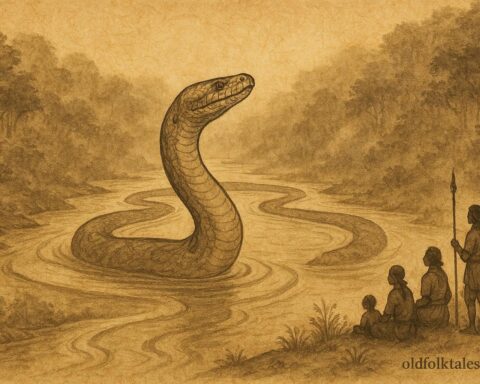
Some turned toward the river. They waded into the water, deeper and deeper, until their forms shimmered and changed. They became water spirits, guardians of currents, watchers of fish and floods. They would never walk among humans again, but they would protect the river and those who respected it.
Others turned away from the water. They remained on land, choosing human life with all its limits. They could no longer breathe beneath the surface or hear the river’s hidden voice. But they gained families, futures, and the weight of human responsibility.
There were tears, and there was grief. Those who chose differently could no longer follow one another. Yet the elders reminded the village that no choice was wrong, only final.
From that day forward, the river children were spoken of with reverence. The water spirits were honored through careful fishing and respectful silence. Those who remained human carried the memory of what they had given up, living with deeper understanding of who they were and why they stayed.
The river flowed on, holding both worlds, reminding all who lived beside it that belonging is never free, it is chosen.
Explore myths and legends from Brazil, Peru, and Argentina rooted in spirit and survival.
Moral Lesson
Identity requires choice, responsibility, and acceptance of consequence. True belonging comes not from having everything, but from committing fully to one path.
Knowledge Check
1. Who were the river children in this folktale?
Children born near rivers who could live both in water and on land.
2. What special ability did the river children possess?
They could move freely between the river and the human world.
3. Why were the children required to choose?
Their dual nature could not last forever.
4. What happened to those who chose the river?
They became water spirits and guardians of the river.
5. What did those who stayed human sacrifice?
Their connection to the river’s spiritual world.
6. What cultural belief does this story reflect?
The Amazonian view of dual identity and responsible choice.
Source: Indigenous oral folklore; documented in Central Amazon ethnographic studies
Cultural Origin: Amazon Basin (Indigenous traditions)