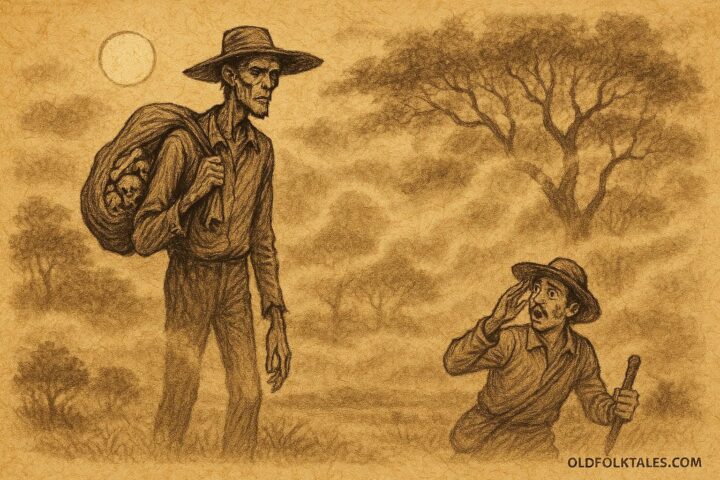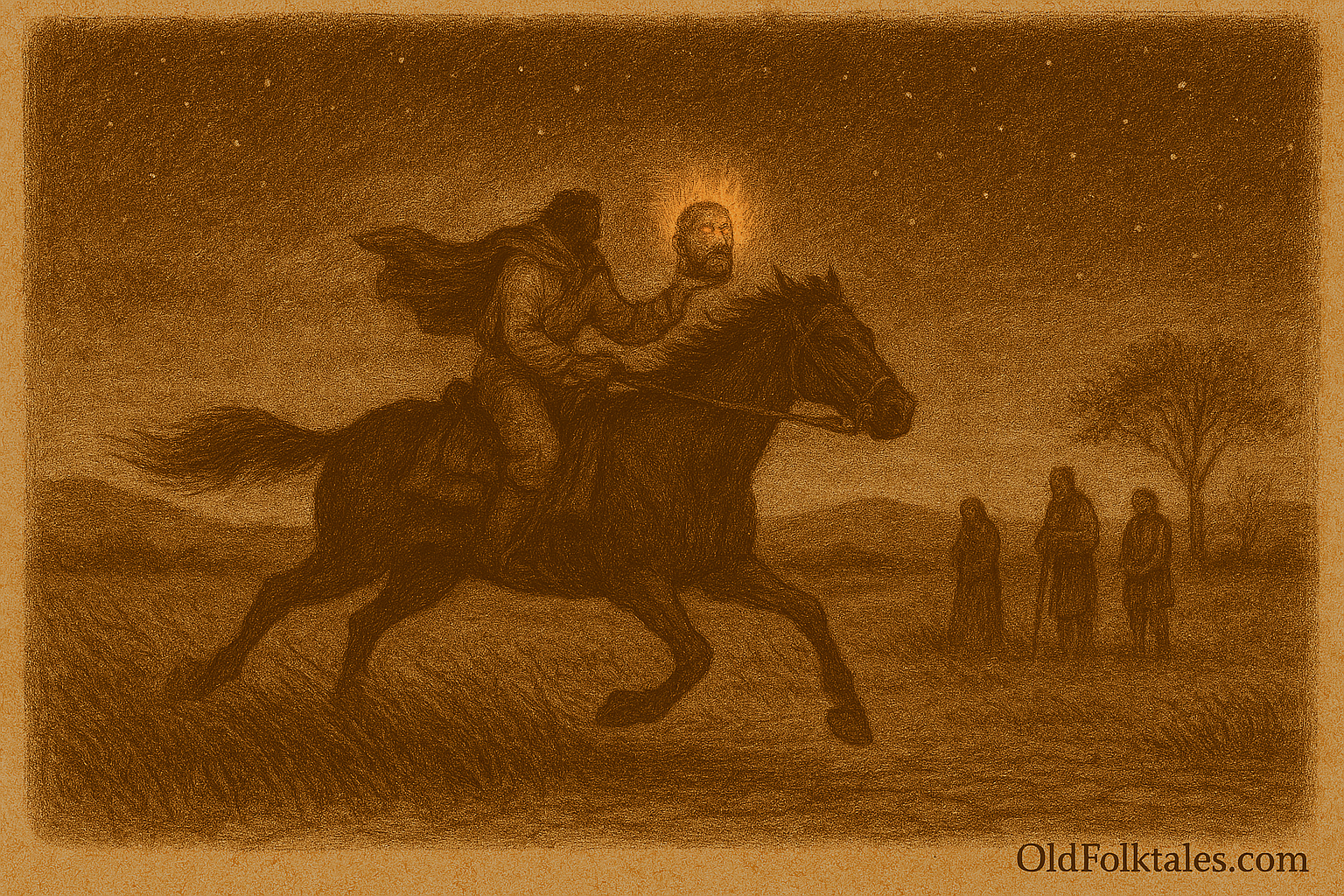
Across the vast, windswept pampas of Uruguay, where endless grasslands stretch to meet the horizon and the sky seems close enough to touch, there rides a figure that haunts the nightmares of those who know his story. He appears only after darkness falls, when honest folk have retreated to their homes and the stars burn cold and distant overhead. Those unfortunate enough to encounter him never forget the sight: a gaucho astride a magnificent black horse, galloping at impossible speed through the night. But where his head should rest upon his shoulders, there is only empty space. His severed head, eyes still blazing with supernatural fury, dangles from his hand, swinging in rhythm with the thunder of hooves against the earth.
The gauchos of Uruguay, those legendary horsemen of the plains, tell this story around their fires, their voices dropping to respectful whispers when they speak of the Headless Rider. For this specter is no ordinary ghost seeking to frighten travelers for sport. He is a judge, an avenger, a reminder that certain laws transcend death itself. He appears only to those who have committed a specific transgression: those who have broken their sacred word, violated an oath, or acted with profound dishonor.
Click to read all South American Folktales — timeless stories from the Andes to the Amazon.
The legend speaks of the Rider’s origin, though the exact details shift like smoke depending on who tells the tale. Most agree that in life, he was a gaucho of exceptional reputation, a man whose word was considered as binding as any written contract, perhaps more so. In the culture of the pampas, where a handshake sealed agreements and a man’s honor defined his worth, this gaucho stood as a paragon of integrity.
But betrayal came to him as it has come to countless others throughout history. Some say a rival gaucho, jealous of his reputation and success, spread vicious lies about him. Others claim that a woman he loved betrayed him with false accusations to cover her own indiscretions. Still others tell that he was framed for a crime he did not commit by men who coveted his land or his herds.
Whatever the specifics, the outcome remained tragically the same. The gaucho’s honor, the very foundation of his identity, was destroyed by deceit. His name, once spoken with respect, became associated with shame. Those he had helped turned their backs. Those he had trusted believed the lies. The weight of this injustice, of having his honor stripped away through no fault of his own, consumed him utterly.
In his despair and rage, the gaucho confronted those who had wronged him. The confrontation turned violent. Blades flashed in the sunlight. Blood stained the grass of the pampas. And when the dust settled, the gaucho lay dead, his head severed from his body by the treacherous strike of his enemies. They left him there, broken and dishonored, believing his story ended with his death.
But death, it seemed, was not the end. Something in the profound injustice of his fate, in the violation of the sacred codes that governed life on the pampas, prevented his spirit from finding rest. He rose again, not as he had been, but as something else entirely. A spirit of vengeance, yes, but also of justice. If his honor could not be restored in life, then he would ensure that others who violated the sacred trust of their word would face consequences that transcended the mortal world.
Now the Headless Rider gallops through the night, his supernatural senses attuned to the presence of oath breakers and the dishonorable. When a man breaks his promise, when someone betrays a trust, when dishonor stains a soul, the Rider knows. And he comes.
Travelers on the lonely roads of the pampas have reported seeing him. The first sign is often the sound carried on the wind: the thunder of hoofbeats approaching at unnatural speed, growing louder and louder until it seems the very ground trembles. Then comes the sight that freezes blood in veins: the black horse and its terrible rider emerging from the darkness, closing the distance with impossible swiftness.
Those who encounter him and are innocent of serious wrongdoing report that he passes by like a nightmare vision, terrifying but ultimately harmless. The horse and rider gallop past in a blur of shadow and supernatural fury, and then they are gone, leaving only the memory and the racing heartbeat to prove they were ever there.
But for those who carry the weight of broken oaths and profound dishonor, the encounter takes a far more sinister turn. The Rider does not pass them by. Instead, he circles, his headless form somehow fixing them with a gaze that comes from the severed head he carries. That head, they say, still possesses eyes that burn with otherworldly fire, a mouth that can speak terrible truths, lips that form accusations that cut deeper than any blade.
The guilty hear their crimes spoken aloud in voices that seem to come from everywhere and nowhere. Every promise they broke, every trust they violated, every dishonorable act they committed, all laid bare in the darkness with no possibility of denial or escape. Some say the Rider forces them to confront the consequences of their actions, showing them visions of the pain and destruction, their dishonor caused. Others claim he simply pursues them, driving them to the edge of madness with his relentless presence.
There are tales of men found at dawn, their hair turned white overnight, their minds shattered by what they experienced. Others have confessed their crimes to anyone who would listen, desperate to unburden their souls and perhaps find some protection from the Rider’s judgment. A few, it is whispered, have simply vanished, last seen fleeing into the darkness with the sound of phantom hoofbeats echoing in their wake, never to be heard from again.
The gauchos use this legend to teach important lessons to the young. In a society where written contracts were rare and a man’s reputation was his most valuable possession, the story of the Headless Rider reinforced the absolute necessity of keeping one’s word. To break an oath was not simply a social transgression but a spiritual violation that could bring supernatural consequences.
Even today, in an age of lawyers and written agreements, the legend persists. Old timers on the pampas still claim to hear the phantom hoofbeats on certain nights. Those who work the land, who understand the old ways and respect the traditions of the gauchos, treat their promises with appropriate gravity. They remember that some debts transcend death, and some judges cannot be escaped simply by dying.
The Headless Rider continues his eternal patrol across the pampas, a guardian of honor in a world that sometimes forgets its importance. His presence serves as a reminder that our words matter, our promises bind us, and the trust others place in us is sacred. In the darkness of the Uruguayan night, beneath the cold stars that have witnessed countless human dramas, he rides still, waiting for the next soul who believes that oaths can be broken without consequence.
Discover the sacred tales of llamas, condors, and gods who guard the Andes
The Moral Lesson
This legend powerfully reinforces the fundamental importance of honor, integrity, and keeping one’s word. The Headless Rider represents the inescapable consequences of betraying trust and breaking oaths. In gaucho culture, where a person’s word was their bond and honor was more valuable than wealth, this story taught that dishonor carries consequences that extend beyond social shame into the spiritual realm. The legend reminds us that our actions and promises matter profoundly, that betraying trust causes ripples of harm that cannot be undone, and that true accountability transcends earthly life. It emphasizes that living with integrity is not merely about avoiding social consequences, but about respecting the sacred nature of trust and commitment.
Knowledge Check
Q1: Who was the Headless Rider of the Pampas before he became a ghost?
A: He was a gaucho of exceptional reputation known for his unshakable honor and integrity. His word was considered binding, and he stood as a model of the values that defined gaucho culture in Uruguay, where a man’s honor and promises were sacred.
Q2: How did the gaucho become the Headless Rider?
A: He was betrayed through lies and false accusations that destroyed his honor and reputation. In a violent confrontation with those who had wronged him, he was killed and beheaded. The profound injustice of his fate prevented his spirit from resting, transforming him into a supernatural avenger.
Q3: To whom does the Headless Rider appear?
A: The Rider appears specifically to travelers who have broken oaths, violated sacred promises, or acted with profound dishonor. He does not randomly haunt the pampas but serves as a supernatural judge who seeks out those guilty of betraying trust.
Q4: What happens to innocent travelers who encounter the Headless Rider?
A: Innocent travelers experience a terrifying but ultimately harmless encounter. The Rider and his black horse gallop past them at impossible speed like a nightmare vision, then disappear, leaving them shaken but unharmed.
Q5: What fate befalls those guilty of broken oaths when confronted by the Rider?
A: The guilty hear their crimes spoken aloud, with every broken promise and dishonorable act exposed. Some are driven to madness, found with white hair and shattered minds. Others confess their crimes desperately seeking relief. Some vanish entirely, never to be seen again.
Q6: What cultural values does this legend reinforce in Uruguayan gaucho society?
A: The legend reinforces the absolute importance of keeping one’s word, maintaining personal honor, and respecting the sacred nature of oaths and promises. In gaucho culture where written contracts were rare, a person’s word and reputation were their most valuable possessions, and this story taught that betraying trust brings supernatural consequences.
Source: Adapted from Uruguayan rural oral traditions and folkloric retellings, with influences from the works of Horacio Quiroga and traditional gaucho storytelling.
Cultural Origin: Gaucho Culture, Uruguayan Pampas, Uruguay