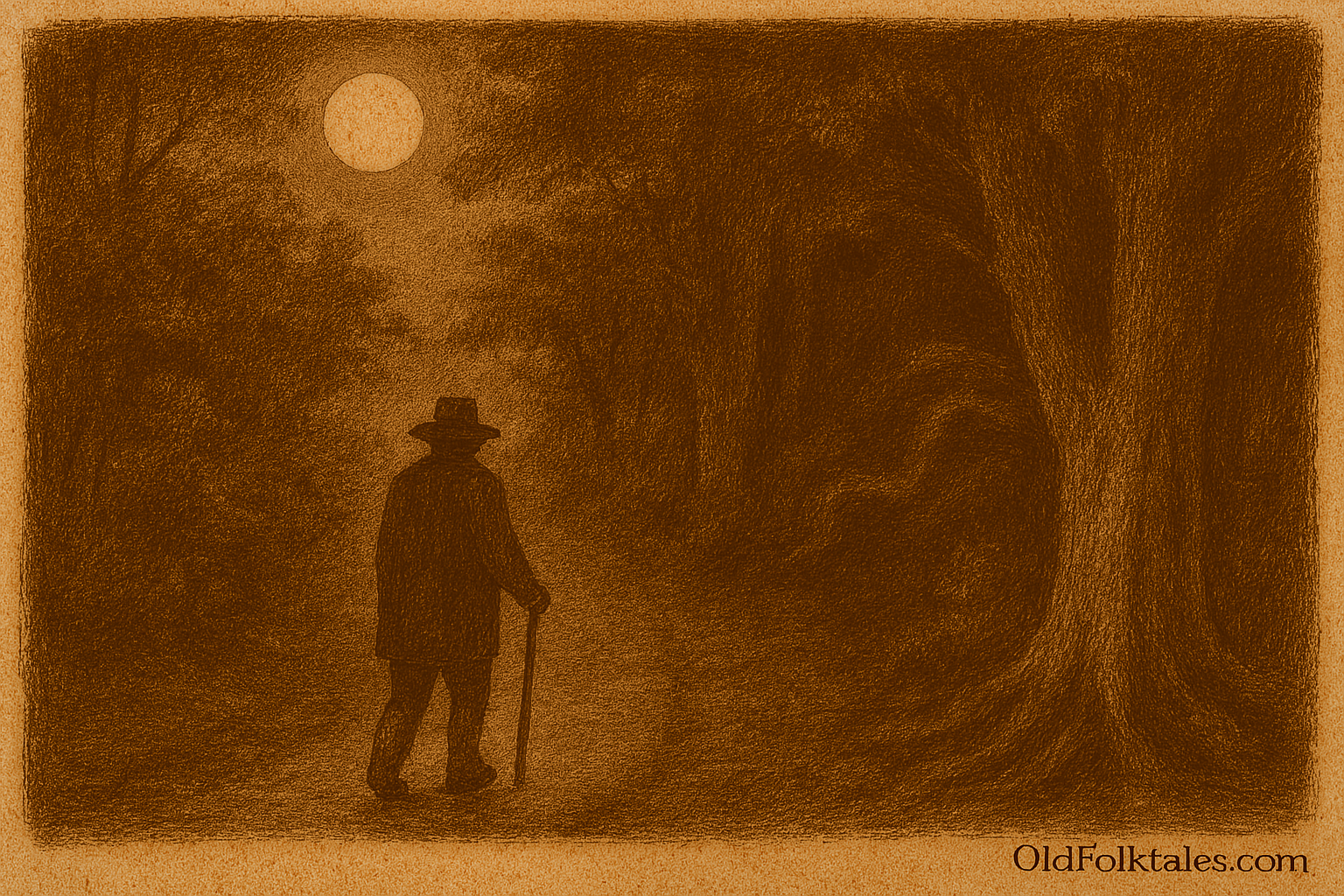
In the remote countryside of Paraguay, where dirt roads wind through dense forests and isolated homesteads sit miles apart under star filled skies, there exists a sound that has chilled the blood of travelers for generations. It comes only after darkness falls, when the sun has fully surrendered to the night and shadows grow long between the trees. Those who hear it never forget it. A whistling, clear and melodious, that seems to drift through the air like music carried on the wind.
The rural folk call it the Silbador, the Night Whistler, and they speak of it in hushed voices around flickering fires. Parents warn their children about it. Grandmothers cross themselves when mentioning it. Because this is no ordinary sound, no simple traveler announcing his presence or farmer calling to his dog. This is something far older, far stranger, and infinitely more dangerous.
Click to read all South American Folktales — timeless stories from the Andes to the Amazon.
The whistling has a peculiar quality that defies natural explanation. When you first hear it, the sound seems distant, almost impossibly far away. A faint melody barely audible above the chirping of crickets and the rustling of leaves. Your first instinct might be curiosity. Perhaps someone is lost and calling for help? Perhaps a neighbor is walking home through the dark?
But as you listen, something becomes terribly wrong. The whistling grows louder, clearer, more insistent. And then you realize the disturbing truth: when the sound seems far away, the Silbador is actually close. Dangerously close, perhaps standing just behind you in the darkness. When the whistling sounds near, as if the whistler is right beside you, the source is actually distant, watching from the shadows at the edge of the forest.
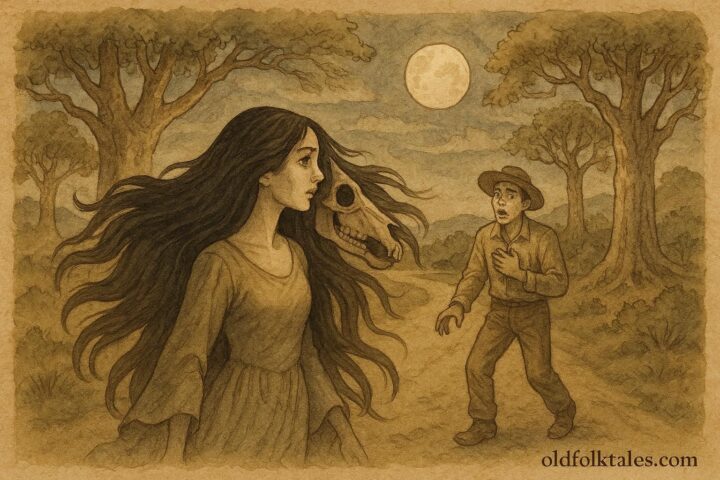
The deception is perfect and intentional. The Night Whistler is not human, though it may once have been. According to the old stories passed down through Guaraní families, the Silbador is a spirit. Some say the ghost of a man who died lost and alone in the wilderness, others claim it is an ancient entity that predates human settlement, a trickster spirit that delights in leading travelers astray.
Those who have survived encounters with the Night Whistler tell remarkably similar tales. They were walking home after dark, following familiar paths they had traveled countless times. Then came the whistling, beautiful and haunting, seeming to drift from somewhere ahead. Against their better judgment, against the warnings they had heard all their lives, curiosity or concern drew them forward. Perhaps someone truly needed help? Perhaps they could find the source?
Step by step, they followed the sound. The whistling would grow fainter, leading them on, always just ahead, always just out of sight. The path they knew so well began to feel unfamiliar. Trees they didn’t recognize loomed in the darkness. The road seemed to twist in ways it never had before. Time became strange. Had they been walking for minutes or hours? The night pressed in closer, thicker, as if the darkness itself were alive and watching.
Some realized their mistake in time. When fear finally overwhelmed curiosity, when instinct screamed at them to stop, they would freeze in place and refuse to take another step. The whistling would continue, growing more insistent, more urgent, as if frustrated by their resistance. But if they held firm, if they turned around and retraced their steps without looking back, they might find their way home. Shaken, exhausted, but alive.
Others were not so fortunate. They followed the whistling deeper into the wilderness, farther from safety, until they were hopelessly lost in the darkness. By morning, search parties would find them miles from where they should have been, collapsed from exhaustion, sometimes injured from stumbling through terrain they couldn’t see, occasionally not found at all. Swallowed by the forest, their fate unknown.
The eldest members of every village know the rule that saves lives: when you hear the whistling, you must do the opposite of what your instincts tell you. Do not investigate. Do not follow. Do not try to help. Simply continue on your original path, eyes forward, moving with purpose toward your destination. Ignore the sound completely, no matter how close it seems, no matter how insistent it becomes.
Some travelers have reported that when they followed this advice, continuing steadfastly on their way despite the whistling that seemed to surround them, the sound would eventually fade into the distance and disappear. It was as if the Night Whistler, denied the satisfaction of leading them astray, simply gave up and moved on to search for easier prey.
The legend has practical wisdom woven into its supernatural warning. The Paraguayan countryside can be treacherous after dark. Paths that are clear by day become invisible mazes at night, streams swell without warning, wild animals prowl the shadows, and it is dangerously easy to become disoriented once familiar landmarks disappear into darkness. Following mysterious sounds away from known paths is an invitation to disaster, whether the source is supernatural or simply the wind playing tricks through the trees.
Yet those who have heard the Night Whistler swear it is no natural phenomenon. The sound has an otherworldly quality. Too perfect, too musical, too deliberate. It moves in ways that wind does not, appears in places where no person should be, and possesses that terrible reversed quality where near sounds far and far sounds near.
Modern travelers passing through rural Paraguay sometimes dismiss these stories as superstition, primitive fears from a less educated time. But the old families still teach their children the rules. They still warn visitors who plan to travel after dark. And when night falls over the Paraguayan countryside, when the darkness deepens and the forest comes alive with nocturnal sounds, even skeptics find themselves walking a little faster, staying close to the center of the path, and trying very hard not to hear if something in the distance begins to whistle.
The Night Whistler remains out there, patient and eternal, waiting in the darkness for the next traveler who will make the fatal mistake of following where he leads. The whistling continues, night after night, a beautiful and terrible sound that carries a simple message: in the darkness, not everything that calls to you deserves an answer, and sometimes the wisest response to mystery is to walk away.
Explore Andean folklore — stories born from highland valleys and Incan legends
The Moral Lesson
This legend teaches the critical importance of heeding traditional wisdom and resisting dangerous curiosity. The Night Whistler represents the deceptive nature of temptation. What seems helpful or intriguing may lead to ruin. The story emphasizes that survival sometimes requires ignoring our instincts to investigate or help, trusting instead in the accumulated knowledge of those who came before us. It reminds us that not every call deserves a response, not every mystery should be solved, and that staying true to our path, even when distraction beckons, is often the difference between safety and disaster.
Knowledge Check
Q1: What is the Night Whistler (Silbador) in Paraguayan Guaraní folklore?
A: The Night Whistler is a supernatural spirit or entity that produces mysterious whistling sounds in rural Paraguay at night. It is believed to be either the ghost of someone who died lost in the wilderness or an ancient trickster spirit that lures travelers away from safe paths.
Q2: What makes the Night Whistler’s sound so dangerous and deceptive?
A: The whistling has a reversed quality. When it sounds distant and far away, the entity is actually very close, and when it sounds near and clear, the source is actually far away. This deception tricks people into following the sound in the wrong direction.
Q3: What happens to travelers who follow the Night Whistler’s sound?
A: Travelers who follow the whistling become disoriented and lost, wandering far from their intended paths into dangerous wilderness. Some are found exhausted and injured by morning, while others disappear completely, never to be found.
Q4: How can someone stay safe when they hear the Night Whistler in rural Paraguay?
A: The traditional wisdom is to ignore the whistling completely. Do not investigate, do not follow, do not try to help. Continue walking on your original path without looking back, and the sound will eventually fade away as the entity gives up.
Q5: What is the cultural significance of the Silbador legend to Paraguay’s rural communities?
A: The legend serves as both a supernatural warning and practical safety advice for navigating dangerous countryside after dark. It teaches respect for traditional wisdom, the importance of staying on known paths, and the dangers of curiosity in unfamiliar or hazardous situations.
Q6: Why do the elderly warn against helping or investigating the whistling sound?
A: The legend emphasizes that not every call for help is genuine and not every mystery should be solved. Following unknown sounds at night leads away from safety into danger, teaching that sometimes wisdom means resisting the instinct to investigate and trusting ancestral warnings instead.
Source: Adapted from Paraguayan oral folklore collections documented by Francisco Pérez Maricevich and traditional Guaraní storytelling traditions.
Cultural Origin: Guaraní Indigenous People, Rural Paraguay