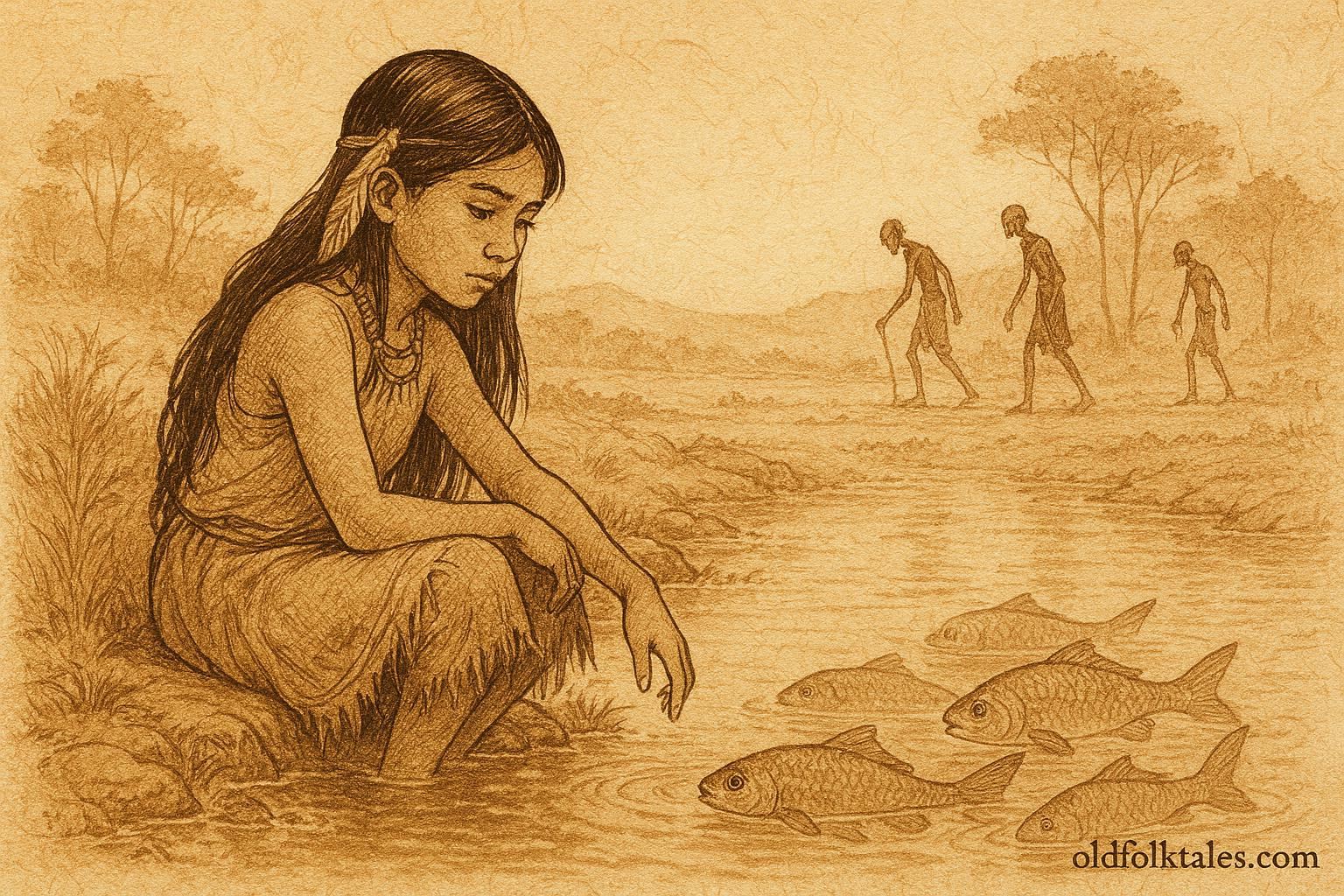
Long ago, in a village beside the winding rivers of the Western Amazon, there lived a young girl known for her quiet nature. While other children raced along the riverbanks or shouted as they played, she preferred to sit still, watching the water. She listened, to the ripple of the current, the whisper of reeds, and the subtle movements beneath the surface where fish passed unseen.
The elders often said that the river speaks only to those who are patient enough to hear it. The girl took these words to heart. Each day, she returned to the river, never disturbing its calm. She did not throw stones or chase the fish. Instead, she watched, waited, and listened.
Discover the vibrant legends of Guatemala, Honduras, and Costa Rica in our folktale collection.
Over time, she began to notice patterns others ignored. The fish gathered in certain bends of the river at dawn and vanished by midday. Their movements changed with the rains, the moon, and the season. Slowly, the sounds of the water formed meaning. The girl came to understand the language of the fish, not through words, but through attention and respect.
The fish sensed her restraint. She never took more than needed and never fished when the river felt quiet or strained. In return, the fish allowed her to know their paths. They showed her where the waters were deep and safe, where food was plentiful, and where danger waited beneath the surface.
One year, famine came to the village. The rains failed, crops withered, and hunger spread. Desperation drove many villagers to fish without care. Nets were cast again and again, hooks were left unattended, and greed replaced balance. Soon, the river grew silent. Fish vanished, and fear deepened.
The girl went to the river alone. She sat as she always had, listening without demand. When the fish returned to her, they guided her to hidden fishing grounds untouched by harm. She shared this knowledge with her people, urging them to fish with restraint and gratitude. When they followed her guidance, food returned, and balance was restored.
But when some ignored her warnings and fished greedily once more, the fish disappeared again, retreating from those who refused respect.
From then on, the village remembered. Fishing became careful, measured, and mindful. The girl’s quiet listening saved them, teaching that abundance is not taken, it is given in return for respect.
Explore myths and legends from Brazil, Peru, and Argentina rooted in spirit and survival.
Moral Lesson
Listening and reciprocity sustain life and abundance. When humans respect nature and take only what is needed, balance and survival endure.
Knowledge Check
1. Why was the girl able to understand the fish?
She listened patiently and respected the river and its creatures.
2. How did the fish respond to her behavior?
They guided her to safe and abundant fishing grounds.
3. What caused the fish to disappear during the famine?
Greedy and careless fishing disrupted balance.
4. How did the girl help her village survive famine?
She shared knowledge gained through respect and restraint.
5. What happened when villagers ignored the lesson?
The fish disappeared again, withholding abundance.
6. What cultural value does this folktale emphasize?
Reciprocal relationships between humans and nature.
Source: Indigenous oral tradition; recorded in Western Amazon folklore
Cultural Origin: Amazon Basin (Indigenous folklore)