The red earth of Paraguay held more than memories of the War of the Triple Alliance. Beneath the battlefields where thousands had fallen, beneath the scarred land that had drunk the blood of a nation fighting for its survival, lay treasures that had been hidden in desperate haste as enemy armies closed in. The people called it Plata Yvyguy, money buried in the earth, and they spoke of it in hushed voices, always with a warning: the treasure was guarded by forces that did not welcome the living.
The war had been catastrophic for Paraguay. From 1864 to 1870, the small nation fought against the combined forces of Brazil, Argentina, and Uruguay. As defeat became inevitable and foreign armies marched deeper into Paraguayan territory, officials and wealthy families made a fateful decision. Rather than let their gold, silver, and precious artifacts fall into enemy hands, they would bury them in secret locations, planning to retrieve them when peace returned.
But peace, when it finally came, had claimed so many lives that few who knew the burial sites survived. The treasure remained hidden, and over time, stories began to spread about what happened to those who went searching for it.
Click to read all South American Folktales — timeless stories from the Andes to the Amazon.
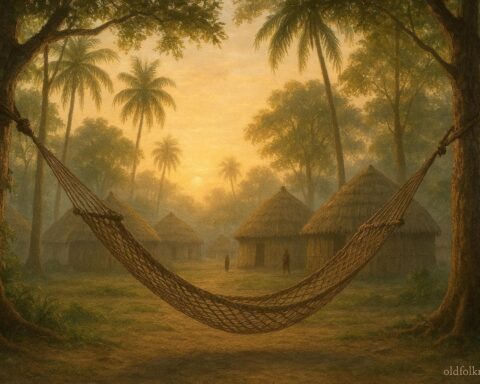
In a small village near the ancient battlefields of Piribebuy, there lived a man named Arsenio. He was a farmer, his hands calloused from working the stubborn red soil, his back bent from years of labor that yielded barely enough to feed his family. Arsenio was not a greedy man by nature, but poverty wore at him like water on stone, and when his youngest daughter fell ill and the doctor demanded payment he could not provide, desperation took root in his heart.
He remembered the stories his grandfather had told him, stories about military officers burying chests of gold coins near the battlefield where the old man had fought as a young soldier. His grandfather had never searched for the treasure himself, claiming he had seen things on that battlefield that convinced him some wealth was better left alone. But Arsenio, in his desperation, convinced himself that these were just old superstitions, fears conjured by an exhausted mind in the aftermath of war.
One evening, as the sun began its descent and painted the sky in shades of orange and crimson, Arsenio took a shovel and made his way to the site his grandfather had described. The area was overgrown now, nature having reclaimed what war had devastated. Twisted trees grew at odd angles, and the ground was uneven, marked by depressions where soldiers had dug trenches more than five decades ago.
Arsenio began to dig near a large ceibo tree that matched his grandfather’s description. The earth was harder than he expected, and soon his shirt was soaked with sweat. The sun dipped lower, and shadows grew long and strange across the battlefield. Still, he continued, driven by thoughts of his daughter’s pale face and labored breathing.
As twilight descended, the air grew thick and heavy. A mist began to rise from the ground, unusual for this time of year. Arsenio’s shovel struck something metallic, and his heart leaped. But before he could investigate further, he heard sounds that made his blood run cold.
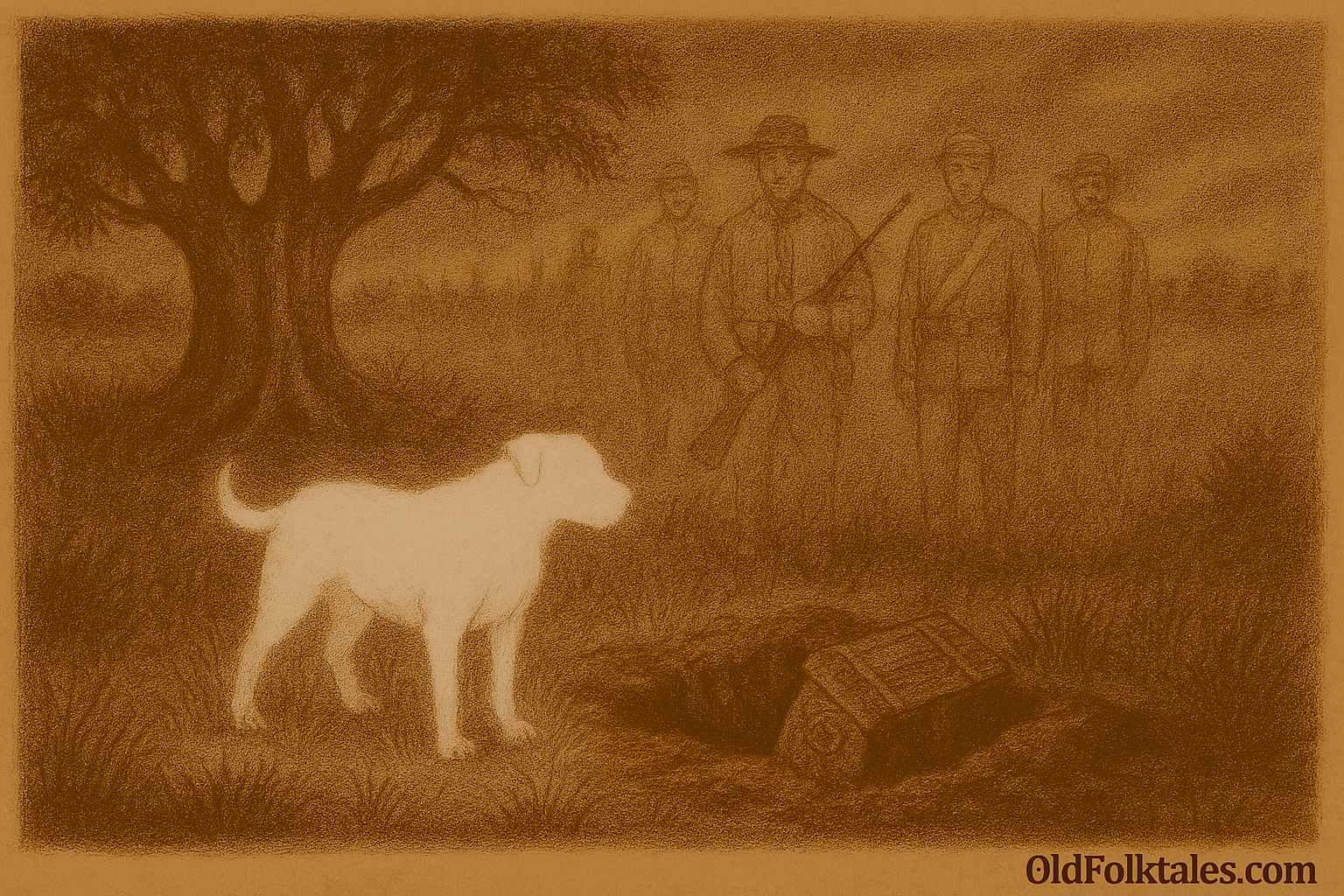
Footsteps. Not one set, but many. The rhythmic march of boots on earth, the jangle of equipment, the low murmur of voices speaking in Portuguese and Spanish. Arsenio looked up from his hole and saw them emerging from the mist: soldiers in uniforms from the last century, their faces gray and translucent, their eyes hollow but fixed intently upon him.
They did not speak, but their presence communicated clearly: this place was theirs, and he was trespassing.
Arsenio scrambled out of the hole, his hands shaking so badly he could barely grip the shovel. The ghostly soldiers moved closer, forming a circle around him. He could see through them to the trees beyond, yet they seemed more real than the earth beneath his feet. The temperature dropped suddenly, and his breath came out in visible clouds despite the warm evening.
Then he heard it: the sound of something moving through the underbrush, something large and deliberate. From the darkness emerged a creature that stole what remained of Arsenio’s courage. It was a dog, massive and white as bone, but where its head should have been, there was nothing. No neck, no skull, just a flat stump from which emanated a low, rumbling growl that seemed to vibrate in his chest.
The headless white dog moved with purpose, positioning itself between Arsenio and the hole he had dug. More dogs appeared, all headless, all white as death, their bodies glowing faintly in the gathering darkness. They did not attack, but their message was clear: the treasure was not for him.
Arsenio ran. He abandoned his shovel, his dignity, and his treasure hunt, fleeing across the battlefield as fast as his legs could carry him. Behind him, he heard the marching continue, the ghostly army processing through their eternal vigil. The headless dogs did not pursue him, but he felt their presence at his back until he reached the road that led to his village.
For three days afterward, Arsenio suffered from fever and nightmares. He would wake screaming, convinced he was back on that battlefield, surrounded by the dead who would not rest and the headless guardians who protected what they had been set to guard. His wife called the curandera, the local healer, who performed cleansing rituals and gave him herbs to calm his spirit.
When Arsenio recovered, he was a changed man. He never spoke of returning to the battlefield, never mentioned the treasure again. He found work doing extra labor, borrowed money from relatives, and eventually paid the doctor’s fee. His daughter recovered slowly, and Arsenio held her close, grateful for what he had rather than consumed by dreams of what he might gain.
The Plata Yvyguy remains buried in the Paraguayan earth, guarded by those who died defending it and by the supernatural sentinels that prevent the living from disturbing the dead. Treasure hunters still occasionally venture into the old battlefields, drawn by legends of hidden wealth. Some return empty handed and shaken, speaking of visions and encounters they cannot explain. Others do not return at all, lost to the same earth that swallowed so many during that terrible war.
The people of Paraguay still tell these stories, reminding each new generation that some prices are too high to pay, even for gold, and that the dead should be allowed to keep their secrets.
Click to read all Andean Highland Folktales — echoing from the mountain peaks of Peru, Bolivia, and Ecuador.
The Moral of the Story
The legend of Plata Yvyguy teaches us that desperation can lead us to violate boundaries that should remain sacred. Not all wealth is meant to be possessed, especially when it is tied to tragedy, death, and sacrifice. True treasure lies in what we already have, our loved ones and our peace of mind, rather than in riches that come at the cost of disturbing the dead or compromising our spiritual wellbeing. Some debts should be paid through honest work rather than supernatural risk.
Knowledge Check
Q1: What is Plata Yvyguy in Paraguayan folklore?
A: Plata Yvyguy, meaning “money buried in the earth,” refers to treasures that were allegedly buried during the War of the Triple Alliance when Paraguayan officials and wealthy families hid their gold, silver, and artifacts to prevent them from falling into enemy hands as Brazil, Argentina, and Uruguay invaded Paraguay.
Q2: What supernatural guardians protect the buried treasure in this legend?
A: The buried treasure is protected by two types of supernatural guardians: ghostly soldiers from the War of the Triple Alliance who march eternally across the battlefields, and headless white dogs that glow in the darkness and position themselves to prevent treasure hunters from accessing the hidden wealth.
Q3: Why did Arsenio initially decide to search for the Plata Yvyguy?
A: Arsenio was driven by desperation when his youngest daughter fell ill and required medical treatment he could not afford. His poverty and love for his child overcame his caution, leading him to dismiss his grandfather’s warnings and search for the buried treasure despite the supernatural risks.
Q4: What happened when Arsenio tried to dig up the treasure?
A: When Arsenio dug near the burial site, he encountered ghostly soldiers emerging from mist who surrounded him, followed by massive headless white dogs that positioned themselves between him and the treasure. These supernatural guardians did not attack but made it clear he was not welcome, causing him to flee in terror.
Q5: What is the historical context of the War of the Triple Alliance?
A: The War of the Triple Alliance lasted from 1864 to 1870 and was fought between Paraguay and the combined forces of Brazil, Argentina, and Uruguay. It was catastrophic for Paraguay, resulting in massive loss of life and prompting the desperate burial of national treasures to keep them from enemy hands.
Q6: What cultural significance does the Plata Yvyguy legend hold for Paraguayans?
A: The legend represents Paraguay’s historical trauma from the War of the Triple Alliance and serves as a reminder to respect the dead and the sacrifices made during that devastating conflict. It teaches that some things should remain undisturbed and that the pursuit of wealth should not override respect for those who died protecting their nation.
Source: Adapted from Paraguayan oral folklore traditions and War of the Triple Alliance historical accounts documented in regional legend collections and cultural preservation records.
Cultural Origin: Rural communities and war memorial sites of Paraguay, South America