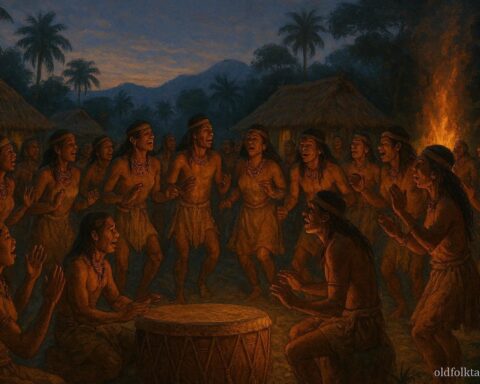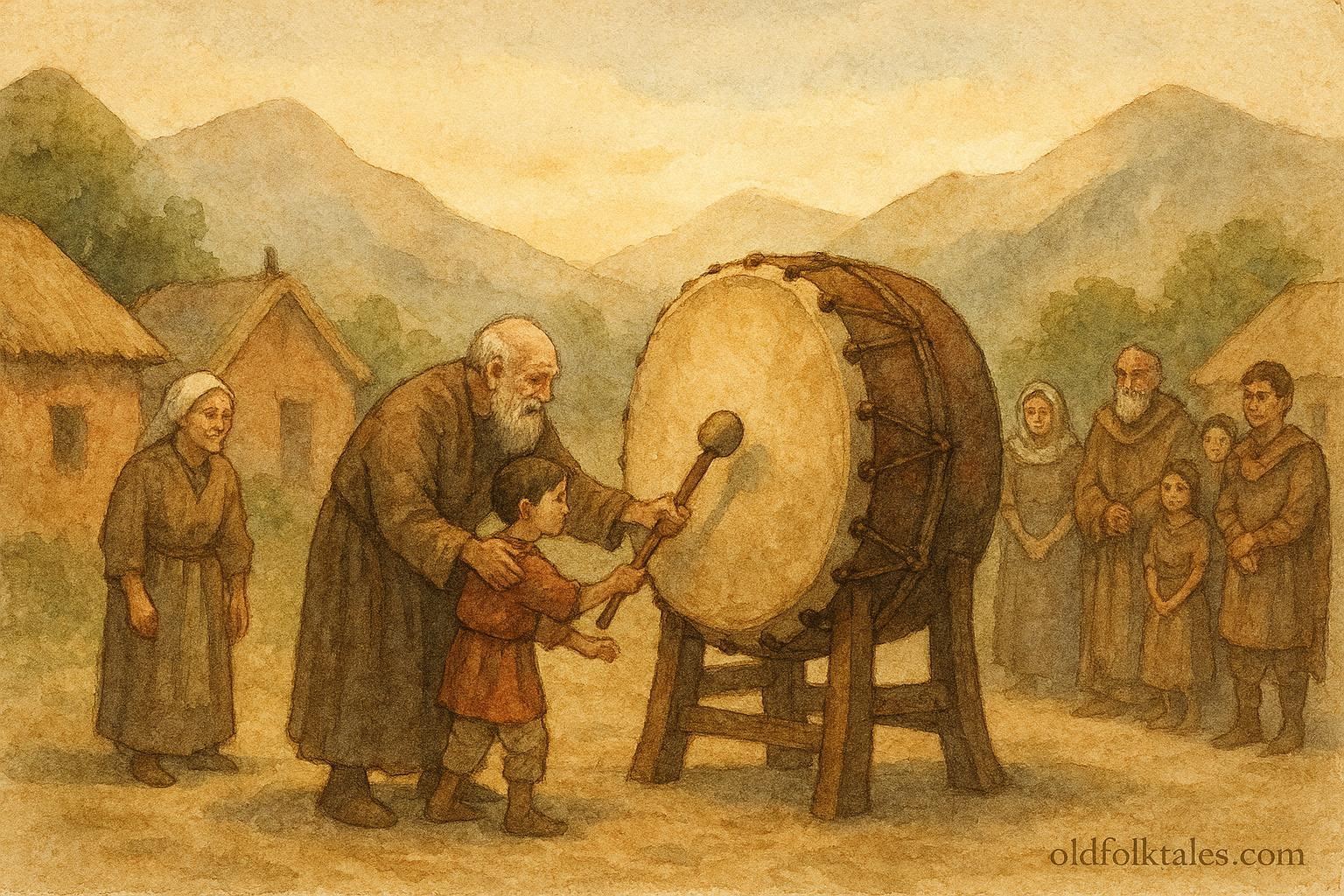
In a village nestled high in the Andes, the people had long celebrated festivals with a large ceremonial drum. This drum was not ordinary; it was carved from the heart of a mountain tree and seasoned with the wisdom of generations. The elders of the village, keepers of knowledge and tradition, were the ones entrusted with guiding the drum’s rhythm during every festival. Its beat marked not only the passage of time during the celebration but also the heartbeat of the community itself, weaving together memory, authority, and spiritual presence.
One year, a festival approached, but the younger villagers, impatient and eager, began to dismiss the elders’ instructions. They claimed that the old ways were slow, unnecessary, and tedious. They wanted to play the drum in new rhythms, faster and louder, without consulting those who had safeguarded its lore. On the day of the festival, the elders approached the drum, as was customary, but the young people rushed past them. They struck the drum without permission, confident in their own abilities.
At first, the drum responded with a weak and uneven thump, as though testing the intentions of the players. The rhythm wavered and faltered, and the elders tried to guide the youth, but their words were ignored. As the festival continued, the drum fell completely silent, refusing to respond. The villagers were shocked and confused; the drum had never gone quiet before. Panic spread among them because they understood that the drum’s silence meant more than mere stubbornness. It was a warning, a reflection of the community’s broken harmony.
Immerse yourself in Latin America’s stories of passion, transformation, and spirit.
The elders explained that the drum’s rhythm was tied to respect, attention, and memory. Each beat carried the voices of ancestors, their lessons, and the values of the village. Ignoring the elders was equivalent to ignoring the collective knowledge and wisdom that kept the community alive and united. The drum did not play for individual pride or impatience; it played for reverence and acknowledgment of the past.
As the days passed, the villagers noticed that other signs of disharmony appeared. Crops seemed slower to grow, minor quarrels escalated into larger disputes, and even the weather seemed capricious, with unexpected storms interrupting daily life. It became clear that the drum’s silence reflected a deeper spiritual imbalance.
The young villagers, humbled and frightened, approached the elders seeking guidance. They listened carefully as the elders taught them the drum’s rhythms, explaining the significance of each beat. Each rhythm represented a story, a memory, or a principle essential for the community’s survival. The youth began to understand that tradition was not a burden but a guide, a living connection to their ancestors.
When the villagers finally approached the drum with patience, respect, and mindfulness, the drum responded. Its sound started softly, almost hesitantly, and then grew stronger, richer, and more harmonious than ever before. The beat carried through the valley, bringing the village together once again, reminding all that the flow of knowledge and respect between generations was vital. The festival resumed with greater joy, but now it carried a renewed sense of reverence, understanding that the drum’s rhythm was a reflection of the community itself.
From that day forward, the villagers never ignored the elders. The drum became not only a musical instrument but also a living teacher. Every beat reminded them that traditions preserved lessons of the past, moral guidance, and the communal spirit. It taught that authority, memory, and respect were not abstract concepts but essential to sustaining harmony and life in their village.
The drum never forgot its rhythm again, but it continued to respond only to those who listened, learned, and acted with patience and humility.
Click to read all South American Folktales — timeless stories from the Andes to the Amazon.
Moral Lesson
The story teaches that wisdom and guidance from elders must be respected. Traditions carry the moral and spiritual memory of a community. Ignoring these lessons can disrupt harmony, weaken social bonds, and even invite misfortune. True understanding requires patience, attention, and humility, reminding us that continuity and respect sustain both culture and communal life.
Knowledge Check
1 What caused the drum to fall silent?
Answer: The younger villagers ignored the elders and struck the drum without guidance
2 What did the drum symbolize in the community?
Answer: The drum symbolized ancestral wisdom, social harmony, and collective memory
3 How did the villagers restore the drum’s rhythm?
Answer: By approaching it with patience, respect, and learning the elders’ teachings
4 What were some consequences of ignoring the drum?
Answer: Quarrels escalated, crops grew slowly, and weather seemed capricious
5 What lesson does the drum teach about tradition?
Answer: That traditions preserve moral, social, and spiritual knowledge essential for community survival
6 Which First Peoples’ wisdom is reflected in the drum story?
Answer: Aymara peoples of Bolivia
Source: Adapted from Music, Authority, and Memory in Andean Communities, Universidad Mayor de San Andrés (2004)
Cultural Origin: Aymara peoples, Bolivia