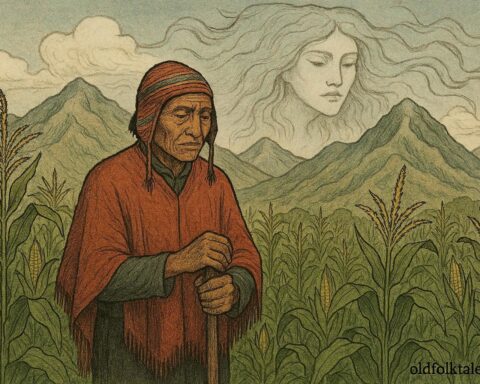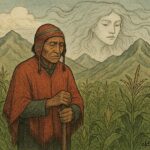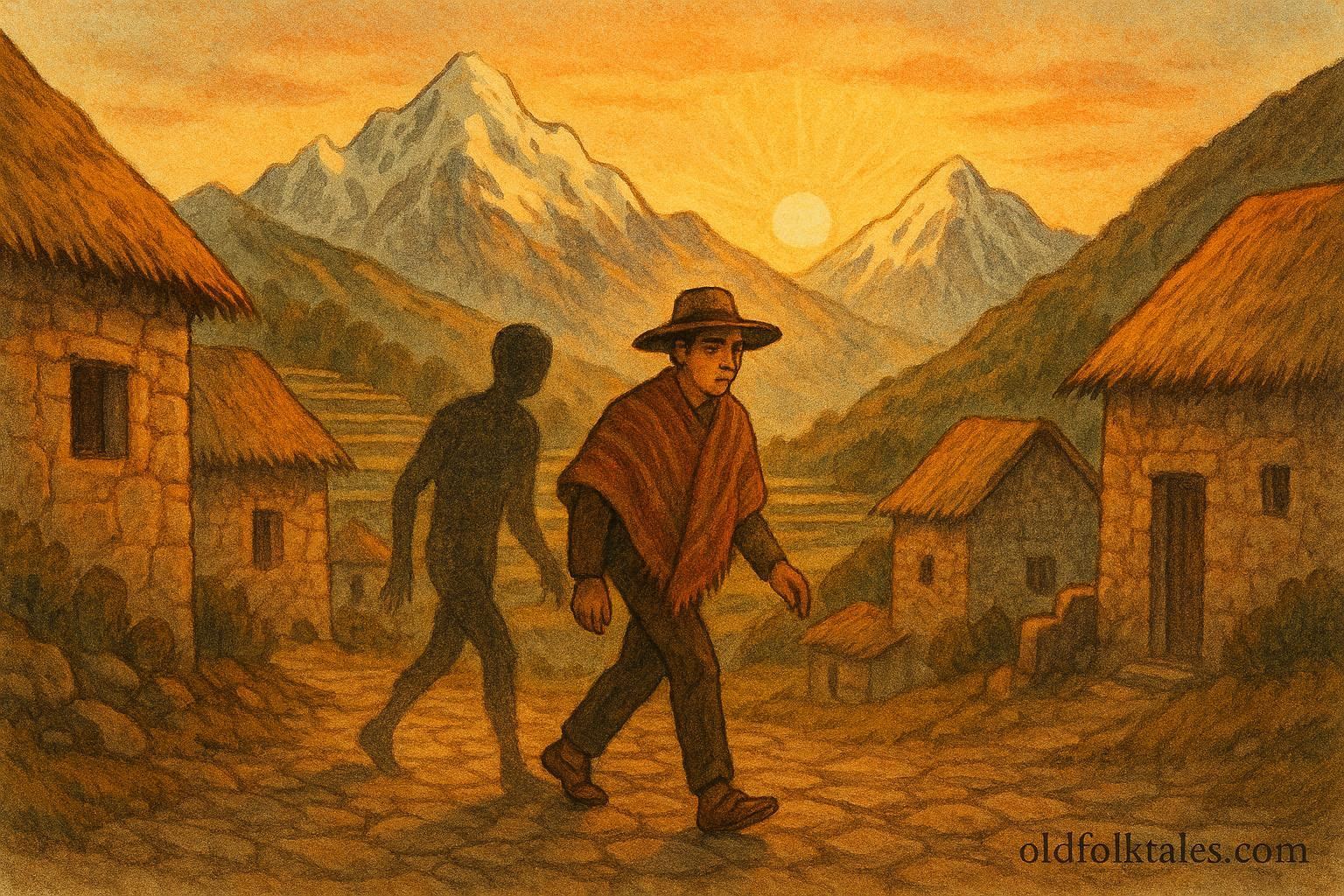
Long ago, in a high Andean village nestled between towering snow-capped peaks and winding rivers, lived a man named Inti Runa. He was clever and skilled in many crafts, but he also had a stubborn streak. While the villagers respected the mountain spirits and the ancient rules that preserved communal harmony, Inti Runa often acted as though he were above them. “The spirits see all,” the elders warned, “but the mountains favor those who walk with honesty.” Inti Runa would smile politely but secretly disregard these admonitions.
One morning, as sunlight spilled across the terraced fields and the mist drifted down the valleys, Inti Runa noticed something unusual. His shadow, usually stretching beside him like a loyal companion, was gone. He paused and looked around, scanning the rocky slopes and the village square. The llamas grazed silently, and even the children’s laughter seemed muted. He walked briskly toward the central plaza, yet the shadow did not return. A chill ran down his spine. Something important had shifted.
In the days before, Inti Runa had secretly taken more than his family’s share of food from the communal store. He rationalized it as minor and harmless, thinking that no one would notice. But the mountain spirits and the unseen forces that protect the village never overlook such acts. His shadow had departed as a reflection of the imbalance caused by his selfishness.
Discover ancient tales passed down by the Indigenous peoples of the Americas.
As Inti Runa walked through the village, villagers watched him with a mixture of concern and quiet understanding. Mothers pulled children closer, and elders shook their heads knowingly. The man was physically the same, yet incomplete. Without his shadow, he felt hollow. Even the sun seemed harsher, and the wind, which usually carried songs of distant peaks, now whispered with a sharp, judgmental tone.
He tried everything to call it back. He ran, he bowed, he pleaded, but nothing worked. His shadow remained absent, leaving him exposed to the scrutiny of both villagers and spirits. At night, when he sat by his hearth, he felt a deep emptiness. Even his reflection in the river seemed diminished, lacking the fullness he had once taken for granted.
Desperate, Inti Runa sought out Mama Killa, the village elder renowned for her deep knowledge of the spirits and the moral laws of the mountains. She lived on the edge of the village, in a small stone house adorned with woven mats and ritual bundles. Inti Runa approached hesitantly, feeling the weight of his misdeeds.
“Why have I lost it?” he asked, his voice trembling.
Mama Killa studied him, her eyes sharp yet compassionate. “A shadow does not leave lightly. It is the mirror of your heart and your place within the community. When you act against the balance of life and the rules that bind us together, a part of your soul withdraws. You must restore what you have taken and live honestly before it can return.”
Inti Runa felt shame, a feeling he had rarely confronted. He understood that this was not simply about returning food; it was about earning back trust, respect, and balance with all living beings. He returned the stolen food to the communal store, explaining openly to the villagers what he had done. He apologized to each family affected, accepting their judgment without complaint.
But apology alone was not enough. Inti Runa dedicated himself to helping the village. He repaired fences, tended fields, and carried water from distant springs. He helped elders reach the terraces and guided children safely along the steep mountain paths. Each task was performed without expectation of reward, performed with sincerity, humility, and a new awareness of the connectedness of all.
As he continued his work, he began to notice a faint shadow trailing behind him. It flickered in the sunlight and seemed hesitant, as though testing whether his repentance was genuine. Inti Runa did not falter. He persisted in honest labor and careful thought, mindful of the ethical codes that had once seemed burdensome. Slowly, the shadow regained strength, becoming a full reflection of his every movement.
The villagers watched the transformation with quiet satisfaction. Birds returned to the rooftops, the llamas grazed freely, and the wind sang once more across the valleys. Inti Runa had learned the deep lesson: selfishness leaves visible traces, but accountability restores harmony. From that day onward, he moved through life with care, teaching younger generations that even small misdeeds affect the community and that honesty, patience, and dedication are essential to personal and communal balance.
The tale of Inti Runa spread beyond his village, across the valleys and mountain passes. Travelers who wandered off the ethical path were warned that shadows, like truth, follow only those who honor their responsibilities. It is said that to this day, in the high Andes, a villager or traveler who acts selfishly or breaks the rules may notice their shadow behaving strangely, reminding them of the ever-present balance between individual action and communal harmony.
This story endures as a testament to the Quechua belief in the moral and spiritual significance of shadows. It teaches that respect for the community, accountability for one’s actions, and the integrity of one’s heart are inseparable. The mountains watch, the winds remember, and the shadow mirrors the soul.
Click to read all South American Folktales — timeless stories from the Andes to the Amazon.
Moral Lesson
The story teaches that personal integrity and accountability are essential. Selfish actions affect not only the individual but the entire community. Respect for communal rules, honesty in behavior, and mindful interaction with others restore balance and harmony. Shadows, like conscience, mirror our moral choices.
Knowledge Check
1 What happens to Inti Runa after he acts selfishly?
His shadow leaves him, showing the moral consequence of breaking communal rules
2 Who guides Inti Runa to restore balance?
Mama Killa, the village elder with knowledge of spirits and moral law
3 What actions does Inti Runa take to regain his shadow?
He returns stolen food, apologizes to villagers, and performs helpful acts without expecting reward
4 What does the shadow represent in the story?
Personal integrity, moral balance, and connection to the community
5 Which cultural group does this folktale originate from?
Quechua peoples of Peru
6 What is the main lesson of the story?
Accountability and honest actions are essential for personal and communal harmony
Source: Adapted from Moral Symbolism in Andean Oral Law, Pontificia Universidad Católica del Perú (2001)
Cultural Origin: Quechua peoples, Peru