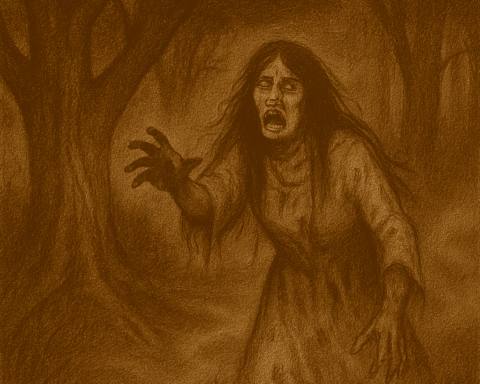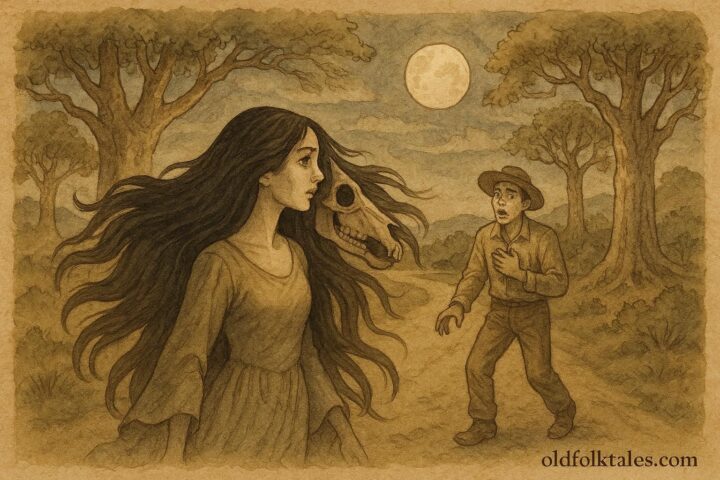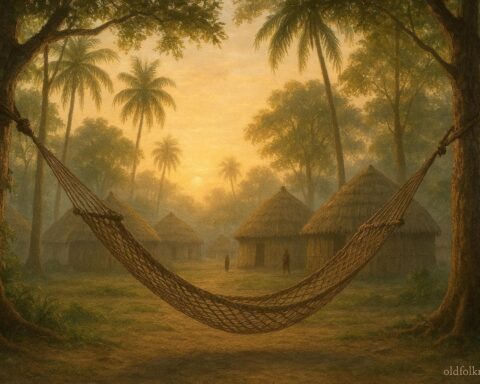
In a Guaraní village deep in the forests of Paraguay, where ancient trees formed a canopy so thick that sunlight barely reached the ground and the night was filled with the sounds of countless unseen creatures, there lived a young woman whose name has been lost to time but whose story lives on in the cry of a bird. She was beautiful and gentle, known for her kindness and the sweetness of her singing voice, which would drift through the village like morning mist, bringing joy to all who heard it.
She had given her heart completely to a young man from her village, and he had given his heart to her in return. Their love was genuine and deep, the kind of connection that seemed destined by the spirits themselves. They would meet in the forest clearings, talking for hours about their dreams and their future together. They imagined the life they would build, the home they would share, the children they would raise. To them, their union seemed as natural and inevitable as the river flowing to the sea.
Click to read all South American Folktales — timeless stories from the Andes to the Amazon.
But fate and family had other plans.
The young woman came from a family of status within the village, and her parents had long ago arranged a different marriage for her. The man they had chosen was older, a respected warrior from a neighboring village whose alliance would bring political and economic benefits to both communities. He was not cruel, but he was stern and humorless, a man who saw marriage as a transaction rather than a union of hearts. He had lost his first wife years before and sought a new one primarily to manage his household and bear his children.
When the young woman’s parents informed her of the arrangement, she was devastated. She fell to her knees before them, tears streaming down her face, and begged them to reconsider. “I love another,” she pleaded. “My heart belongs to him. Please, do not force me into a marriage without love.”
But her father was unmoved. “Love is a luxury,” he said firmly. “Marriage is about family, about alliance, about duty. You will marry the man we have chosen. This has been decided.”
Her mother, though sympathetic to her daughter’s tears, supported her husband’s decision. “You are young,” she said more gently. “You think this love is everything, but in time you will understand that there are more important things. Respect, security, family connections. These matter more than the feelings that seem so overwhelming now.”
The young woman tried desperately to change their minds. She spoke to the village elders, hoping they might intervene. She sought the counsel of the wise women, praying they would find a way to help her. But everywhere she turned, she met with the same response: the marriage had been arranged, agreements had been made, and to break them now would bring shame upon her family and potentially threaten the peace between villages.
The young man she loved was equally desperate. He offered to run away with her, to leave the village and start a new life elsewhere, far from the reach of their families and their obligations. But she knew that such an action would make them outcasts, hunted by both communities, always looking over their shoulders, never truly free or safe. She could not bear the thought of living that way, always running, always afraid.
As the date of the forced marriage approached, the young woman felt her spirit breaking. The weight of her situation pressed down on her like a physical burden she could no longer carry. She could not marry the man her parents had chosen, knowing her heart belonged to another. But she also could not escape her fate, could not run away, could not change the minds of those who held power over her life.
One night, when the moon was hidden behind clouds and the forest was darker than usual, the young woman slipped away from her family’s dwelling. She walked deep into the forest, following paths she had known since childhood, moving farther and farther from the village until the sounds of human habitation faded completely and there was only the whisper of wind through leaves and the distant calls of night creatures.
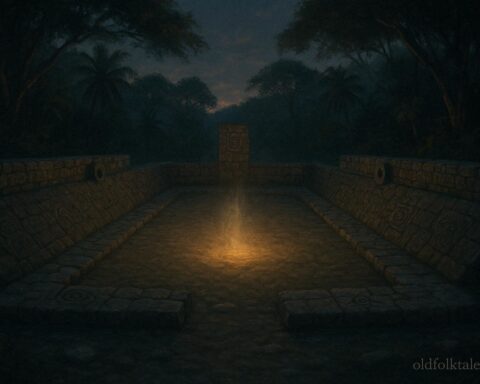
She found herself in a small clearing she had often visited in happier times, a place where she and her beloved had met in secret to share their dreams. The irony of returning here in her moment of deepest despair was not lost on her. This place that had once been filled with hope and joy now seemed to mock her with memories of what could never be.
She fell to her knees in the center of the clearing, her face turned toward the dark sky, and began to pray. She called out to the spirits of the forest, to the ancient powers that governed the natural world, to any force that might hear her desperate plea.
“I cannot live this life,” she cried out. “I cannot marry a man I do not love. I cannot spend my days longing for what I can never have. But I cannot escape, cannot run, cannot change what has been decided for me. Please, spirits of the forest, hear my prayer. End my suffering. Transform me into something else, anything else, so that I do not have to endure this unbearable pain.”
Her voice rose through the trees, raw with anguish and desperation. She wept until she had no more tears, until her voice grew hoarse from crying, until exhaustion began to claim her body even as her spirit remained tormented.
The forest spirits heard her prayer. They had watched humans for countless generations, had seen the suffering that rigid customs and forced obligations could cause. They recognized the genuine nature of her pain and the impossibility of her situation. And in their ancient wisdom, they decided to grant her request.
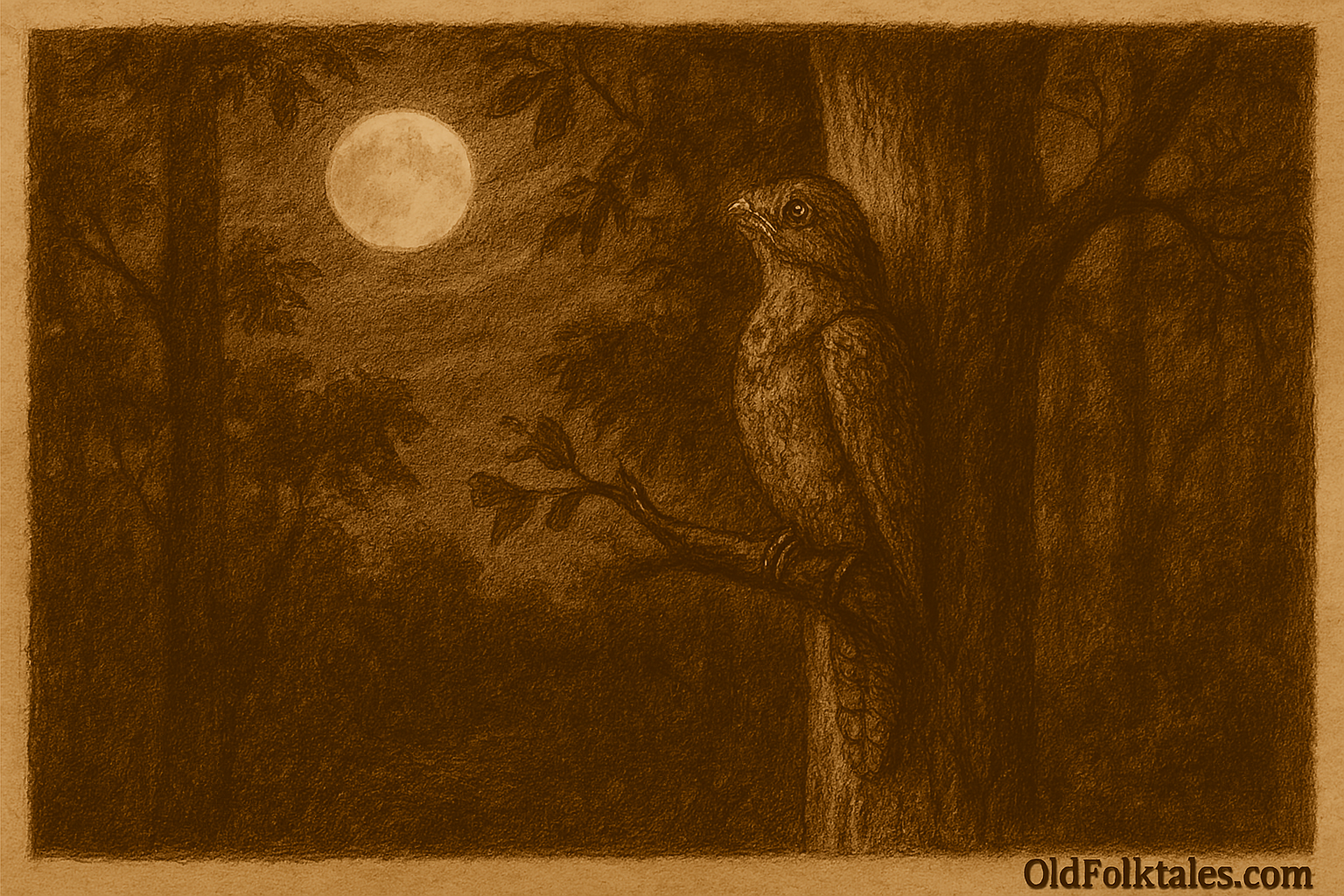
As the young woman knelt in the clearing, still calling out her grief to the uncaring sky, she began to feel a strange sensation spreading through her body. Her arms, outstretched in supplication, began to change. Soft feathers sprouted along her skin, brown and mottled like tree bark. Her legs, folded beneath her, shifted and restructured, becoming thin and adapted for perching. Her mouth and nose merged and extended, forming a wide beak perfectly designed for catching insects in flight.
Her transformation was gentle, not painful but simply inevitable, like water gradually reshaping stone. Within moments, the young woman was no longer human. She had become a bird, specifically the urutaú, a nocturnal creature perfectly adapted to life in the forest shadows.
But though her body had changed, her voice remained. When she opened her beak to cry out, the sound that emerged was haunting and unmistakably sorrowful. It was a long, descending wail that seemed to carry all the grief and longing of her human heart, a sound that once heard could never be forgotten.
The urutaú bird she had become lifted into the air on silent wings and disappeared into the canopy, leaving the clearing empty except for the echo of her mournful cry.
When the village discovered that the young woman had vanished, searches were organized, but no trace of her was ever found. Her lover mourned her for the rest of his life, never marrying, always wondering what had become of her. Her parents, though they would never admit it, were haunted by guilt, wondering if their rigid adherence to tradition had driven their daughter to some terrible fate.
But the forest knew the truth. The urutaú bird that began to appear in the area after her disappearance was no ordinary bird. During the day, it would rest motionless on tree branches, its camouflage so perfect that it seemed to become part of the bark itself, invisible and silent. But at night, especially on nights when the moon was hidden and darkness was complete, it would sing its sorrowful song.
The cry of the urutaú is one of the most distinctive and haunting sounds in the Paraguayan forest. It is a long, descending wail that seems to express infinite sadness, a sound that makes listeners stop and feel a chill run down their spines. Those who hear it say it sounds like someone calling for a lost love, like a voice crying out in grief that can never be comforted.
The Guaraní people know this is exactly what it is. They recognize in the bird’s cry the voice of the young woman who could not live without her love and could not escape her fate. She found her transformation, her release from unbearable suffering, but her grief remained. Now she spends her nights calling out across the forest, her voice carrying the sorrow and longing that even transformation into another form could not erase.
To this day, when people in Paraguay hear the urutaú’s mournful cry echoing through the darkness, they remember the story of forbidden love and impossible choices. They are reminded that some sorrows run so deep that even becoming something entirely different cannot heal them, and that the voice of the heart, once it has learned to cry, may never truly be silenced.
Discover the sacred tales of llamas, condors, and gods who guard the Andes
The Moral Lesson
This touching Guaraní legend teaches about the devastating consequences of denying people the right to choose their own paths in matters of the heart. The transformation of the heartbroken young woman into the urutaú bird illustrates how forced obligations and rigid adherence to tradition, even when well intentioned, can cause suffering so profound that it transcends physical form. The story warns against prioritizing social arrangements and family alliances over genuine human emotion and connection. Yet it also shows that love and grief are so fundamental to the human experience that they persist even through supernatural transformation. The urutaú’s eternal cry reminds us that some wounds to the heart never fully heal, and that the echoes of denied love can resonate through the world forever, calling out in the darkness for what was lost.
Knowledge Check
Q1: What was the central conflict in this Guaraní legend from Paraguay? The central conflict was between a young woman’s genuine love for a man from her village and her parents’ insistence that she marry a different man they had chosen for her. This arranged marriage was designed to create political and economic alliances between villages, but it meant forcing the young woman to abandon her true love and marry someone she did not care for, creating an impossible situation from which she saw no escape.
Q2: Why did the young woman’s parents refuse to let her marry the man she loved? The young woman’s parents had already arranged her marriage to an older, respected warrior from a neighboring village. They believed this alliance would bring important political and economic benefits to both communities. Her father saw marriage as being about duty, family, and alliance rather than love, while her mother thought respect and security mattered more than emotional connection.
Q3: What desperate plea did the young woman make to the forest spirits? In a clearing deep in the forest, the young woman fell to her knees and prayed to the spirits to end her suffering. She explained that she could not marry a man she did not love, could not live longing for what she could never have, but also could not escape her situation. She begged the spirits to transform her into something else, anything else, so she would not have to endure her unbearable pain.
Q4: How did the forest spirits respond to her prayer? The forest spirits, recognizing the genuine nature of her pain and the impossibility of her situation, granted her request for transformation. They gently changed her body from human form into that of a urutaú bird, a nocturnal forest creature with mottled brown feathers that blend with tree bark. However, though her body changed, her voice remained, still carrying all her grief and longing.
Q5: What makes the urutaú bird distinctive in Paraguayan folklore? The urutaú is known for its perfect camouflage during the day when it rests motionless on branches, appearing to be part of the tree bark itself, and for its haunting nocturnal cry. The bird’s call is a long, descending wail that sounds like infinite sadness, like someone calling for a lost love. This distinctive cry is believed to be the voice of the transformed young woman, still expressing her grief and calling out for her forbidden love.
Q6: What does the urutaú bird’s eternal crying represent in Guaraní culture? The urutaú bird’s mournful cry represents how some sorrows run so deep that even transformation into another form cannot heal them. It symbolizes the lasting pain of forbidden love, the consequences of forced obligations, and the idea that the voice of the heart, once it has learned to cry, may never truly be silenced. The cry serves as a reminder of the human cost of rigid traditions that deny people the right to follow their hearts.
Source: Adapted from Portal Guaraní and traditional Paraguayan folklore collections about the Leyenda del Urutaú
Cultural Origin: Guaraní Indigenous Peoples, Paraguay