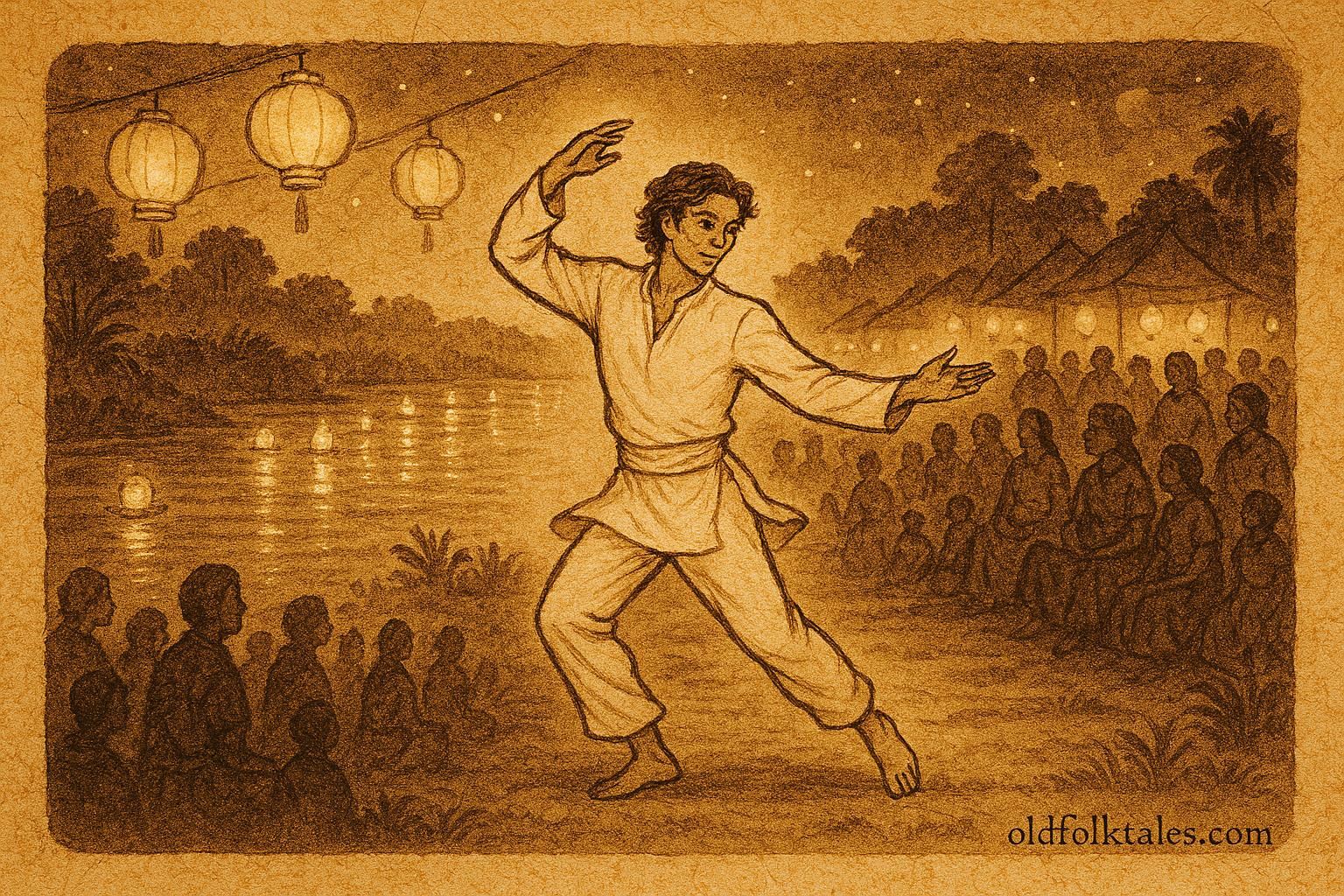
In the river villages scattered along the winding waterways of the Brazilian Amazon, elders speak in hushed voices of a mysterious figure known as the Boto. By day, it is a pink river dolphin gliding silently beneath the dark, slow-moving waters. By night, especially during village festivals—it is said to become something far more dangerous.
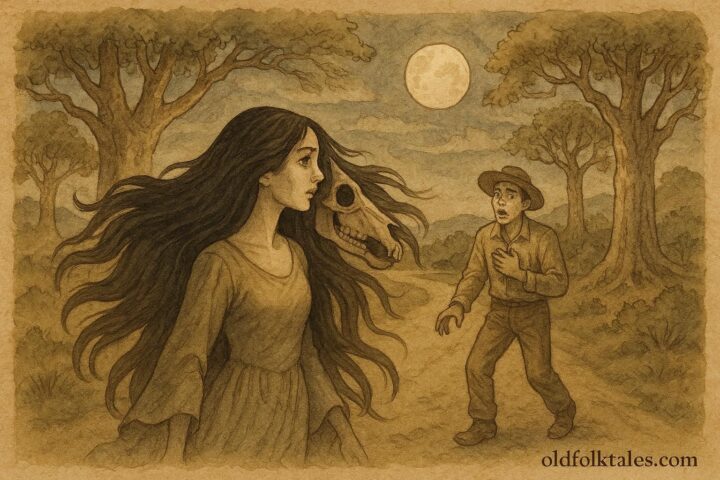
When music fills the air and lantern light flickers across the riverbanks, the Boto emerges from the water and takes on the form of a handsome man. He is always dressed in spotless white, his clothing neat and elegant, and upon his head he wears a wide-brimmed hat. Villagers say the hat is never removed, for it hides the small blowhole that would betray his true nature. His manners are gentle, his voice smooth, and his movements graceful, especially when he dances.
At festivals, where drums echo through the night and laughter carries across the water, the Boto blends easily among the people. He dances tirelessly, moving with a fluid rhythm that mirrors the river itself. Young women are often drawn to him, enchanted by his charm and confidence. He flatters them softly, speaking words that promise affection, excitement, and escape from the ordinary rhythms of village life.
As the night deepens, the Boto chooses one companion. By the river’s edge, away from the glow of lanterns, he leads her with kind words and persuasive smiles. Yet before the first light of dawn touches the water, he slips away. As morning comes, the handsome stranger is nowhere to be found. All that remains is the quiet river, flowing as it always has, giving no sign of what passed during the night.
Weeks or months later, when a young woman’s pregnancy cannot be explained, whispers move through the village like wind through leaves. The elders nod gravely. Mothers lower their voices. The people say simply, “The Boto has visited again.” No man is accused, and no questions are asked. The river has claimed its secret.
For generations, this story has lived alongside the Amazon’s waters, serving many purposes within the community. It is a warning to the young to be cautious of strangers, especially those who arrive without history or ties. It speaks of desire unchecked and the dangers hidden beneath pleasing appearances. It also offers an explanation for events that might otherwise bring shame or conflict, allowing the community to maintain harmony through myth.
The river itself holds a powerful presence in the tale. To the people of the Amazon, it is not merely water but a living force, one that provides food, travel, and life, yet also conceals mysteries beyond human control. The Boto embodies this dual nature. Like the river, he is beautiful and alluring, but also unpredictable and dangerous.
Even today, the legend endures. Parents still tell the story to their children, and festival nights still carry an undercurrent of caution. The Boto remains a symbol of the thin boundary between the human world and the spirit-filled realm of nature, reminding all who live near the river that respect and restraint are essential for survival.
Click to read all South American Folktales — timeless stories from the Andes to the Amazon.
Moral Lesson
The legend teaches that desire without caution leads to vulnerability, and that outward beauty and charm can conceal hidden dangers. It also reinforces respect for natural forces and social boundaries within the community.
Knowledge Check
1. Who is the Boto in Amazonian folklore?
The Boto is a pink river dolphin that transforms into a handsome man during village festivals.
2. Why does the Boto wear a hat?
The hat conceals his blowhole, hiding his true identity as a river spirit.
3. When does the Boto appear in human form?
He appears at night during village festivals and disappears before dawn.
4. What happens when a woman becomes pregnant mysteriously?
Villagers believe the Boto is responsible and avoid blame or conflict.
5. What does the river symbolize in the story?
The river represents life, mystery, beauty, and hidden danger.
6. What lesson does the Boto legend teach?
It warns against deception, unchecked desire, and trusting appearances.
Source: Indigenous oral tradition; documented in Brazilian folklore collections
Cultural Origin: Amazon Basin, Brazil (Indigenous folklore)