High in the Andes, where the mountains rose like ancient guardians and the air carried the scent of earth and herbs, there lived a Kallawaya community known for its deep respect for nature and ancestral knowledge. The people believed that wisdom did not live only in spoken words but also in silence, in observation, and in the land itself. Stones, rivers, plants, and wind were all considered teachers for those patient enough to listen.
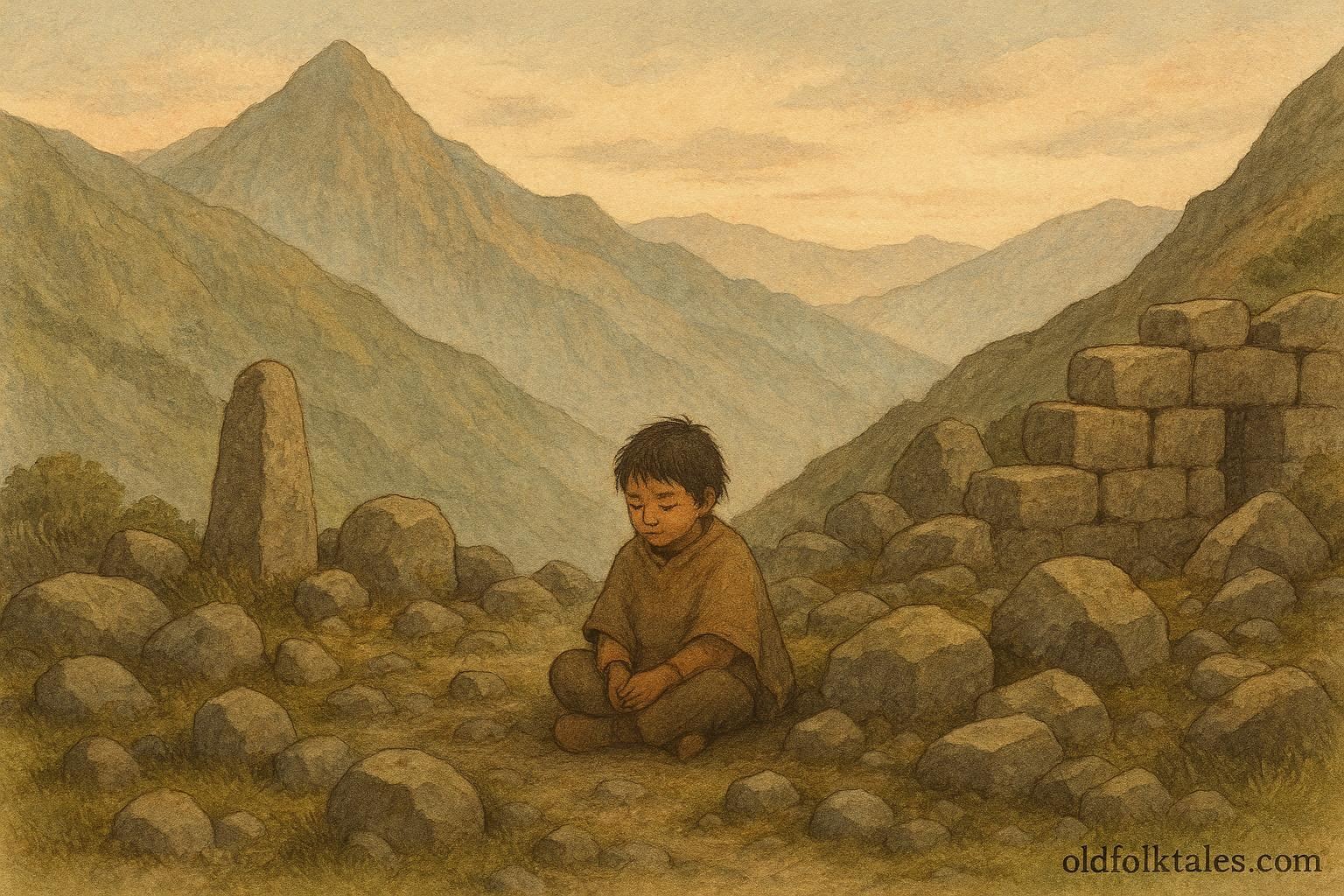
Among the children of the village was a quiet boy named Amaru. He was not known for loud laughter or quick answers. While other children chased one another across the terraces or practiced games of strength, Amaru often sat alone near the stone paths that wound through the hills. He would touch the rocks gently, tracing the lines etched into them by centuries of wind, rain, and footsteps. The elders noticed his calm nature but said little, believing that each child revealed their path in time.
Amaru lived with his grandmother, Mama Quya, an elder respected for her knowledge of healing, memory, and tradition. She often reminded him that the mountains remembered everything. “The stones were here before us,” she said. “They have seen generations come and go. They listen, and they speak, but not with words.”
One season, when Amaru reached the age when children were taught the stories of their ancestors, Mama Quya did something unusual. Instead of telling him legends by the fire, she led him beyond the village to a slope covered with scattered stones of different sizes and colors. Some were smooth, others cracked and scarred. She asked him to sit.
“Do not speak,” she told him. “Do not ask questions. Sit, breathe, and listen.”
Amaru obeyed. At first, he heard only the wind moving through the grass and the distant call of birds. His legs grew tired, and his thoughts wandered. But Mama Quya returned each day, bringing him to the same place, asking the same thing. Sit. Listen. Be still.
Days passed, then weeks. Slowly, Amaru noticed changes. The silence no longer felt empty. He began to sense patterns in the wind, warmth in certain stones, and a heaviness in others. Some rocks felt peaceful when he touched them. Others filled him with sadness or unease. He could not explain why.
One evening, after a long day of listening, Amaru told his grandmother that a large stone near the path made him feel sorrow. Mama Quya nodded. She explained that long ago, during a time of conflict, that stone marked a place where people gathered to mourn those lost in struggle. The land remembered what had happened there.
Encouraged, Amaru returned to the stones with deeper attention. Over time, images formed in his mind. He saw farmers carving terraces into hillsides, healers preparing medicines, families migrating during harsh seasons. He felt joy, fear, endurance, and hope. The stones did not speak in words, but through feeling and memory.
When drought struck the region, the elders gathered to decide where to plant new crops. The usual signs were unclear. Mama Quya brought Amaru before the council. Some questioned why a child should be consulted, but she insisted.
Amaru led them to a cluster of stones near an old streambed. He explained that the stones there felt warm and steady, not strained. The elders followed his guidance. That season, the crops survived while others failed. The people began to understand that Amaru had learned something rare.
As years passed, Amaru grew into a young man known not for loud speech but for careful listening. Travelers came seeking advice, and elders asked him to sit with them when difficult decisions arose. He never claimed power or ownership of the knowledge. He reminded them that the wisdom belonged to the land and the ancestors, not to him.
Before her death, Mama Quya told Amaru that listening was a responsibility, not a gift. “You must never force the stones to speak,” she said. “They share only with those who respect silence.”
After she passed, Amaru continued teaching children as she had taught him. He brought them to the hills and asked them to sit, breathe, and listen. Some grew impatient and left. Others stayed and slowly began to understand that knowledge could be carried without words.
To this day, the Kallawaya people say that the stones still remember. They say the land speaks to those who are willing to slow down, to listen deeply, and to honor the past carried quietly beneath their feet.
Discover ancient tales passed down by the Indigenous peoples of the Americas.
Moral Lesson
True wisdom often comes through patience and silence. By listening deeply to the land and honoring ancestral memory, people learn responsibility, respect, and balance with the world around them.
Knowledge Check
1. Who was Amaru, and what made him different from other children?
Amaru was a quiet child who showed patience and sensitivity to the land rather than loud strength or quick speech.
2. What lesson did Mama Quya teach Amaru?
She taught him that wisdom exists in silence and that stones and land carry ancestral memory.
3. How did the stones communicate with Amaru?
They shared feelings, impressions, and memories rather than spoken words.
4. Why did the elders begin to trust Amaru’s guidance?
His listening helped them make decisions that protected the community during hardship.
5. What responsibility came with Amaru’s ability?
He had to listen respectfully and never force knowledge from the land.
6. What does the story teach about knowledge transmission?
That knowledge can be passed through observation, patience, and silence, not only speech.
Source
Adapted from Andean pedagogy studies, Universidad Mayor de San Andrés Indigenous Education Archive.
Cultural Origin
Kallawaya peoples, Bolivia.