Long ago, in the high valleys of Oaxaca, the Zapotec people lived among mountains shaped by wind and rain. Their villages were built near forests that provided shelter, medicine, and memory. Among these forests stood one tree unlike any other. It was not the tallest, nor the widest, but it was known as the Tree That Counted Years.
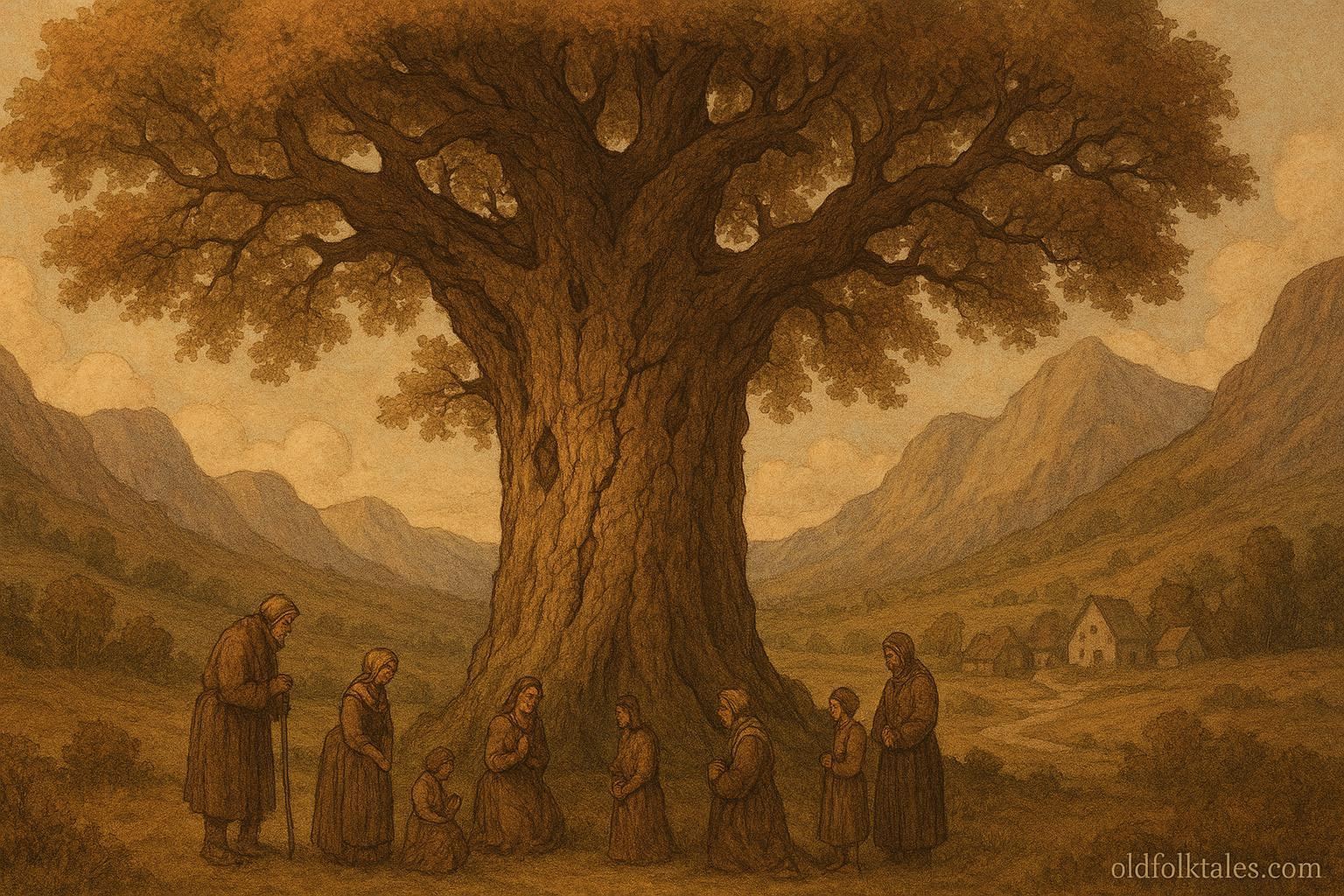
The elders said the tree did not measure time through rings hidden inside its trunk. Instead, it remembered each year through marks left on its bark. Every scar, crack, and healed wound told a story. The tree stood near a meeting place where generations gathered to settle disputes, mark seasons, and speak promises aloud. It listened without moving, watched without eyes, and remembered without forgetting.
As children, the Zapotec were taught never to cut or scar the tree without reason. They were told that the tree recorded not only the passing of time but the choices of people. A year of harmony left the bark smooth. A year of conflict left a mark. The tree was not feared but respected, for it reflected what humans brought to the land.
In one generation, the village prospered. Crops grew well, rains arrived on time, and disputes were settled through calm discussion. During those years, the tree’s bark remained unbroken. Even storms passed without tearing its branches. The elders would stand before it and say the tree was content because the people lived with balance.
Then came a year of disagreement.
Two families argued over a stretch of land near a stream. At first, the dispute was quiet. Words were exchanged, then voices rose. Each side claimed ancestral rights. Instead of seeking guidance from the council, the families acted alone. One night, boundary stones were moved. Another night, crops were damaged. Anger spread through the village like fire through dry grass.
Not long after, a deep crack appeared in the bark of the Tree That Counted Years. It ran vertically, as though the tree itself had been split by tension. The elders noticed immediately. They gathered the people and warned them that the tree had marked the year as broken. Still, the families refused to reconcile.
As the conflict continued, the land responded. The stream overflowed its banks, flooding the disputed fields. Crops rotted. When the people tried to cut branches from the tree for repairs, their tools dulled, and the wood resisted them. The tree did not bleed sap. It simply stood firm, scarred and silent.
A young woman named Xquenda often visited the tree. She had listened to the elders since childhood and believed the land carried memory. One evening, she placed her hand against the cracked bark and felt warmth beneath the surface. It was not heat, but presence. She understood then that the tree was not punishing the people. It was reminding them.
Xquenda spoke before the council and asked that the families meet at the tree. Reluctantly, they agreed. When they stood before it, she asked them to place their hands on the scar. As they did, the elders spoke of previous marks on the trunk. Each scar corresponded to a time of broken trust or violence in the past. Each smooth section followed years of peace.
Shamed but awakened, the families agreed to speak honestly. They admitted wrongs and returned what had been taken. The land dispute was resolved not by victory but by compromise. They shared access to the stream and agreed to protect its banks together.
Within weeks, the crack on the tree began to close. It did not disappear, but it softened. New bark grew around it, forming a thick ridge. The elders said the tree had recorded both the wound and the healing. The year would be remembered as one of hardship, but also of repair.
From that time on, the Zapotec treated the tree as a living record. When a child was born, they touched its bark. When leaders were chosen, they stood beneath its branches. When promises were made, they were spoken near the trunk so the tree could remember if the people forgot.
Generations passed. The tree grew heavy with scars. Some were deep, others faint. Together, they formed a map of time that no written record could replace. Outsiders who passed through the valley asked why the tree was never cut down. The people answered that it was already doing its work. It held their history.
When the tree finally fell during a powerful storm many generations later, the people gathered around its trunk. Inside, they found no rings that told the story of years. Instead, the scars on the outside had been enough. The elders said the tree had taught them what time truly was. Not numbers. Not seasons. But memory shaped by choices.
To this day, the Zapotec say that trees still remember. They say the land keeps count not by calendars but by how humans treat one another. And they teach their children that every action leaves a mark, whether seen immediately or remembered later by the world itself.
Explore the ancestral legends of Canada, Mesoamerica, and South America’s Indigenous tribes.
Moral Lesson
Time remembers human actions through their consequences. Endurance comes not from avoiding scars but from learning, healing, and taking responsibility for past choices.
Knowledge Check
1. Why was the tree called the Tree That Counted Years?
It marked time through visible scars that reflected human actions rather than hidden growth rings.
2. What caused the first major scar in the story?
A land dispute and broken trust between two families.
3. How did the land respond to the conflict?
Flooding, crop loss, and resistance to human interference followed the unrest.
4. What role did Xquenda play?
She helped the community understand the tree’s message and guided reconciliation.
5. Why did the tree’s scar begin to heal?
Because the families admitted wrongdoing and restored balance.
6. What lasting lesson did the Zapotec take from the tree?
That history is recorded through actions and responsibility, not just time itself.
Source
Adapted from Zapotec ecological folklore; Oaxaca regional oral history archives.
Cultural Origin
Zapotec peoples, Oaxaca, Mexico.