Among the Secwépemc people of the Interior of British Columbia, the land itself was a teacher. Rivers instructed patience, mountains demanded humility, and the open grasslands taught people to see far beyond their own footprints. Children were raised not only to move forward in life, but to understand where each step came from and where it might lead.
In one village near a winding river and long slopes of pine and sage, a child named Tsetlín grew restless with learning. He was clever and quick, but he often acted before thinking. When other children listened to elders, Tsetlín ran ahead. When warnings were given, he laughed and tested them. He climbed where rocks were loose, spoke where silence was needed, and took without asking when curiosity overcame restraint.
His parents corrected him gently. His grandparents told stories meant to slow his spirit. Still, Tsetlín rushed forward as though the world existed only in front of him.
One autumn morning, after Tsetlín narrowly escaped falling into the river while chasing a bird, his grandmother spoke quietly to his parents. She did not scold the child. Instead, she suggested an old teaching, one rarely used and never lightly given.
“He must learn to see what follows his steps,” she said. “Before he can walk forward wisely, he must learn to walk backward.”
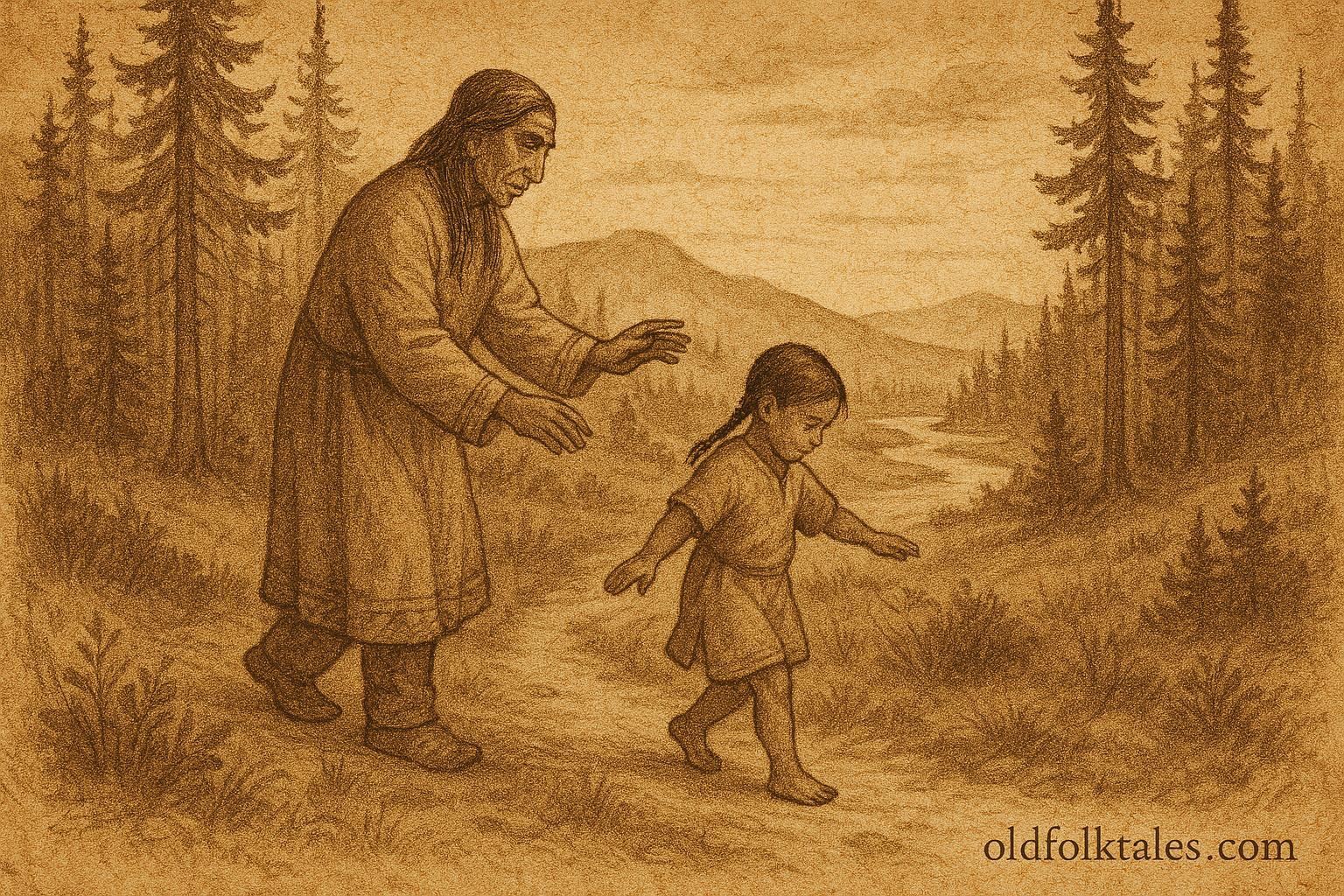
The next day, Tsetlín was told he would begin a new lesson. He was confused when his grandfather took him to a flat clearing near the village and asked him to turn around.
“You will walk backward today,” his grandfather said calmly. “Slowly. Carefully.”
At first, Tsetlín laughed. Walking backward felt like a game. He took quick steps and nearly fell. His grandfather steadied him.
“Not fast,” he said. “You must feel the ground before each step.”
Day after day, the lesson continued. Tsetlín walked backward along familiar paths. He moved slowly, guided by his grandfather’s voice and his grandmother’s watchful eye. He learned to listen for changes in the ground, to sense stones beneath his heels, to notice how balance shifted with each movement.
At first, the lesson frustrated him. Everything felt harder. He could not rush. He could not look ahead. He had to remember what lay behind him before stepping.
Gradually, something changed.
Tsetlín began to notice patterns. He remembered where roots crossed the path. He recalled where the earth dipped slightly or where loose gravel waited to slip underfoot. His mind started to reach backward before his body moved.
One afternoon, his grandmother asked him a question while he practiced.
“What happens if you forget what is behind you?”
“I fall,” he answered.
“And what happens if you forget what came before your actions?” she asked.
Tsetlín did not answer at once.
As the weeks passed, the lesson extended beyond walking. When Tsetlín spoke impulsively, he was asked to pause and recall what words had done before. When he reached for something that was not his, he was reminded to consider the steps that followed such actions. Walking backward had become a way of thinking.
One day, during a gathering near the river, another child slipped close to the edge. Without thinking, Tsetlín reached out and stopped him. Later, when asked how he knew what would happen, Tsetlín answered simply.
“I remembered what came before.”
When winter arrived, the backward walking lessons ended. Tsetlín was allowed to walk forward again, but he did so differently. His steps were measured. His eyes observed more than they rushed. He still moved with curiosity, but now it was guided by awareness.
The elders noticed. The children followed his example.
Years later, Tsetlín became a teacher himself. When asked why he was so patient, he would smile and tell them about the days he learned to walk backward, when the land taught him that wisdom does not come from speed, but from remembering where your steps have already been.
Explore the ancestral legends of Canada, Mesoamerica, and South America’s Indigenous tribes.
Moral Lesson
Wisdom grows when actions are guided by memory and awareness. Foresight is not about seeing the future, but about understanding the consequences that follow each step. Those who remember where they have been learn how to move forward without harm.
Knowledge Check
1. Why was Tsetlín asked to walk backward?
He acted impulsively and needed to learn awareness and foresight before taking action.
2. What did walking backward teach the child?
It taught him to remember consequences, observe carefully, and move with intention.
3. Who guided Tsetlín during his lesson?
His grandparents, especially his grandmother and grandfather.
4. How did the lesson change Tsetlín’s behavior?
He became more patient, thoughtful, and aware of how actions affect others.
5. What does walking backward symbolize in the story?
Reflection, memory, and understanding consequences before acting.
6. Why is the land important in the lesson?
The land acts as a teacher, reinforcing balance, patience, and respect.
Source
Adapted from Indigenous child rearing philosophy collections and Canadian cultural anthropology texts documenting Secwépemc teachings.
Cultural Origin
Secwépemc First Peoples, Interior British Columbia, Canada.