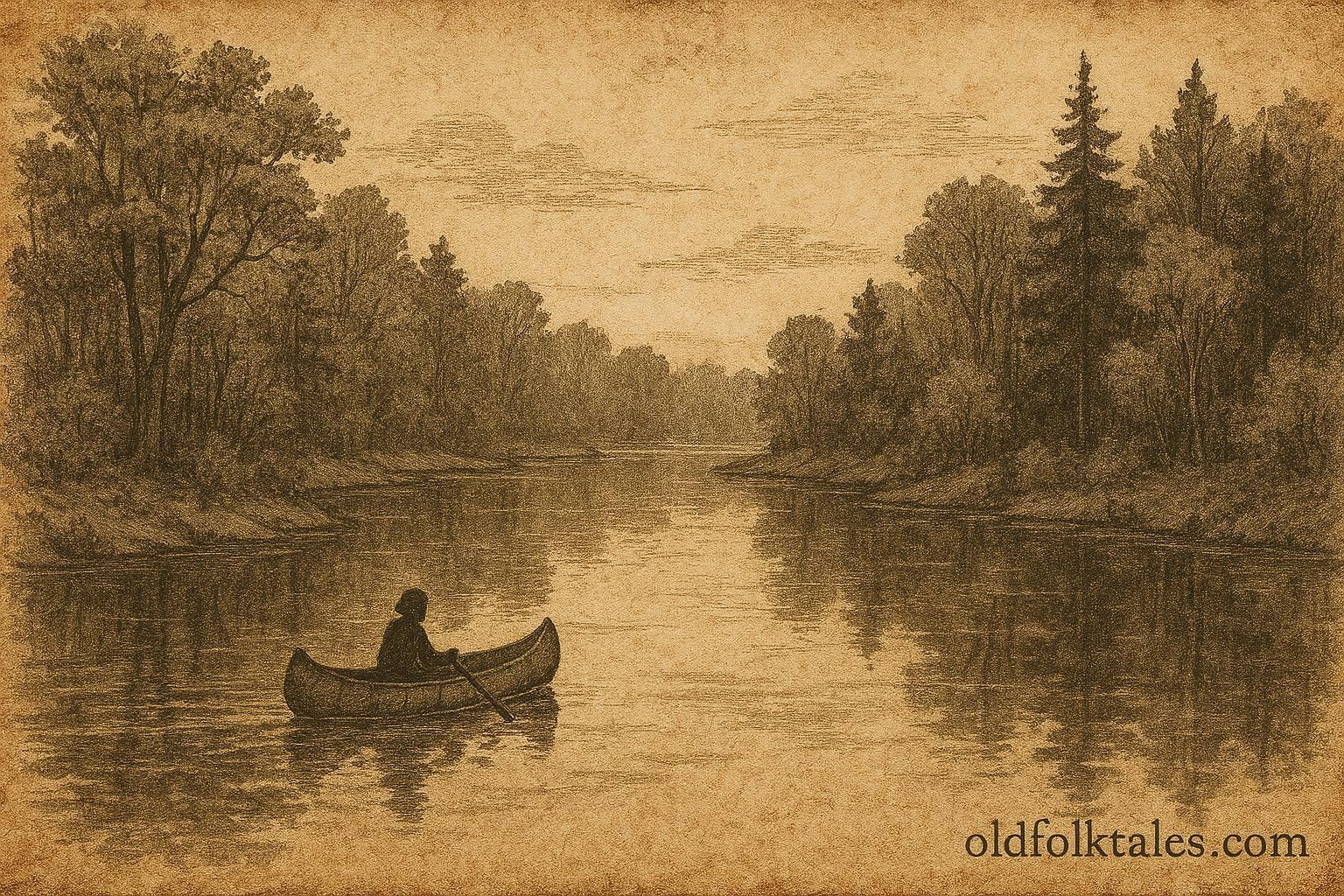
The river wound its way through the Great Lakes region like a living path, bending and straightening as it passed through forests, wetlands, and stretches of smooth stone. It had carried people for generations. Canoes traveled its length in every season, bearing hunters, families, messengers, and traders. To most, the river was a means of passage, something to cross or follow on the way to somewhere else.
But there was one bend the elders spoke of with care.
At that bend, they said, the river did not only move forward. It remembered.
Those who hurried past it noticed nothing. Those who paddled with restless hearts felt unease and dismissed it. Only those who slowed their strokes, who respected the water and the land around it, discovered that the river could return time in a way no human could control.
No one knew when the bend first gained this power. Some believed it was shaped by the land itself, formed to remind people that movement without awareness leads to loss. Others said the spirits of the river made it a place of quiet teaching, where memory surfaced gently instead of being forced.
Immerse yourself in Latin America’s stories of passion, transformation, and spirit.
One early spring, a man named Wabishki paddled toward that bend without knowing its meaning. He was known for speed and endurance. He measured journeys by how quickly they were completed, not by what they offered along the way. His canoe was strong, his supplies carefully arranged, and his mind fixed firmly on his destination.
As Wabishki entered the bend, the river behaved strangely. The current softened, and his paddle met resistance, as though the water itself had thickened. The forest grew quiet. Even the wind seemed to pause.
Annoyed, he increased his pace.
The canoe slowed instead of speeding up. Then it stopped altogether, rocking gently as if resting. Wabishki looked around, frustrated, and noticed that the water near the shore shimmered faintly. It was not sunlight reflecting, but movement rising from below the surface.
Then he heard laughter.
It was the sound of children playing, high and carefree. His breath caught. He recognized the voices at once. They belonged to his younger siblings, long grown and scattered across distant places. The river revealed a scene from his childhood. He saw himself standing apart, carving a stick, ignoring his siblings as they splashed and called for him to join them.
The moment played clearly, without distortion. He remembered the impatience he had felt, the belief that what he was doing mattered more. He remembered how quickly the chance had passed.
The vision faded. The canoe drifted forward again.
Wabishki told himself it was exhaustion. He paddled on.
Soon, the river slowed a second time. Another memory rose from the water. This time, an elder sat beside the riverbank, speaking calmly. The younger Wabishki stood nearby, listening only enough to appear respectful. His thoughts were already elsewhere. The elder’s words faded before they were finished, swallowed by silence.
Wabishki lowered his paddle.
The river did not accuse him. It did not trap him in regret. It showed him what he had rushed past, what he had failed to hear, what he had left unfinished.
By the time the canoe moved beyond the bend, Wabishki no longer measured the journey by distance. He allowed the river to carry him at its own pace.
When he reached his destination, he arrived later than planned. Instead of apologizing, he stayed. He listened to stories. He asked questions. He helped without urgency.
Others noticed the change.
Over time, travelers spoke more openly of the bend. Some encountered memories of promises broken. Others relived moments of pride or neglect. Not everyone saw anything. The elders said the river offered lessons only to those ready to receive them.
The bend remained unchanged in appearance. The river continued to flow forward, carrying both water and memory. It reminded people that time does not wait, but understanding requires pause.
Explore the ancestral legends of Canada, Mesoamerica, and South America’s Indigenous tribes.
Moral Lesson
Rushing through life may bring speed, but it costs awareness. Reflection is not weakness or delay. It is the act that allows wisdom to form. Those who slow down long enough to listen to memory learn how to move forward with intention and balance.
Knowledge Check
Question 1: Why does the river bend affect some travelers and not others?
Answer: The river responds to patience and readiness. Only those who approach with awareness and respect experience its lessons.
Question 2: What kinds of moments does the river return?
Answer: The river reveals moments that were ignored, rushed, or left unfinished, especially those involving relationships and responsibility.
Question 3: How does Wabishki change after passing through the bend?
Answer: He becomes more patient, attentive, and willing to listen, valuing reflection over speed.
Question 4: What does the river symbolize in the story?
Answer: The river represents time, memory, and the natural flow of life that continues whether people notice or not.
Question 5: Why does the river not force its lessons?
Answer: Because true understanding must be received willingly. Forced lessons do not create lasting change.
Question 6: What role does reflection play in the story’s message?
Answer: Reflection allows individuals to recognize past choices and move forward with greater awareness and responsibility.
Source
Adapted from Indigenous river narratives and oral storytelling traditions documented through Native-Languages.org and regional Anishinaabe oral history collections.
Cultural Origin
Anishinaabe First Peoples, Great Lakes region, Canada.