In a small rural village in colonial Mexico, nestled between rolling hills and dense forests, lived a curious young boy named Diego. From dawn to dusk, Diego explored every corner of the village, fascinated by the world around him. Yet, as the sun dipped behind the mountains and shadows stretched across the land, the villagers often warned him: “Do not wander into the forest at night. The Night Owl watches, and its lessons are not for the reckless.”
Diego, however, was too eager for adventure to heed their warnings. One evening, after the sky had turned a deep indigo and stars glimmered faintly above, he crept past the village boundaries and entered the dark forest. The air was cool and thick with the scent of pine and damp earth. A soft wind whispered through the trees, carrying the distant calls of night creatures.
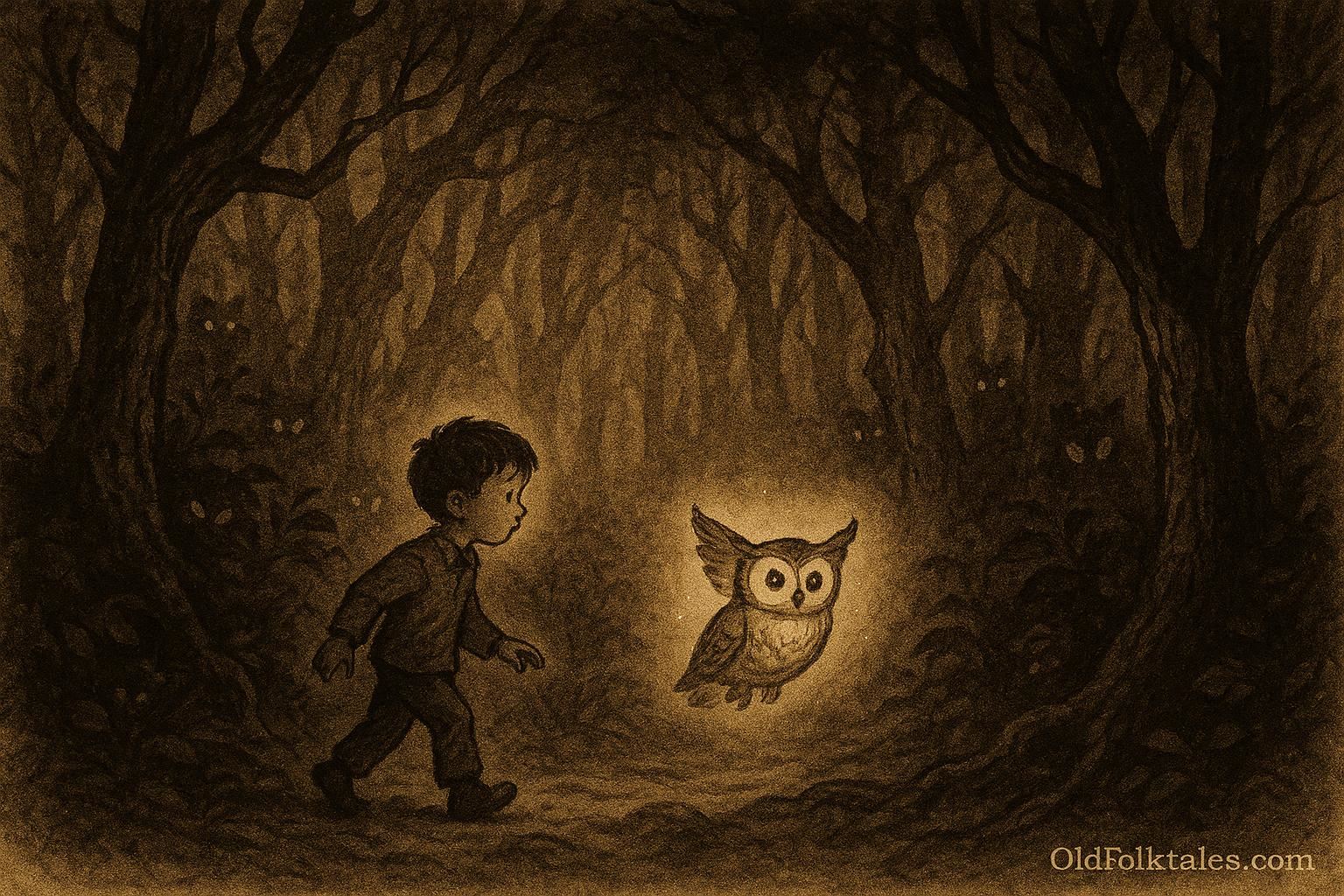
As Diego ventured deeper, a sudden hoot echoed through the trees, startling him. From the shadows, a majestic owl with wide, luminous eyes appeared, its feathers blending seamlessly with the moonlit branches. The villagers had called it the Night Owl, a guardian spirit of the forest, believed to protect the balance of nature and guide the wise.
The owl regarded Diego silently for a long moment, then spread its wings and beckoned him to follow. Though nervous, Diego felt compelled to obey. The forest seemed to shift around him, pathways changing as if alive. One moment, a stream gurgled nearby; the next, a thicket of thorned bushes appeared. The owl led him through illusions and minor hazards, a fallen log, a shallow pit, a cluster of poisonous-looking mushrooms, each obstacle testing his awareness and caution.
Throughout the night, Diego realized that the owl’s guidance was not meant to frighten but to teach. He learned to watch carefully, step lightly, and think before acting. When he stumbled, the owl would hoot softly, reminding him to observe and reflect. By midnight, Diego understood the rhythm of the forest, the gentle sway of branches, the whisper of wind, the sounds of animals moving through the underbrush.
Finally, the owl guided Diego back to the edge of the village, where the first pale light of dawn touched the horizon. Diego bowed to the guardian spirit, grateful for the wisdom imparted. From that day on, he approached the forest with respect and patience, sharing the story with other children. He spoke not of fear, but of balance, of curiosity tempered by prudence, of exploration guided by respect for both the forest and the counsel of elders.
The villagers praised Diego for his tale, and parents used it to teach their children. They reminded them that curiosity is a gift, but without caution, it can lead to harm. Diego himself became a careful observer of nature, helping others understand that knowledge comes not from reckless wandering but from mindful learning.
Discover Mexico’s timeless tales blending Indigenous roots and Spanish tradition
Moral Lesson
Curiosity is valuable, but it must be balanced with prudence, respect for guidance, and awareness of natural boundaries.
Knowledge Check
-
Who is the main character in the story?
Diego, a curious young boy from a rural Mexican village. -
What does the Night Owl symbolize?
The guardian spirit of the forest, representing wisdom, caution, and respect for nature. -
What lesson does Diego learn from the Night Owl?
That curiosity must be tempered with prudence, observation, and respect for guidance. -
Why did villagers warn children about entering the forest at night?
To instill respect for natural boundaries and encourage following the wisdom of elders. -
How does the story blend Indigenous and colonial influences?
It incorporates indigenous spiritual beliefs (the forest guardian) alongside practical moral lessons common in colonial education. -
What is the broader cultural meaning of the tale?
The story teaches children to balance curiosity with caution, reinforcing communal and ecological respect.
Source: Oral village folklore; documented in regional ethnographies of rural Mexico.
Cultural Origin: Mexico (Rural folklore, Spanish Colonial and Indigenous influences)