In a quiet village nestled among rolling hills and fertile fields of central Mexico, there lived a humble farmer who worked tirelessly from dawn to dusk. His days were filled with planting, watering, and tending his crops, yet his harvests were often meager, and life remained a struggle. Still, he took pride in his small plot of land, believing that hard work and respect for the earth would bring rewards.
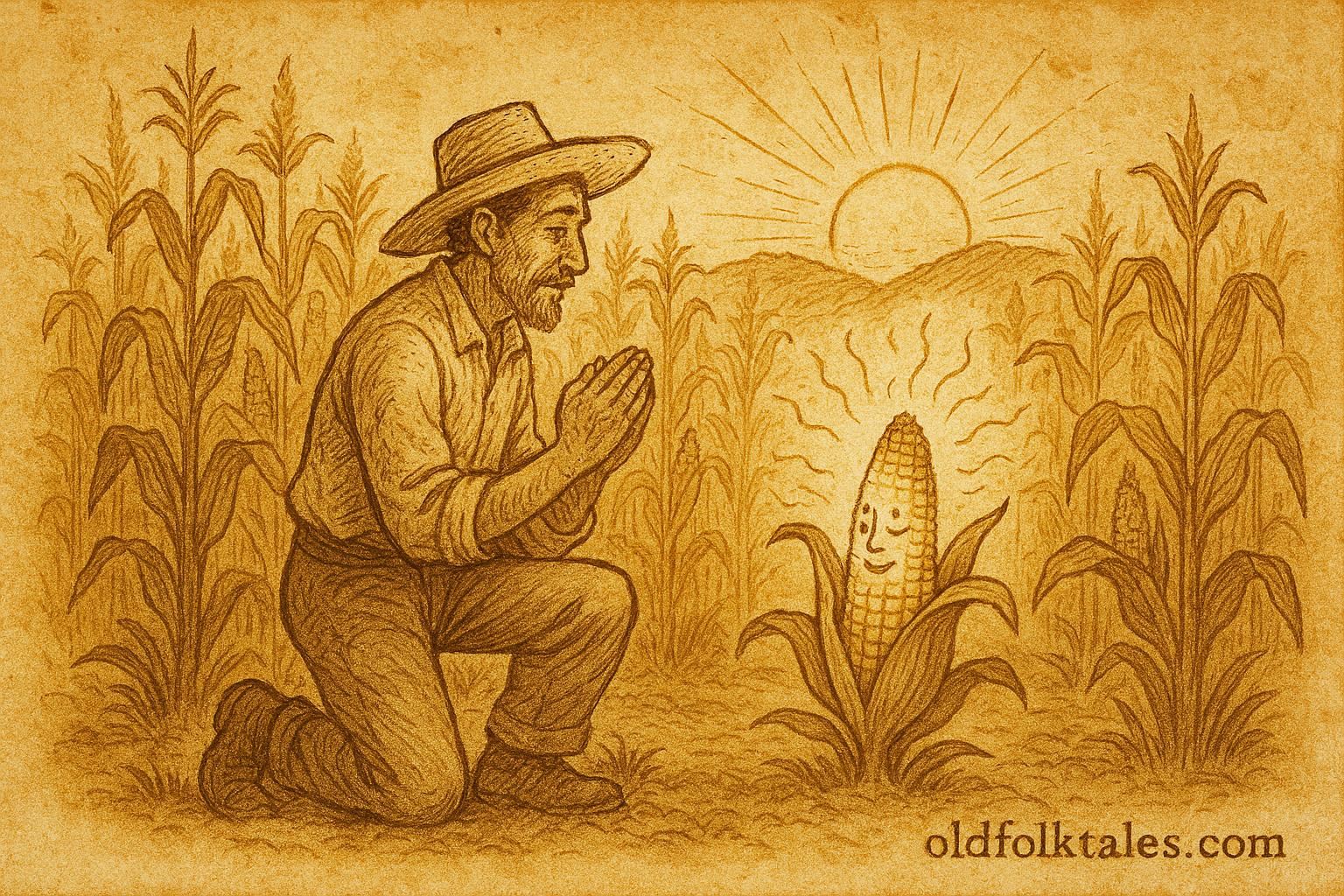
One warm morning, as the farmer inspected his cornfields, he noticed something strange. Among the tall green stalks, one ear of corn quivered as though stirred by a gentle wind, though the air was still. Then, astonishingly, a small, clear voice spoke.
“Care for the earth,” the corn said. “Respect what gives you life, and share generously with others. Ignore me, and hardship will follow.”
The farmer blinked in surprise, unsure if his eyes or ears deceived him. Yet the voice was steady, calm, and filled with a quiet wisdom. Moved by this miracle, he promised to heed its advice.
Following the corn’s counsel, he tended his fields with extra care. He watered the plants at the proper times, removed weeds that threatened to choke his crops, and treated the soil gently, mixing in the compost that nourished the earth. He also shared part of his harvest with neighbors, especially those who were hungry or unable to work their own fields. Word of the miraculous talking corn spread through the village, and people came to marvel at the small but wise ear that spoke of gratitude and care.
Those who ignored the corn’s guidance faced misfortune. A wealthy but greedy neighbor tried to harvest all his crops at once, ignoring the cycles of planting and growth. His soil became exhausted, and his corn wilted before it matured. Others who failed to respect the land found their crops stunted or their livestock sick. Meanwhile, the humble farmer, who listened to the corn and worked with reverence, enjoyed bountiful yields year after year. His family prospered not merely in food and wealth, but in harmony with their neighbors and the land itself.
The talking corn continued to remind villagers of the sacred balance between people and nature. During planting and harvest festivals, families would gather and recount the story to children, teaching lessons of care, patience, and generosity. The maize, central to their diet and culture, became more than food, it became a teacher, a guardian, and a symbol of moral responsibility.
Even years later, when the farmer’s hair turned silver and his hands bore the marks of decades of toil, he would kneel in the field at sunrise, whispering thanks to the corn. And the ear of corn, golden and shining, seemed to nod in quiet approval, a living reminder that respect and gratitude never go unnoticed.
Moral Lesson
This folktale teaches that gratitude, respect for nature, and responsible stewardship bring abundance. True prosperity arises not from greed or neglect, but from care, generosity, and reverence for the earth that sustains us.
Knowledge Check
Q1: Who discovers the talking corn?
A: A poor farmer working in a rural Mexican village.
Q2: What advice does the corn give?
A: To care for the crops, respect the land, and share the harvest.
Q3: What happens to those who ignore the corn’s guidance?
A: They suffer crop failures, misfortune, or hardships.
Q4: How does the farmer benefit from following the corn’s advice?
A: He enjoys bountiful harvests, harmonious community relations, and moral satisfaction.
Q5: What cultural significance does maize hold in this story?
A: It is sacred, central to daily life, and symbolizes sustenance, gratitude, and moral teaching.
Q6: What broader values does the story reinforce?
A: Generosity, patience, respect for nature, and responsible stewardship.
Source: Oral rural tradition; collected in ethnographic studies
Cultural Origin: Mexico (Rural folklore)