Across Chile and Argentina, where old districts meet modern neighborhoods, bridges stretch over rivers, roads, and forgotten ground. By day, they carry traffic and noise. By night, they grow quiet, lit only by scattered lamps and the sound of wind moving across steel and stone. It is on these bridges that drivers speak of La Novia del Puente.
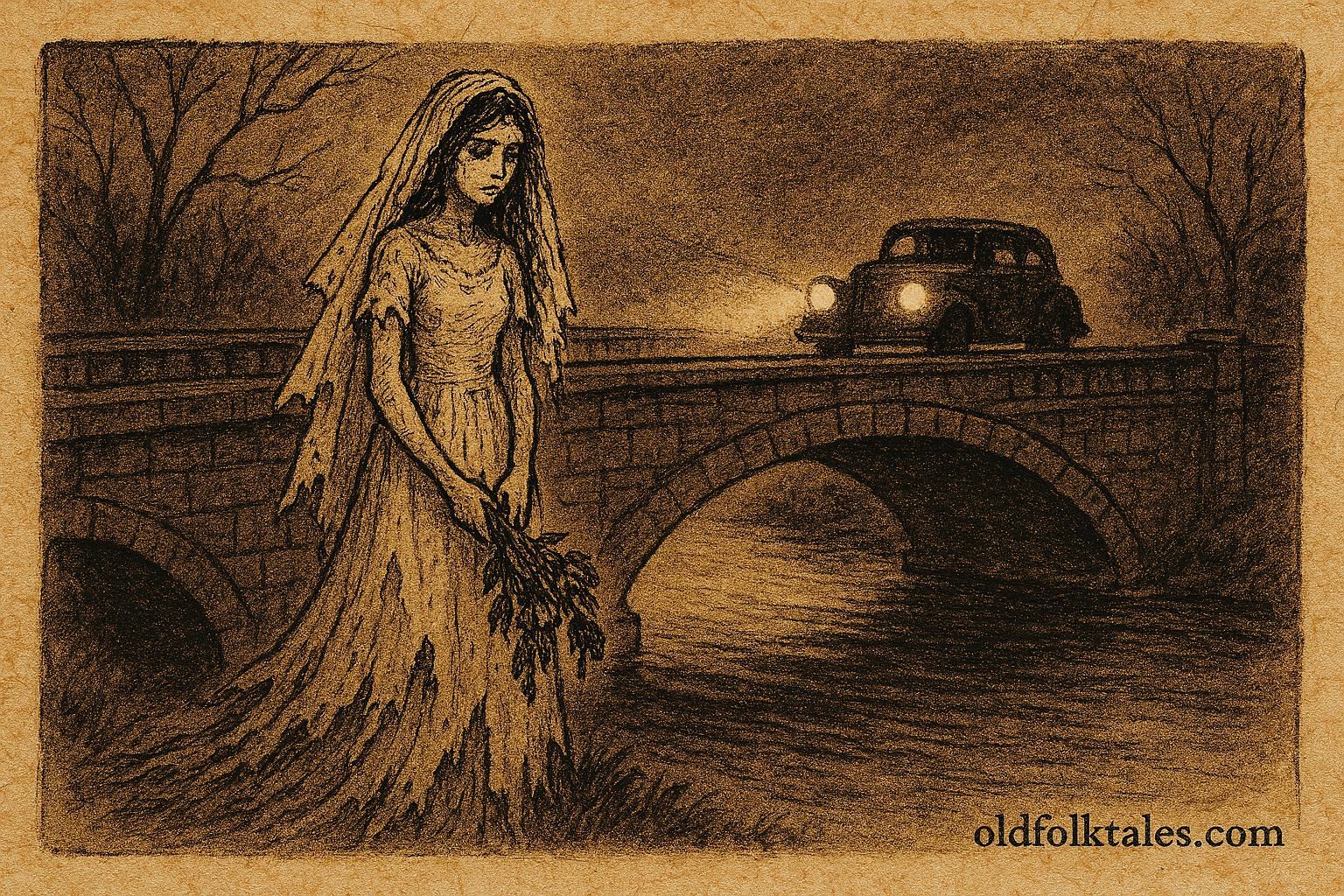
Those who encounter her say the night is always late and the road nearly empty. A lone figure stands near the edge of the bridge, her white dress torn and trailing. She raises a hand gently, not urgently, as though she has been waiting a long time. Her veil hangs loose, and her face is pale but calm.
She asks for a ride home.
Drivers describe her voice as soft and distant, carrying both politeness and sadness. She gives an address nearby—never far, never unfamiliar. There is nothing threatening about her, only a quiet urgency, as if reaching her destination matters deeply.
As the car moves forward and the bridge begins to pass beneath them, the bride starts to speak.
She talks of a wedding that never happened. Of preparations made, vows promised, and a groom who failed to arrive. Her words are not angry. They are heavy with disappointment and confusion, as though she is still trying to understand how everything could end before it truly began.
The air inside the car grows cold.
Some drivers notice that her reflection in the mirror seems faint. Others say her hands rest motionless in her lap, clutching flowers that already look wilted. The scent of old blossoms fills the car, mixing with the damp night air.
When the vehicle reaches the address she provided, the driver turns to her, only to find the seat empty.
The door has not opened. The bride is gone.
Outside, the night feels unnaturally still. Flowers lie on the seat or floor, already browning and lifeless. The cold lingers long after the engine is turned off.
Later, when drivers ask about the address, they learn the same story repeated in different towns. A woman once waited on that bridge for her groom. He never came. Some say he abandoned her. Others say he broke his promise without explanation. What remains constant is her waiting, and her death, whether by despair or misfortune, left deliberately unclear.
Locals say she returns to the bridge night after night, searching for someone willing to listen. She does not seek revenge. She seeks acknowledgment.
In Chile and Argentina, La Novia del Puente is spoken of with sorrow rather than fear. She is not a spirit of rage, but of unresolved heartbreak. Drivers who respond kindly, who listen, who speak gently, say the ride ends quietly, without misfortune. Those who mock or dismiss her report recurring sightings or unsettling dreams.
The bridge becomes her threshold, a place between what was promised and what was denied. And her story survives as a warning passed from driver to driver: words spoken lightly can leave wounds that time cannot erase.
Moral Lesson
This folktale teaches that promises broken through cruelty or neglect leave lasting scars. When vows are abandoned without compassion, the pain may linger far beyond death.
Knowledge Check
1. Who is La Novia del Puente?
A ghostly bride believed to be waiting for a groom who abandoned her.
2. Where does this urban folktale take place?
On bridges in Chile and Argentina.
3. What does she ask passing drivers for?
A ride home.
4. What happens when the car reaches her destination?
She disappears without opening the door.
5. What objects are often left behind?
Wilting flowers and lingering cold air.
6. What lesson does the legend teach?
Broken promises can cause harm that lasts beyond death.
Source: Urban oral tradition
Cultural Origin: Chile & Argentina (Urban folklore)