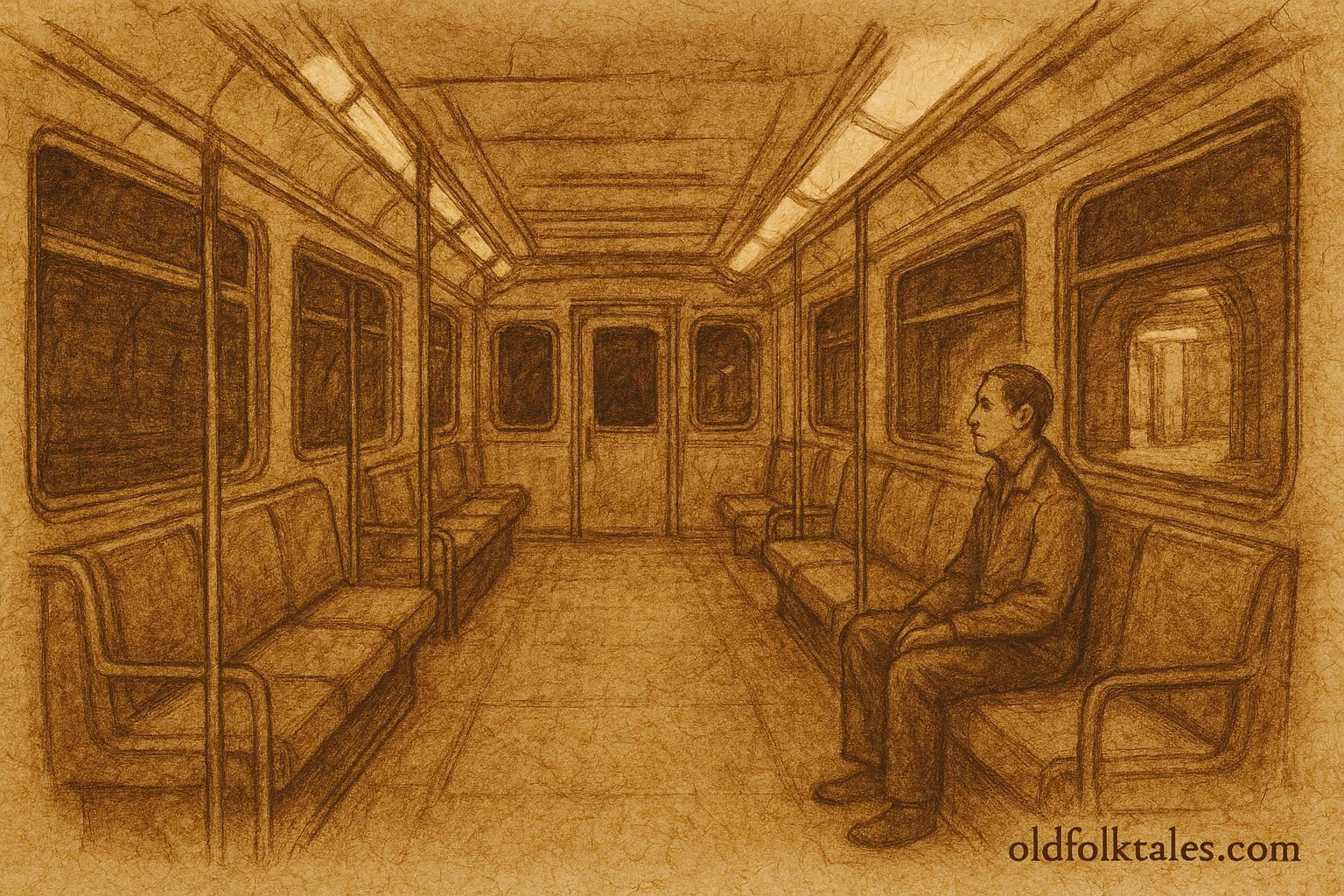
In Mexico City, where millions move through underground tunnels each day, the metro is a world of its own. By daylight, platforms pulse with footsteps and voices. But late at night, as the final trains approach and stations empty, the underground grows eerily quiet. It is during these last hours that commuters speak of El Pasajero del Último Metro.
Those who encounter him say the experience begins without warning. A nearly empty train arrives just before service ends. A handful of tired passengers step aboard, expecting a routine ride home. Then, moments before the doors close, a lone man enters the car.
Discover Mexico’s timeless tales blending Indigenous roots and Spanish tradition
He appears ordinary at first, neatly dressed, calm, and silent. He takes a seat without greeting anyone and sits perfectly still. What unsettles riders is not his appearance, but his gaze. He stares directly at the other passengers, unblinking, his eyes heavy with something difficult to name.
Those who meet his eyes describe an overwhelming wave of sadness. Thoughts become tangled. Time seems to stretch. Some feel suddenly disoriented, as if they have forgotten where they are going or why. Others are struck by a deep loneliness that does not feel like their own.
No one recalls him speaking.
As the train moves through dark tunnels, the silence grows thick. The sound of rails echoes like a heartbeat. Passengers shift in their seats, avoiding his stare, yet feeling drawn back to it against their will. The man does not move. He does not blink. He simply watches.
When the train reaches the final station, the doors open. The man stands, steps onto the platform, and walks calmly toward the exit. Those who gather the courage to follow see him vanish before reaching the stairs. He does not turn corners. He does not fade slowly. He is simply gone.
Security guards later insist nothing unusual occurred. Cameras show an empty platform. Train logs record nothing out of place. The encounter exists only in memory.
Over time, explanations take shape. Some say the man represents those forgotten by the city, the homeless who sleep unseen, the lonely who pass through crowds unnoticed, the suffering ignored by hurried lives. Others believe he is a reflection rather than a ghost, a presence that forces riders to confront the isolation beneath the city’s constant movement.
What is agreed upon is this: those who encounter El Pasajero del Último Metro never forget him. Many report becoming more aware of the people around them afterward. Some say they avoid eye contact less. Others offer help where they once walked past.
In a city that never truly sleeps, the legend survives as a quiet reminder. Beneath the noise and motion, loneliness rides the last train home.
Moral Lesson
This folktale teaches that ignoring human suffering allows loneliness to grow unseen. Awareness and compassion are necessary to prevent isolation from haunting society.
Knowledge Check
1. Who is El Pasajero del Último Metro?
A silent man who appears on the final metro train of the night.
2. Where does this urban folktale take place?
In the underground metro system of Mexico City.
3. What makes his presence unsettling?
His unblinking stare and the sadness it causes in others.
4. What happens when the train reaches the last station?
He steps off the train and vanishes.
5. What do security cameras reveal?
Nothing unusual, deepening the mystery.
6. What lesson does the story convey?
Ignoring loneliness and suffering allows it to haunt society.
Source: Modern urban legend
Cultural Origin: Mexico (Urban folklore)