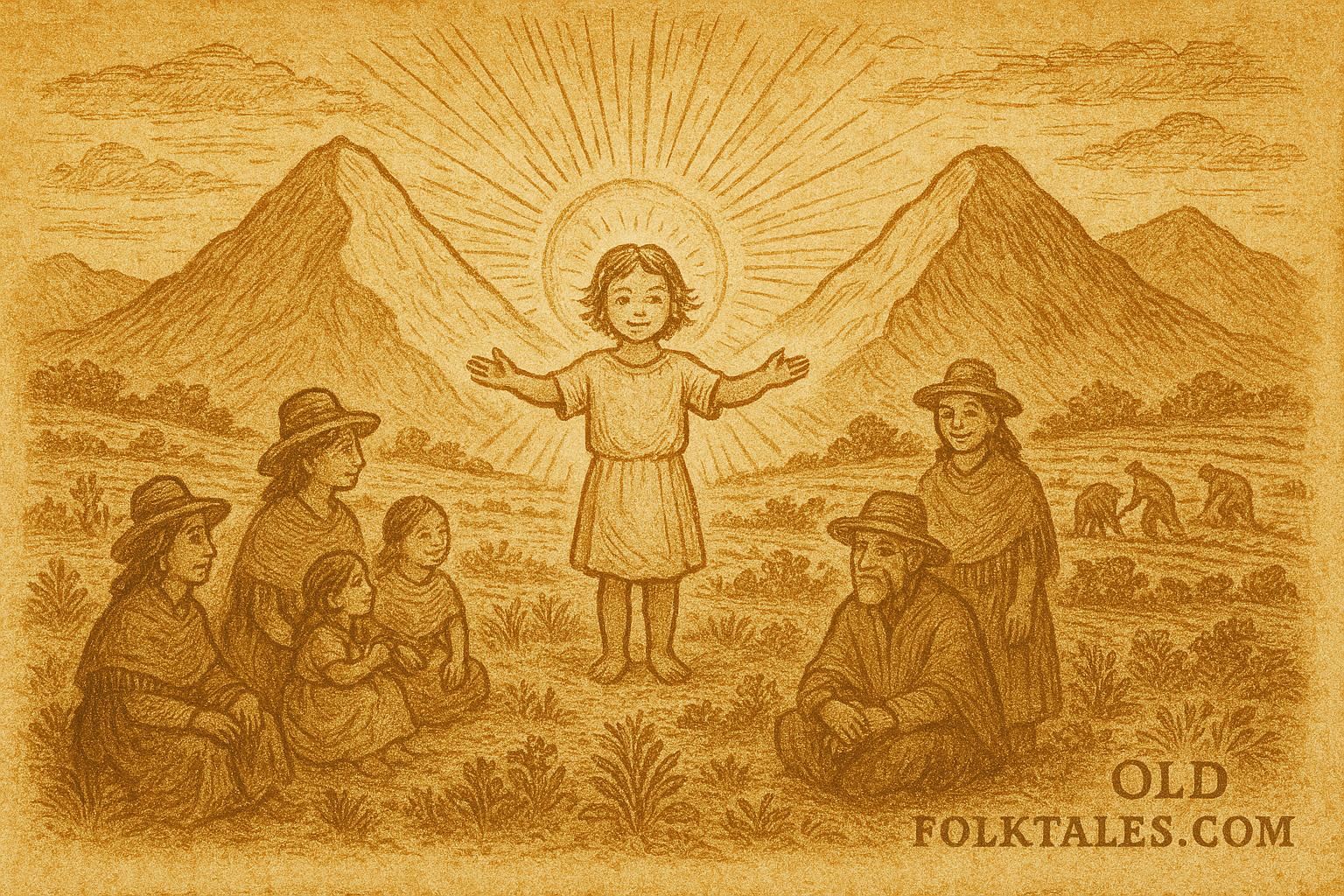
In the high Andes, where mountains rose like ancient guardians and valleys breathed with wind and light, there lived a small colonial community shaped by two worlds. Stone terraces built by Indigenous hands stretched across the hillsides, while a newly raised church bell tower stood at the center of the settlement. Spanish hymns drifted through the air, mingling with older songs sung to the sun and the earth. Though the people shared the same land, they did not always share understanding.
It was during this uneasy time that a child was born under signs unlike any seen before.
On the morning of the birth, the sun rose with unusual brilliance, warming the peaks until they glowed like gold. At the same moment, the earth trembled softly, not in anger, but as if awakening. Crops stood taller overnight, and springs flowed more clearly from the rocks. The elders whispered that the sun had blessed the child, while Indigenous sages said Pachamama herself had opened her arms.
The child was born to parents who stood between worlds, one tied to Indigenous traditions, the other shaped by Spanish colonial life. From the beginning, the child showed no fear of difference. As an infant, they were calm beneath both the ringing of church bells and the rhythmic prayers offered to the land. People soon began to call the child the Child of the Sun and Earth, believing that both forces had shaped their spirit.
As the child grew, so did their influence. Where disputes arose between neighbors, the child listened patiently and spoke with fairness beyond their years. They taught that the land could be honored without rejecting new ways, and that faith need not erase memory. Fields once divided were planted together, and festivals slowly began to include both old dances and new songs.
The child walked freely among all people, sharing bread with settlers, learning ancestral stories from Indigenous elders, and speaking gently to those who feared change. Wherever they passed, illness eased, and quarrels softened. The land itself responded: harvests grew fuller, rains came on time, and the soil yielded generously.
Yet the child never claimed power or authority. When asked who they truly served, they answered only that balance was their purpose. They reminded the people that the sun shines on all without favor, and the earth nourishes every footstep without question.
One season, after many years of peace, the child walked alone into the hills at dawn. By evening, they did not return. The people searched, calling out across valleys and peaks, but found no trace, only fertile soil where the child had last stood, and fields greener than ever before.
Though the Child of the Sun and Earth was gone, harmony remained. The people remembered the lessons taught not through command, but through example. From that time on, the land prospered when respect endured, and suffering returned only when balance was forgotten.
Moral Lesson
This folktale teaches that true peace comes from balance, mutual respect, and coexistence, not dominance. Harmony between cultures, beliefs, and traditions allows both people and land to flourish together.
Knowledge Check
Q1: Who is the Child of the Sun and Earth?
A miraculous child believed to be blessed by both Indigenous and Spanish spiritual forces.
Q2: What does the sun symbolize in the story?
Life, fairness, and shared blessings that reach all people equally.
Q3: What role does the earth play in the folktale?
The earth represents nourishment, memory, and Indigenous spiritual power.
Q4: How does the child bring peace to the community?
By teaching fairness, listening to all sides, and encouraging cooperation.
Q5: Why does the child disappear?
Their role is fulfilled once harmony and balance are restored.
Q6: What is the cultural message of the tale?
Respectful coexistence between cultures leads to lasting peace and prosperity.
Source: Syncretic colonial mythology; oral tradition
Cultural Origin: Andes region, Spanish Colonial folklore (South America)