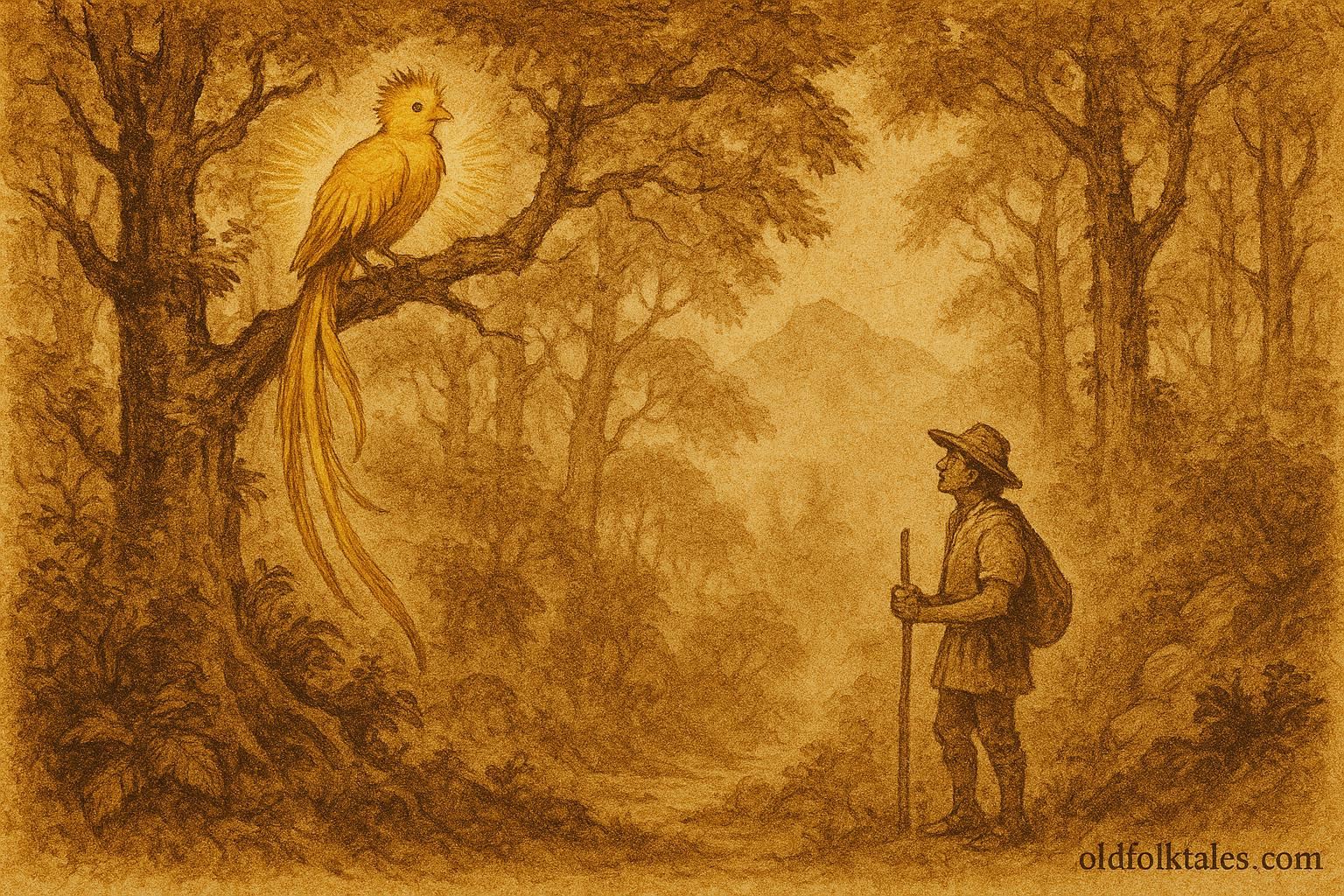
In the highlands of colonial Guatemala, where dense forests climbed toward mist-covered mountains, people spoke with awe of the quetzal, a bird of rare beauty whose feathers shone like burnished gold in the sunlight. Long before Spanish rule, the quetzal had been honored as a sacred creature, a symbol of freedom, abundance, and harmony with the natural world. Even under colonial authority, its image endured in whispered stories and cautious reverence.
In a small village near the forest lived a hunter known not for wealth, but for restraint. He took from the land only what was needed and offered quiet thanks for every gift. One morning, while tracking game along a narrow mountain path, he caught sight of something radiant moving through the trees. Perched on a high branch was a golden quetzal, its feathers glowing against the green canopy like sunlight made living.
Discover the diverse storytelling traditions of Canada — from the icy North to the Maritimes
The hunter stood still, struck by wonder. He did not reach for his weapon. Instead, he lowered it, recognizing the bird as something beyond possession. He watched as the quetzal regarded him calmly, unafraid. When it took flight, the hunter followed at a respectful distance, guided more by curiosity than desire.
Word of the golden quetzal soon spread. Others entered the forest driven by greed, imagining wealth, favor, and status gained through capture. They set traps, shouted commands, and pursued the bird with impatience. Yet the quetzal vanished from their sight each time, slipping through branches and shadows as if the forest itself rejected them.
The hunter returned alone to the mountains, carrying no nets or ambitions. When the quetzal appeared again, it did not flee. Instead, it flew slowly ahead, pausing as if inviting him to follow. The path grew dangerous, steep ravines, loose stone, and hidden drops, but the bird guided him safely through, warning him away from peril with sudden turns and sharp cries.
At last, the quetzal led the hunter to a secluded place where the earth opened into hidden abundance. The treasures there were not merely gold or stone, but fertile land, clear water, and safe passage through the mountains, resources that would sustain life rather than merely enrich one man. The hunter understood the gift as a reward for respect, not ownership.
He returned to the village changed. He shared what he had learned and guided others safely through the land. Those who once sought to capture the quetzal learned that it could never be taken by force. The golden bird was seen only by those who approached with humility and care.
Immerse yourself in Latin America’s stories of passion, transformation, and spirit.
Moral Lesson
This folktale teaches that generosity, respect for nature, and moral integrity invite true fortune. Wealth gained through virtue endures, while greed drives blessings away.
Knowledge Check
1. What does the golden quetzal symbolize?
Wealth, beauty, freedom, and harmony with nature.
2. Why does the hunter not try to capture the bird?
He respects its sacred nature and avoids greed.
3. What happens to those who pursue the quetzal selfishly?
The bird eludes them completely.
4. How does the quetzal reward the hunter?
By guiding him safely and revealing hidden abundance.
5. What dangers does the hunter face?
Treacherous terrain and hidden mountain hazards.
6. What cultural values does the story reflect?
Indigenous reverence for nature blended with colonial moral teachings.
Source: Guatemalan oral folklore; documented in colonial chronicles
Cultural Origin: Guatemala (Spanish Colonial era)