In one highland village where the traditional ways were still carefully maintained, there lived a farmer named Ixbalanque, competent and hardworking, whose fields generally produced well through his diligent labor. He was neither poor nor wealthy, neither particularly generous nor notably stingy, but somewhere in that middle ground where character has not yet been tested by significant temptation or challenge. He participated in communal activities as expected, contributed his share of labor to collective projects, and generally fulfilled his basic obligations to the community.
One year, the community’s ceremonial leaders distributed sacred seeds as they did annually a particular variety of maize that had been preserved for generations, used in important rituals, and considered especially blessed. These seeds were given to each family to plant in the communal fields, where all families would work together tending the crops, and where the harvest would be shared equitably. The distribution was careful, the planting would be ceremonial, and the entire process from seed to harvest would be approached with reverence and collective responsibility.
Click to read all South American Folktales — timeless stories from the Andes to the Amazon.
Ixbalanque received his portion of the sacred seeds perhaps twenty kernels, carefully counted and blessed and outwardly agreed to plant them in the designated communal field as tradition required. But privately, a thought had taken root in his mind, growing like a weed among cultivated plants. These were sacred seeds, particularly blessed, known to produce strong plants. What if he planted them privately, in his own hidden field, where he alone would benefit from their productivity? Why share the harvest from these special seeds when he could keep it entirely for himself and his family?
The more he considered this idea, the more attractive it became. He rationalized his thinking: he had received these seeds, hadn’t he? They had been given to him, placed in his hands. Surely that meant they were his to do with as he pleased. And wasn’t it actually more responsible to plant them in his personal field where he could give them his full, undivided attention rather than in the communal field where care would be diluted among many families? Wouldn’t the seeds actually prosper more under his dedicated individual care than under collective stewardship?
Having convinced himself that his plan was not only acceptable but actually superior to the traditional communal approach, Ixbalanque went to a hidden clearing on the mountainside above the village a small, isolated plot that he had cleared years ago but rarely used. There, in secret, he planted the sacred seeds, speaking none of the proper prayers, involving none of the ceremonial protocols, seeking no blessing from the ceremonial leaders or involvement from the community. He simply placed the seeds in the ground, covered them, and left, planning to return alone to tend them.
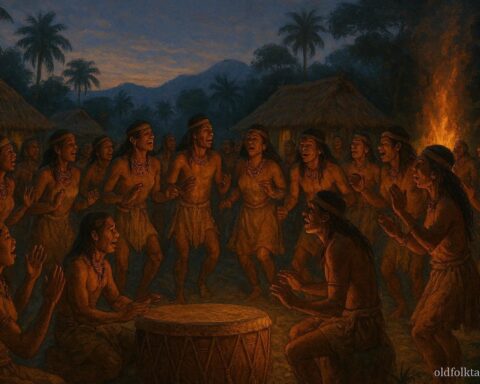
Meanwhile, in the communal fields, the rest of the village planted their portions of sacred seeds together. Families gathered, the ceremonial leaders blessed the planting, prayers were offered to the earth and the ancestors, and the seeds were placed with reverence and collective intention. Throughout the growing season, community members would visit the communal fields together, tending all the crops collectively weeding, protecting young plants from pests, ensuring adequate water reached all areas. The work was shared, the attention was consistent, and the fields received the benefit of many eyes, many hands, many hearts invested in their success.
Ixbalanque returned periodically to his hidden plot to check on his secretly planted seeds. At first, he was delighted the seeds germinated quickly and the plants grew with impressive vigor. In fact, they grew faster and taller than the communal plants, reaching heights that seemed almost unnaturally impressive. The stalks were thick and strong, the leaves broad and green. “I was right,” Ixbalanque thought with satisfaction. “These sacred seeds are prospering even more under my individual care than they would have in the communal field. I will have an exceptional harvest while the others divide their yields into small portions.”
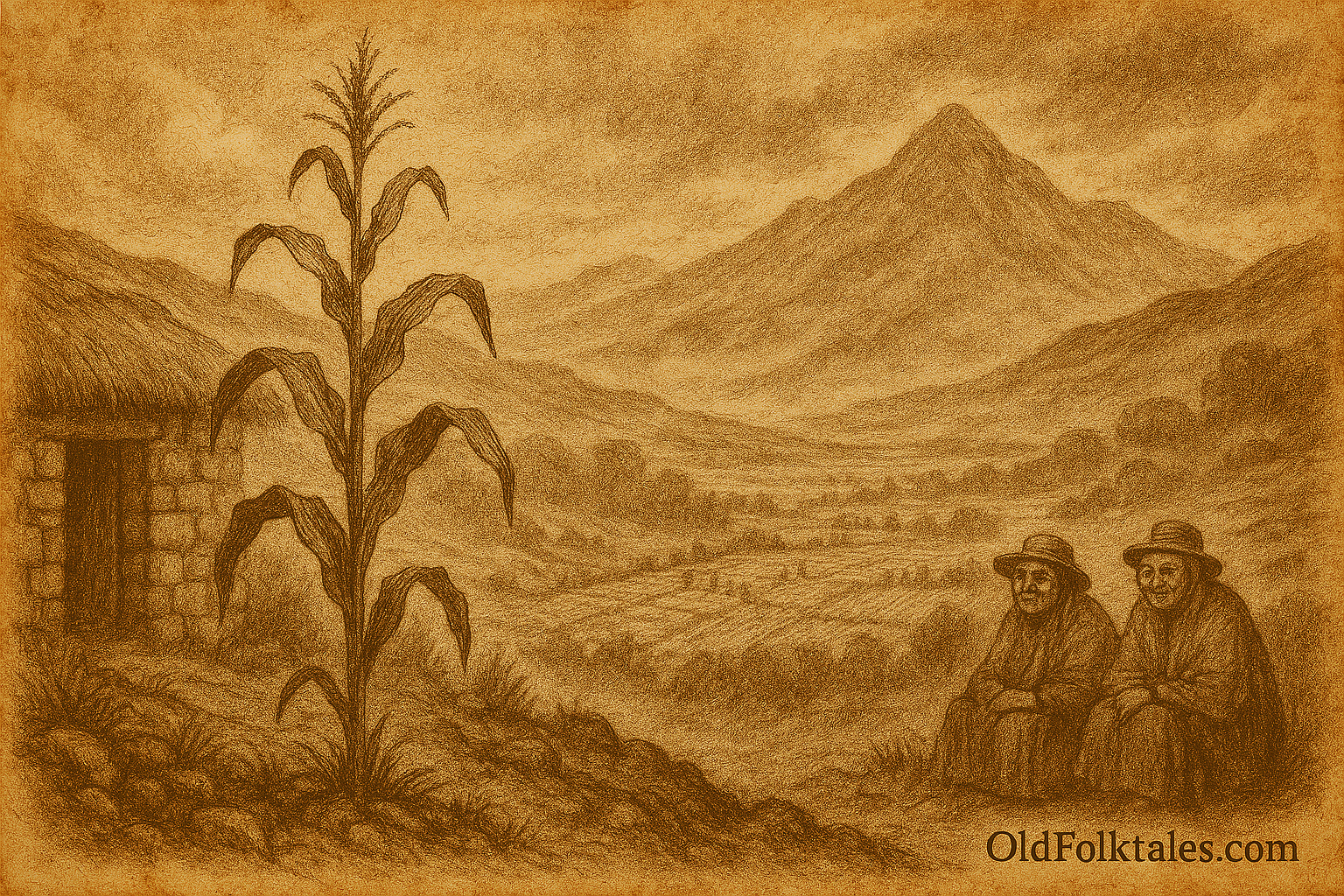
But as the growing season progressed, something strange became apparent. Despite their impressive height and apparent vigor, Ixbalanque’s secretly planted stalks produced no ears of corn. The plants grew tall, taller than any he had seen but remained stubbornly fruitless. Where flowers should have appeared and then developed into ears heavy with kernels, there was nothing. The stalks stood like empty monuments, impressive in appearance but utterly barren, producing not a single grain of actual food despite their towering presence.
Meanwhile, in the communal fields, the sacred seeds planted with proper ceremony and tended through collective care produced abundantly. The plants grew to normal, healthy height and bore multiple ears per stalk, each ear full and heavy with kernels that gleamed like captured sunlight. The harvest was generous, and when distributed among all the families who had participated in the communal care, each household received plenty for both sustenance and ceremonial use.
Ixbalanque, by contrast, harvested nothing from his secretly planted field. The tall, impressive stalks that had promised so much yielded not a single kernel. He had invested time, effort, and hope in his hidden plot, had sacrificed participation in the communal planting to pursue his private scheme, and had nothing to show for it but empty stalks that mocked his presumption.
When the communal harvest was being celebrated and distributed, Ixbalanque’s absence from the earlier planting was noted. One of the elders, a woman whose understanding reached deep into the traditional teachings, approached him privately and asked directly whether he had planted his sacred seeds as tradition required.
Faced with her clear, knowing gaze, Ixbalanque found he could not lie. He confessed what he had done the secret planting, the rationalization that individual care would be superior, the hope for private gain rather than shared harvest. He described the impressive height of the plants and their complete failure to produce any fruit.
The elder nodded slowly, her expression showing sadness rather than anger. “You have learned something important,” she said, “though the learning came through loss rather than success. The sacred seeds are not ordinary seeds that produce simply through technical skill and physical care. They are gifts meant to flourish under specific conditions planted with ceremony, blessed by the community, tended through collective responsibility, and harvested with gratitude to be shared among all. When you separated them from these conditions, when you tried to hoard sacred gifts for private benefit, you broke the essential relationships that allow such seeds to fulfill their purpose.”
She continued: “The impressive height of your plants without fruit is significant it shows that appearance is not reality, that seeming success without genuine substance is empty. Your plants grew tall because the sacred seeds retain power even when misused, but they bore no fruit because sacred resources thrive only through collective care and shared responsibility. You cannot take what is meant to be communal and make it private without destroying its essential nature. The seeds needed the blessing of ceremony, the care of many hands, the intention of shared benefit without these, they could grow but not produce, could reach toward the sky but not fulfill their purpose of feeding people.”
Ixbalanque felt shame settle heavily upon him, but also understanding. He had learned what no lecture could have taught that sacred gifts operate according to different principles than ordinary property, that some things cannot be successfully hoarded or privatized, and that attempting to keep for oneself what is meant to be shared breaks the very conditions that make such gifts fruitful.
The following year, Ixbalanque participated fully in the communal planting. He brought his portion of sacred seeds to the designated fields, joined in the ceremonies with genuine reverence rather than merely going through motions, worked alongside other community members throughout the growing season, and received his share of the abundant harvest with gratitude rather than resentment at having to divide the yield. And he became known not for his earlier selfish attempt but for his willingness to learn from it, to teach younger farmers about the importance of collective care for sacred resources, and to defend communal traditions against those who might be tempted as he had been.
The story of the mountain seed planted alone became a teaching tale, told to remind each generation that sacred gifts whether seeds, knowledge, ceremonies, or communal resources flourish only when approached with proper understanding of their nature. They cannot be successfully hoarded, privatized, or separated from the collective care and shared responsibility that constitute the conditions of their fruitfulness. Impressive appearance without genuine substance is empty, and what seems like individual advantage gained at community expense ultimately benefits no one.
Click to read all Andean Highland Folktales — echoing from the mountain peaks of Peru, Bolivia, and Ecuador.
The Moral Lesson
This K’iche’ Maya tale teaches that sacred resources and gifts meant for communal benefit cannot be successfully appropriated for private gain without destroying their essential fruitfulness. Ixbalanque’s error was treating sacred seeds as ordinary property that could be hoarded and individually controlled, failing to understand that certain gifts flourish only under specific conditions collective care, proper ceremony, shared responsibility, and intention of communal benefit. The story reminds us that in indigenous worldviews, some things are sacred precisely because of their communal nature, and attempting to privatize what is meant to be shared breaks the relationships that make such resources productive.
Knowledge Check
Q1: What is the significance of sacred seeds in K’iche’ Maya agricultural tradition?
A1: In K’iche’ Maya culture, certain seeds particularly varieties preserved for generations for ceremonial use or connection to ancestral practices hold special spiritual significance beyond mere productivity. These sacred seeds are understood not as private property but as gifts entrusted to the community, meant to be shared, planted communally, and cared for through cooperative labor. Their cultivation reflects the K’iche’ understanding that agriculture is sacred relationship requiring proper reverence, reciprocity, and collective responsibility. Sacred seeds are typically stored communally, distributed fairly among families, and planted in fields where multiple community members share responsibility for their care.
Q2: Why did Ixbalanque decide to plant his sacred seeds secretly and alone?
A2: Ixbalanque rationalized that since the seeds had been placed in his hands, they were his to do with as he pleased. He convinced himself that planting them in his private hidden field where he could give them his full, undivided attention would be more responsible than planting in the communal field where care would be “diluted” among many families. He believed the seeds would prosper more under his dedicated individual care than under collective stewardship, and he wanted to keep the entire harvest for himself and his family rather than sharing it through the communal distribution system.
Q3: What happened to the sacred seeds that Ixbalanque planted alone?
A3: The secretly planted seeds germinated quickly and grew with impressive vigor, reaching heights greater than any Ixbalanque had seen actually growing taller and appearing more vigorous than the communal plants. However, despite their impressive appearance, the plants produced no ears of corn whatsoever. Where flowers should have appeared and developed into ears heavy with kernels, there was nothing. The stalks stood tall like empty monuments, barren despite their towering presence, yielding not a single grain of actual food. Meanwhile, the sacred seeds planted communally with proper ceremony produced abundantly.
Q4: How did the elder explain the failure of Ixbalanque’s secretly planted seeds?
A4: The elder explained that sacred seeds are not ordinary seeds that produce simply through technical skill and physical care they are gifts meant to flourish under specific conditions: planted with ceremony, blessed by the community, tended through collective responsibility, and harvested with gratitude to be shared among all. By separating the seeds from these conditions and trying to hoard sacred gifts for private benefit, Ixbalanque broke the essential relationships that allow such seeds to fulfill their purpose. The impressive height without fruit showed that appearance is not reality and that seeming success without genuine substance is empty sacred resources thrive only through collective care and shared responsibility.
Q5: What is the symbolic meaning of plants that grow tall but bear no fruit?
A5: The tall but fruitless plants symbolize that impressive appearance without substance is ultimately empty and useless. They represent how actions or endeavors that seem successful on the surface but violate essential principles cannot produce genuine benefit or fulfill their intended purpose. In the context of the story, they specifically illustrate how sacred resources maintain some power even when misused (thus growing tall) but cannot complete their purpose of nourishing people when separated from proper conditions of collective care and shared intention. The barren stalks embody the emptiness of private gain pursued at the expense of communal good.
Q6: What cultural values about community, sacred resources, and shared responsibility does this Guatemalan highland story convey?
A6: The story embodies K’iche’ Maya values emphasizing that sacred gifts and resources meant for communal benefit cannot be successfully privatized without destroying their fruitfulness, that collective stewardship is not inefficient dilution but essential condition for certain things to prosper, and that proper reverence includes understanding and respecting the communal nature of sacred things. It reflects indigenous understanding that some resources are sacred precisely because of their communal dimension, that attempting to hoard what is meant to be shared violates the relationships that make such gifts productive, and that true prosperity comes through proper stewardship according to gifts’ inherent nature.
Source: Adapted from K’iche’ Maya agricultural oral traditions preserved in highland community narratives and documented in ethnographic studies of K’iche’ farming practices, ceremonial life, and concepts of collective stewardship.
Cultural Origin: K’iche’ Maya people, Guatemalan Highlands, Guatemala