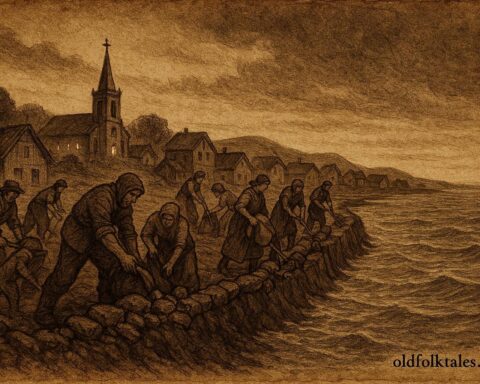
Along the windswept shores of Prince Edward Island, where the red cliffs meet the restless Atlantic, fishermen and traders alike had long relied on sturdy anchors to keep their ships safe in storms and tides. But the old sailors often whispered of a peculiar anchor, one with a mind of its own a sentinel of the sea that could refuse to hold for those who brought dishonesty or greed aboard their vessels.
The story began centuries ago with a merchant named Pierre. He was known for sailing from port to port, trading goods across the Maritime provinces. Though clever and shrewd, he was often ruthless. He would take advantage of traders, pilfer cargo when no one was watching, and always believed that the sea could be controlled by skill alone.
One autumn morning, Pierre prepared his ship for a voyage. He had collected valuable cargo, much of it promised to others but not yet delivered. Gold coins, dried fish, and furs filled the hold. The locals watched him load the stolen goods, shaking their heads. The tide was rising, and the sky was a pale gray, the clouds heavy with wind.
Immerse yourself in Latin America’s stories of passion, transformation, and spirit.
Pierre laughed at their warnings. “The sea is mine to command,” he said. “Anchors and tides obey me, not superstition.”
As he sailed toward deeper waters, he came to a familiar bay where he always anchored before heading to the open sea. He dropped his anchor into the water, expecting it to bite into the seabed as always. But it did not.
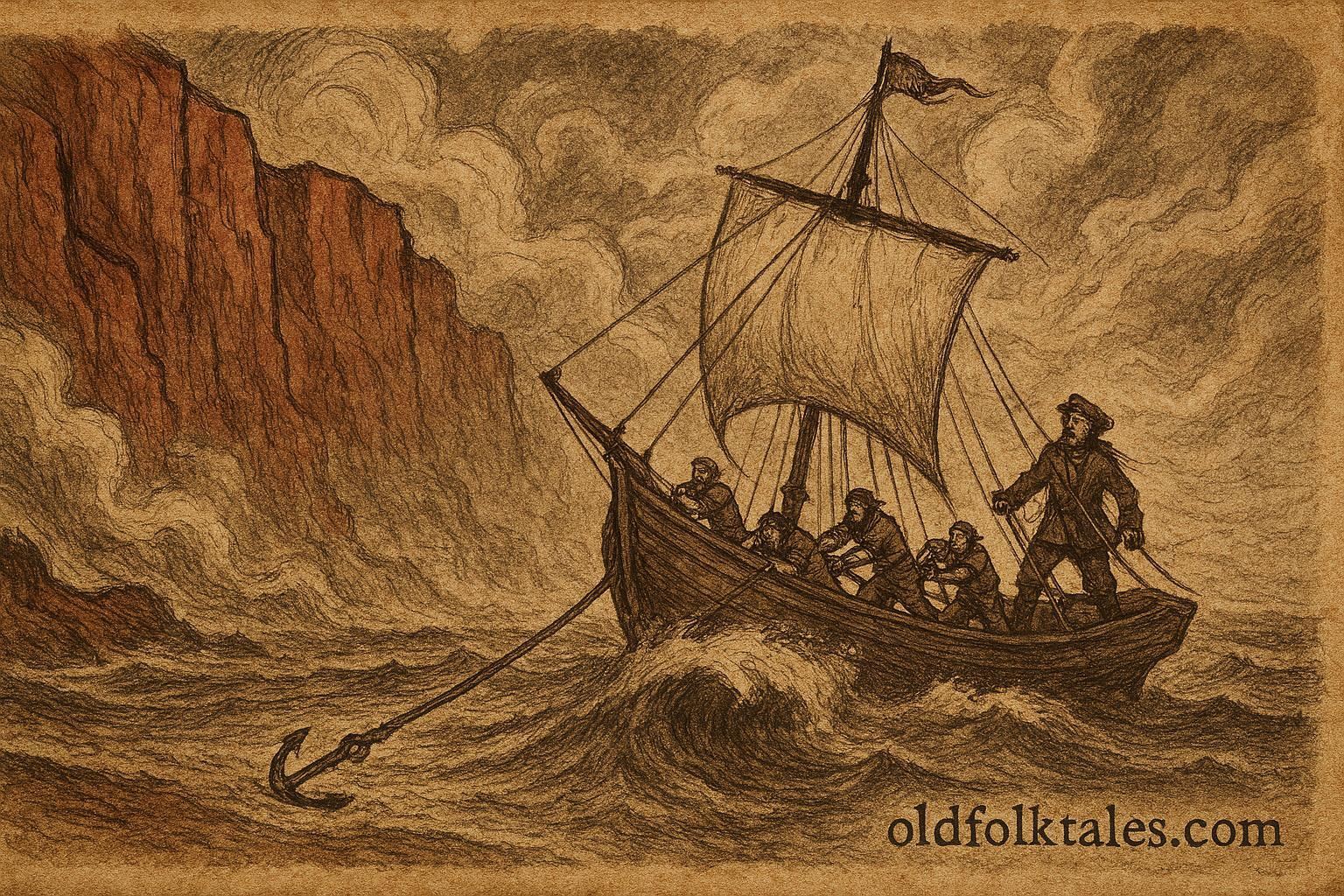
The anchor rattled and slid along the ocean floor. Pierre tugged the ropes, shouted orders to his crew, and tried again, but the heavy iron would not hold. Waves began to rock the ship. The crew looked at one another nervously, for they had heard the legends of the anchor that refused dishonest hands.
The merchant’s pride turned to anger. “It is the rocks!” he shouted. “The current! Nothing more!” He ordered the sailors to weigh the anchor and try again. But no matter where they dropped it, the anchor slid or spun uselessly. The ship drifted perilously close to the cliffs.
An old sailor, one who had worked these waters longer than most, spoke quietly: “Captain, the anchor is alive in the ways we do not see. You have stolen, you have cheated, and it will not rest for such hands.”
Pierre scoffed. “Superstition! I fear no metal or sea.”
That evening, a sudden fog rolled in, thick and cold. The waves grew restless. The anchor dragged dangerously. Pierre’s ship lurched. Each time they tried to stop, the anchor refused to grip. Night fell, and with it, the full force of the Atlantic storm.
In desperation, Pierre ordered the stolen cargo thrown overboard. Furs, crates of coins, barrels of dried fish were cast into the waves. The anchor finally caught hold, and the ship steadied. By morning, the sky cleared, and the sea calmed, but the lesson had been seared into the minds of all aboard.
From that day forward, sailors treated the sea with humility. They did not overload their ships with goods that were not theirs, and they respected every anchor and tide as if alive. Parents told their children the story of the anchor that refused dishonest hands, teaching them that the sea could see more than human eyes, judging actions when no one else could.
The anchor, it was said, still rests somewhere in the bay. Some claim it has been passed from ship to ship, refusing only those who sail with deceit in their hearts. Others say it returns to the seabed beneath the waves, waiting patiently for the day it will remind another of the importance of honesty.
And so, the waters around Prince Edward Island are not only treacherous for their storms and rocks, but also because they are watched. Those who sail lightly, with respect, are granted calm seas and safe anchorage. Those who attempt to deceive the tides may find their anchor will not settle, leaving them at the mercy of the ocean.
Moral Lesson
The sea does not reward greed or deceit. Even tools designed for security like an anchor to reflect moral accountability. Respect, honesty, and integrity are as essential as skill in navigating life’s challenges. Dishonesty may be temporarily profitable, but consequences are inevitable, and justice can come from forces unseen.
Knowledge Check
- Why did Pierre’s anchor refuse to hold?
Because he carried stolen and dishonestly acquired goods. - How did the crew respond to the anchor’s behavior?
They were afraid and began to realize the sea might judge dishonesty. - What action finally allowed the ship to stabilize?
Pierre threw the stolen goods into the sea, showing accountability. - What broader lesson does the story convey?
That dishonesty invites consequences, and moral behavior ensures safety. - How is the anchor described in folklore terms?
As a living object that judges the character of the sailor. - What impact did this event have on local sailors?
They became more careful, respecting both the sea and ethical practices.
Source:
Adapted from Parks Canada maritime heritage notes and Prince Edward Island Archives.
Cultural Origin:
Maritime folklore, Prince Edward Island.