Along the wide rivers of Quebec, ferries once served as lifelines between distant settlements. Before bridges spanned the water and roads were firmly marked, travelers depended on small crossings guided by memory, experience, and trust. Fog often rolled in without warning, snowstorms erased familiar paths, and rivers became places of both passage and peril.
It was near one such crossing that people began to speak of a lantern that appeared when all other light failed.
They called it the Lantern of the Lost Ferry.
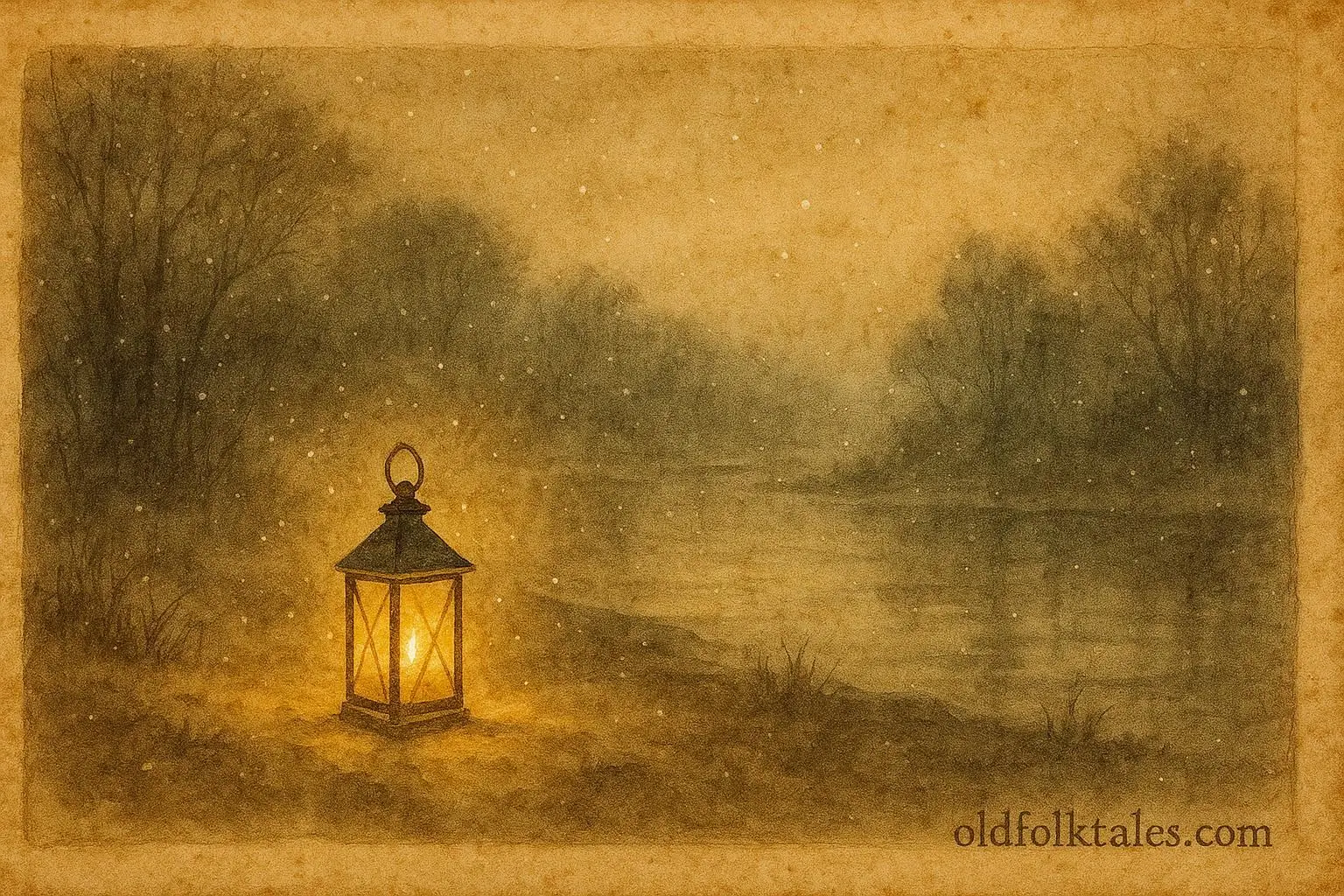
The ferry itself had vanished generations earlier. Some said it was claimed by floodwaters. Others believed it had simply been abandoned when trade routes changed. Its landing posts rotted away, and the path leading to it grew over with brush. Yet on certain nights, when fog pressed low against the water or snow fell so thick that sound itself seemed muffled, a single lantern would glow near the riverbank.
Those who saw it never forgot the sight.
The lantern did not flicker wildly like a flame caught in wind. Instead, it burned steady and calm, casting a warm circle of light that cut through darkness. It appeared only when travelers were truly lost, and it vanished as quietly as it arrived.
Explore the ancestral legends of Canada, Mesoamerica, and South America’s Indigenous tribes.
One winter evening, a merchant named Pierre found himself caught in a sudden storm. He had traveled the river route many times, confident in his sense of direction. But snow fell faster than expected, and the familiar bend in the river disappeared beneath drifting white. Pierre’s horse slowed, uneasy, and Pierre realized he no longer knew where he was.
He stopped, listening. The wind carried no sound but its own howl.
Just as panic began to take hold, Pierre noticed a glow ahead. At first, he thought it was a reflection of moonlight, but the glow grew warmer and steadier as he approached. There, near the water’s edge, stood a lantern mounted on a simple wooden post.
Pierre hesitated. He had heard stories of lights that misled travelers, drawing them into danger. But something about this lantern felt different. It did not beckon or sway. It simply waited.
Trusting his instinct, Pierre guided his horse toward it. As he drew closer, the fog thinned, revealing the outline of the old ferry path. Following the lantern’s glow, Pierre reached safe ground where the river narrowed and shelter stood nearby. When he turned to look again, the lantern was gone.
By morning, the storm had passed. Pierre returned home shaken but unharmed. When he told others what he had seen, elders nodded knowingly. They said the lantern had saved him, as it had saved many before.
Over time, stories accumulated. A young woman returning late from visiting family was guided through thick fog by a floating light that remained just far enough ahead to follow. A group of woodcutters lost near the river heard no voices but saw the lantern appear precisely when they reached the wrong bank, steering them away from thin ice. A child separated from his parents followed the glow until familiar ground appeared.
Yet not everyone who saw the lantern was helped.
A man once tried to follow it while shouting loudly and moving carelessly, ignoring the river’s dangers. The lantern faded, leaving him confused and frightened. He was found the next day, exhausted but alive, having learned a lesson he never forgot.
People came to understand that the lantern responded not to desperation alone, but to vigilance. Those who remained alert, respectful, and willing to follow quietly were guided. Those who rushed or mocked the warning light were left to face the river’s risks alone.
Some believed the lantern was the spirit of a ferryman who had drowned long ago, continuing his duty even after death. Others said it was the memory of the ferry itself, refusing to let travelers suffer where it once provided safe passage. Elders taught that rivers remember those who respect them, and the lantern was proof of that memory.
As years passed, bridges replaced ferries, and roads replaced trails. Fewer people traveled the old river paths, and sightings of the lantern became rare. Still, during especially harsh winters or heavy fog, someone would return with a quiet story of a warm light appearing just when all seemed lost.
One such story came from an elderly woman who had lived her entire life near the river. Late one evening, she went searching for a neighbor who had not returned home. Fog had settled thickly, and visibility was poor. She carried no lantern of her own, trusting familiarity. When she realized she was disoriented, fear crept in.
Then she saw it.
The lantern glowed gently ahead, guiding her not only back to safety, but toward the missing neighbor, who was found unharmed but shaken. The light lingered until both were safe, then vanished into the mist.
After that night, the woman placed a small wooden lantern near her window each winter, not lit, but ready, as a sign of gratitude.
Today, the old ferry path is barely visible, and many dismiss the lantern as legend. But those who travel near the river at night know better. They move carefully. They listen. And when fog thickens or snow begins to fall, they remember the stories.
Some lights are meant to be followed. Others are meant to test judgment. The Lantern of the Lost Ferry does neither loudly. It simply appears when needed, offering guidance to those willing to see it.
Moral Lesson
Guidance often appears quietly and must be met with awareness and respect. Those who remain vigilant and humble in uncertain moments are more likely to find safety, while those who rush or ignore subtle warnings invite danger. Protection is often offered not through force, but through calm attention and trust.
Knowledge Check
- What is the Lantern of the Lost Ferry?
A mysterious guiding light that appears near rivers. - When does the lantern usually appear?
During fog, snow, or moments of disorientation. - Who is guided by the lantern?
Travelers who remain calm, attentive, and respectful. - Why does the lantern fade for some people?
Because they ignore caution or act recklessly. - What might the lantern represent?
A protective spirit or memory of safe passage. - What lesson does the lantern teach?
That vigilance and humility lead to protection.
Source: Folklore du Québec Archives; Canadian Museum of History.
Cultural Origin: French-Canadian folklore, Quebec.