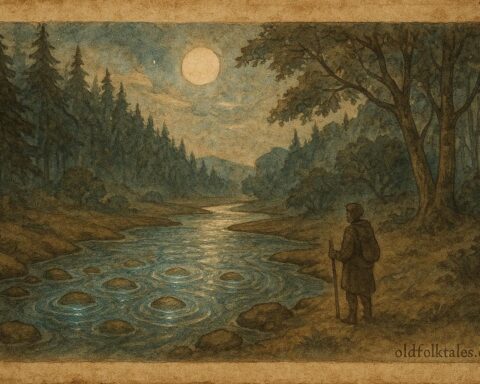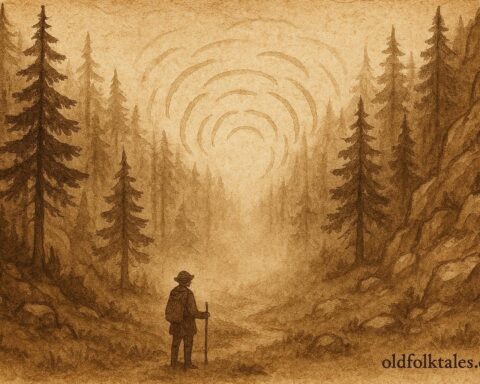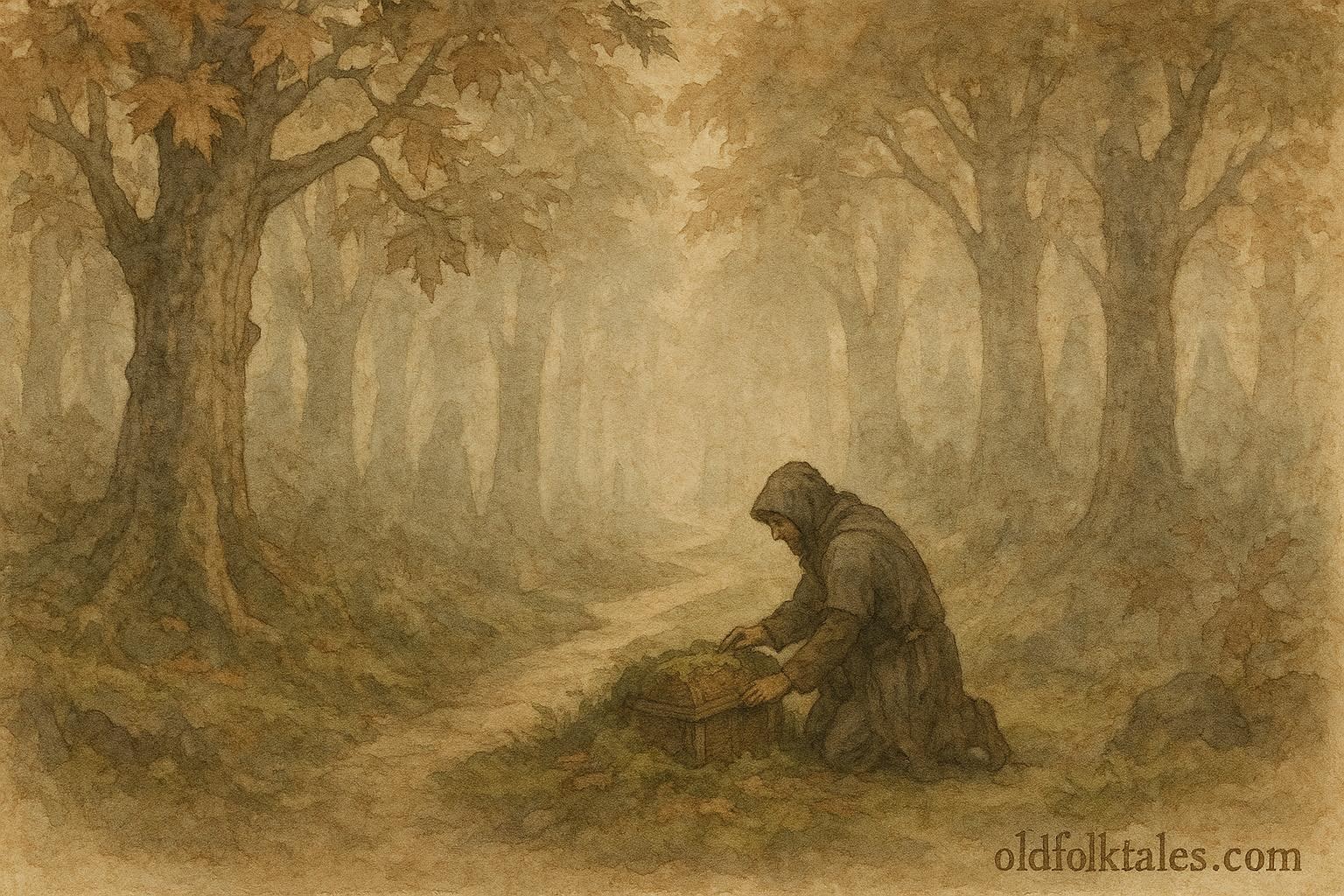
Long before wide roads and towns spread across Quebec, an ancient trading path wound quietly through forests and river valleys. This path, known among travelers as the Iroquoian Path, was not merely a route for trade. It was a living passage shaped by countless footsteps, whispered agreements, and unseen guardians. Elders believed spirits watched over it, ensuring that those who walked with respect were protected, while those driven by greed would face consequences.
One autumn evening, a lone traveler set out along this old path. He was a modest man, carrying little more than a pack of supplies and a walking staff worn smooth by years of travel. He had heard stories of hidden caches along the route, supplies said to be left behind by spirits to aid the weary or reward the honorable. Many dismissed these stories as superstition, but others spoke of them in hushed tones, warning that such gifts were never meant to be taken lightly.
As the traveler walked, the forest grew dense and quiet. Leaves crunched beneath his boots, and the scent of damp earth filled the air. At dusk, he noticed an unusual marking on a tree. It was an old symbol, carved long ago, nearly erased by time. Remembering the stories, he felt a chill run through him. The elders had said such markings pointed to places where the spirits had once intervened.
Explore the ancestral legends of Canada, Mesoamerica, and South America’s Indigenous tribes.
Curiosity pulled him off the path. Beneath a fallen cedar, half buried in moss and leaves, he found a small wooden chest. Its surface was weathered but intact, and no lock held it shut. The traveler’s heart pounded as he opened it. Inside were finely crafted tools, bundles of dried food, and a pouch heavy with coins. This was no ordinary cache. It was more than he had ever seen in one place.
At once, two thoughts battled in his mind. One urged him to take everything and change his life forever. The other reminded him of the warnings, that these caches were not gifts for the greedy, but tests of character. The forest around him felt suddenly alive. The wind whispered through branches, and the shadows seemed to shift.
The traveler sat beside the chest for a long time. Hunger gnawed at him, and his boots were worn thin. He needed food and supplies to survive the coming winter. Carefully, he took only what he required. A small portion of food. A single tool to replace a broken one of his own. He left the coins untouched and closed the chest gently, covering it once more with leaves and moss.
That night, he camped nearby. As he slept, he dreamed of figures moving through the forest, silent and watchful. They did not speak, but their presence was strong. When he awoke, his fire still burned warmly, though he was certain he had not fed it. His pack felt lighter than expected, yet everything he needed was there.
The next day, the path ahead seemed easier. Fallen trees no longer blocked his way, and the weather remained calm. When he reached a river crossing, he found a canoe waiting at the shore, though no one was in sight. He crossed safely and continued his journey, increasingly convinced that unseen forces guided him.
Farther along the path, he met another traveler, one who walked with hurried steps and restless eyes. This man spoke eagerly of treasures hidden along the route. He claimed to have found a chest like the one beneath the cedar but had taken everything it contained. He laughed as he described his good fortune, boasting of the wealth he now carried.
Before parting ways, the first traveler noticed something strange. The second man’s pack was torn and heavy, yet his face showed worry rather than joy. He complained of aches, of tools breaking unexpectedly, and of hearing whispers at night. Soon after, they separated, each continuing in opposite directions.
Days later, the first traveler reached a village. He traded fairly, shared stories, and was welcomed warmly. The small tool he had taken proved invaluable, earning him honest work and shelter. Though he had not taken riches, he found stability, respect, and peace.
Meanwhile, rumors spread of a man found wandering near the old path, exhausted and penniless. His coins had vanished, his food spoiled, and his tools turned useless. Some said the spirits reclaimed what was taken without permission. Others said the path itself rejected him.
Years passed, and the traveler grew old. When asked about the hidden caches, he spoke carefully. He did not deny their existence, nor did he encourage others to seek them. Instead, he said the path rewarded only those who understood that true wealth was not meant to be seized.
Even today, some claim that caches still lie hidden along forgotten trails in Quebec. Whether they are real or not matters less than the lesson they carry. The spirits of the path, like the land itself, remember how they are treated. Those who walk with restraint find what they need. Those who walk with greed lose far more than they gain.
Moral Lesson
Greed blinds the heart, but restraint brings lasting reward. True gifts are given only to those who take no more than they need.
Knowledge Check
- What is the Iroquoian Path in the story?
An ancient trading route watched over by spirits. - What does the hidden cache represent?
A test of character and restraint. - Why did the traveler take only a small portion?
He respected the spirits and feared the consequences of greed. - What happened to the greedy traveler?
He lost everything he had taken and suffered misfortune. - How were the spirits shown without appearing directly?
Through dreams, protection, and subtle guidance. - What lesson does the story teach readers?
True reward comes from restraint, not excess.
Source: Canadian Encyclopedia; Folklore du Québec.
Cultural Origin: French Canadian folklore, Quebec.