In a small village during the Spanish colonial period in Mexico, life revolved around the land. The farmers rose with the sun, tilled dry soil with worn tools, and depended on modest harvests to feed their families. Their lives were shaped by seasons, weather, and the demands of colonial rule, which reached even the most remote communities through officials sent to collect taxes for the crown.
Among these officials was a tax collector whose reputation spread quickly. He was known not for fairness, but for greed. Rather than collecting reasonable levies, he demanded excessive payments far beyond what the struggling farmers could afford. He showed little concern for drought, poor harvests, or hunger. To him, numbers mattered more than people.
Explore French-Canadian legends and First Nations myths in our Canadian Folktales collection
Each season, the villagers gathered their produce with worry in their hearts, knowing the tax collector would take more than his share. Some farmers sold tools or livestock to meet his demands. Others went hungry. Fear kept them silent, for resisting colonial authority often led to punishment.
Among them lived a farmer known not for strength or wealth, but for his sharp mind. He listened carefully to the complaints of his neighbors and observed the tax collector’s habits. He understood that open defiance would bring trouble, but cleverness might succeed where force could not.
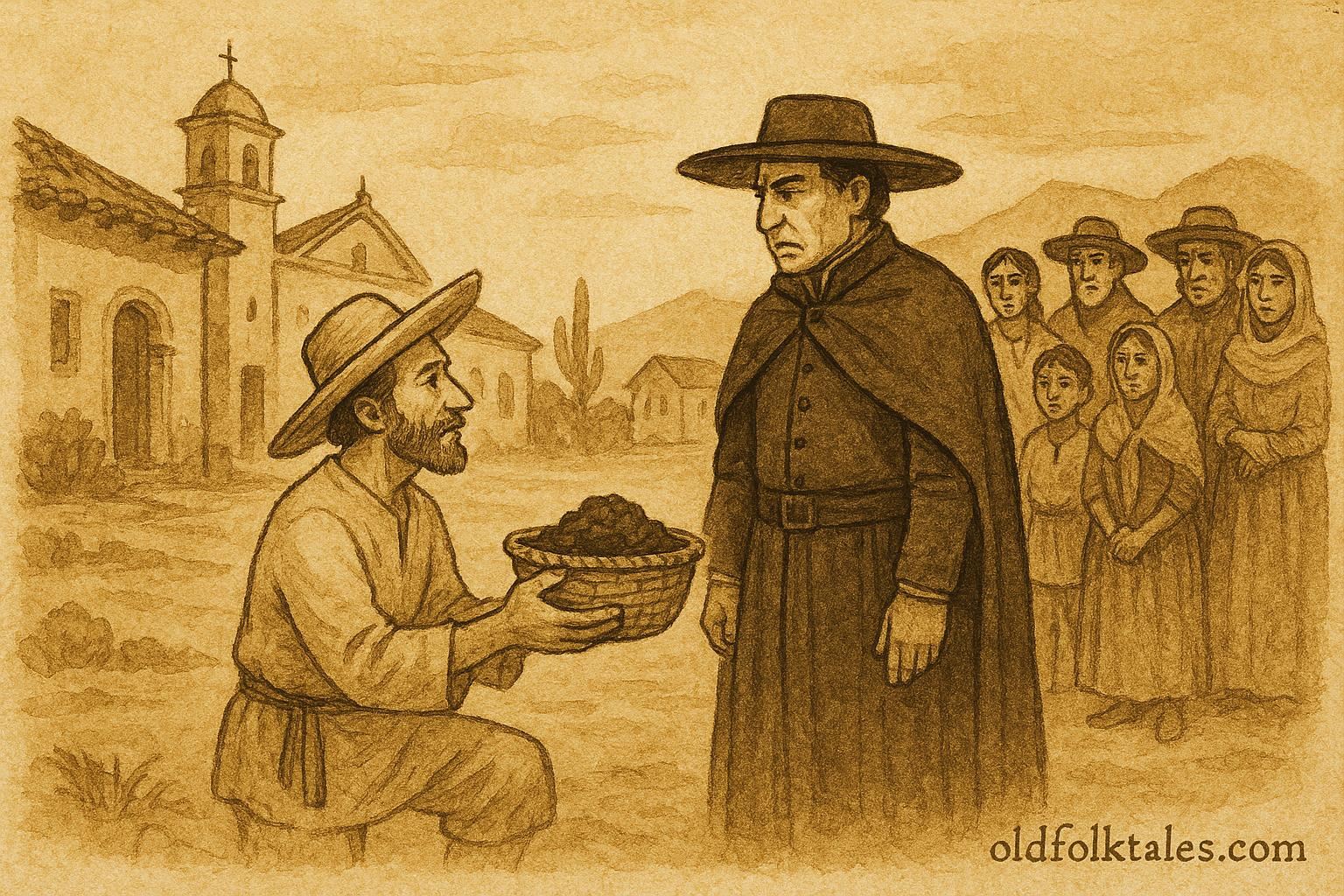
When the time came once again to pay taxes, the farmers assembled with baskets of corn, beans, and grain. The tax collector stood watching, measuring, and demanding more. When the clever farmer’s turn arrived, he stepped forward carrying a heavy basket covered with cloth.
The tax collector smirked, expecting produce like the rest. But when the cloth was lifted, the basket revealed nothing but mud—dark, heavy, and damp.
Angered, the tax collector accused the farmer of mockery and deception. Calmly, the farmer bowed and explained that the basket was a symbolic tribute to the crown. The mud, he said, came from the very land that sustained the village. Without it, there would be no crops, no wealth, and no taxes at all. It represented the foundation of all that the crown claimed.
The explanation confused the tax collector. The farmer spoke respectfully, using the language of loyalty and symbolism. The villagers watched in silence, unsure whether cleverness would protect him or bring punishment.
The tax collector searched for a way to accuse the farmer of wrongdoing, but he found none. The basket had been presented openly, the tribute explained clearly, and no law specified what form payment must take. Unwilling to expose his own excesses or appear foolish before the villagers, he reluctantly accepted the basket of mud.
The moment passed, but its impact did not. The tax collector became cautious, aware that his authority had limits. He knew now that the villagers were not as powerless as he believed.
Later, the clever farmer approached the tax collector again, not with defiance, but with reason. He spoke on behalf of the village, explaining their struggles and proposing fairer terms that would still satisfy the crown without destroying the community. Perhaps embarrassed by his earlier defeat, or wary of further public challenge, the tax collector agreed to reduce the excessive demands.
Word of the event spread quickly through the village. The farmers felt a renewed sense of unity and hope. They learned that intelligence, creativity, and solidarity could protect them even under unjust systems.
The clever farmer never claimed glory. He returned to his fields as before. But his story endured, reminding future generations that justice can be defended through wisdom, and that communities are strongest when they stand together.
Moral Lesson
This folktale teaches that creativity and intelligence can overcome corruption. Justice is strengthened when individuals act not only for themselves, but for the good of their community.
Knowledge Check
Q1: Who are the main characters in the story?
A: A clever farmer and a greedy tax collector in colonial Mexico.
Q2: What problem do the villagers face?
A: Excessive and unfair taxes imposed by colonial authority.
Q3: What is the farmer’s clever strategy?
A: He presents a basket of mud as symbolic tribute to the crown.
Q4: Why does the tax collector accept the mud?
A: He cannot prove deceit and fears exposing his own greed.
Q5: What does the mud symbolize in the story?
A: The land as the true source of wealth and livelihood.
Q6: What cultural theme does the tale reflect?
A: Resistance to injustice through wit and communal solidarity.
Source: Spanish colonial oral tradition; collected in early moral narratives.
Cultural Origin: Mexico (Spanish Colonial period)