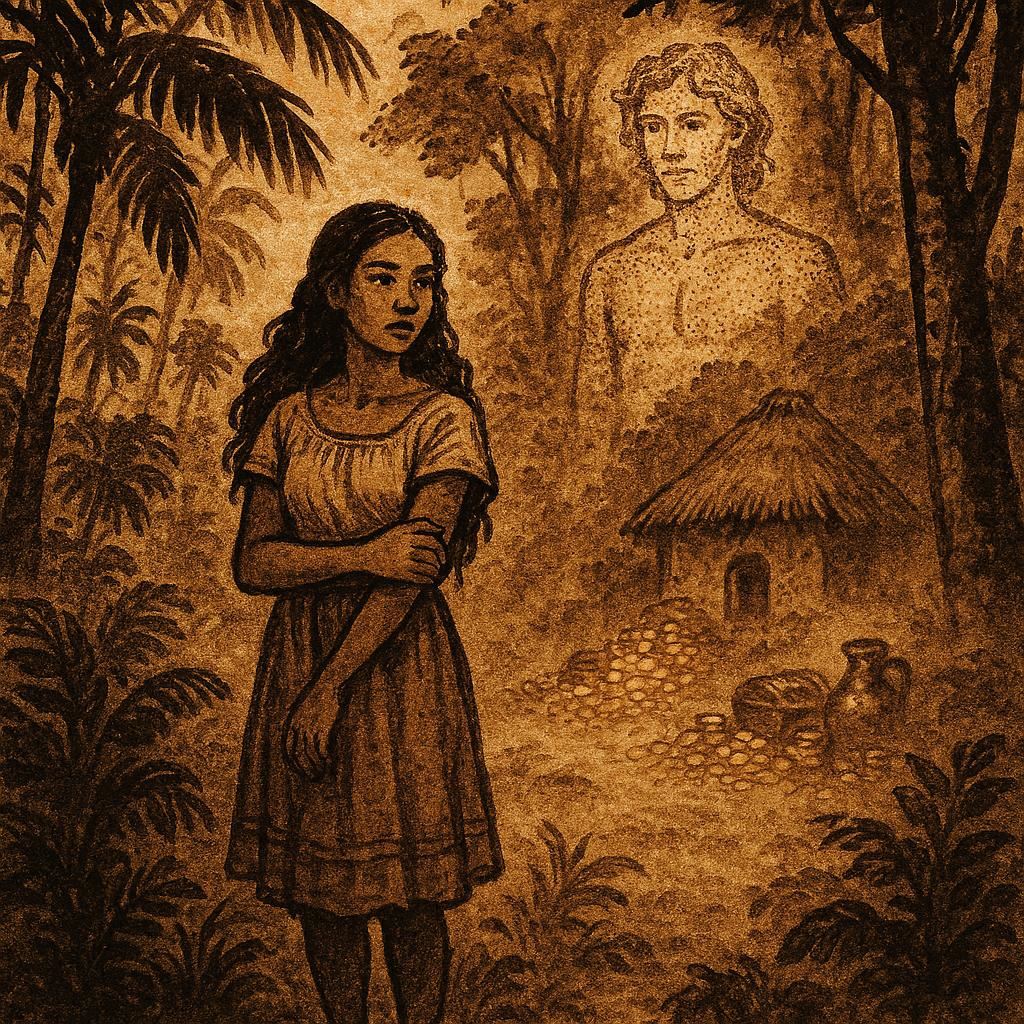
In a lush Caribbean village, where forests whispered secrets to the wind and rivers shimmered under the sun, there lived a woman named Alika. She was admired for her beauty, her laughter like chimes in the morning breeze, and her kind heart. One day, a stranger arrived in the village, a tall, elegant man whose presence seemed to make the air hum. He wore garments that caught the sunlight, and his eyes gleamed with a strange, mesmerizing light.
The man courted Alika, showering her with gifts of gold, fine fabrics, and the sweetest fruits from distant lands. Though villagers whispered that he was no ordinary man, Alika felt drawn to him, her heart captured by his charm and generosity. Soon, she married him, and life overflowed with comfort and luxury. The house gleamed with treasures, her table overflowed with delicacies, and Alika never lacked for anything.
Yet, the man imposed a single rule: she was never to speak of his true nature or reveal his secret to anyone. Alika agreed, curiosity tempered by gratitude and love. The days passed in blissful harmony, and the villagers envied her fortune, though some sensed something unusual about her husband.
One day, while tending to her household chores, Alika’s curiosity became irresistible. She whispered to herself, “What secret makes him so extraordinary? Could it be magic or something beyond this world?” That evening, she invited a close friend and, in her eagerness, revealed the truth: her husband was not human, but a spirit who had taken human form.
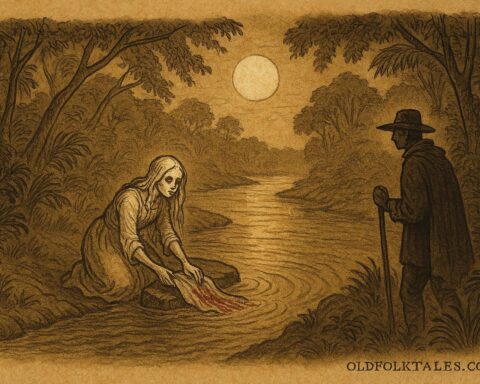
The moment the words left her lips, the atmosphere changed. The air thickened, the wind stilled, and shadows lengthened unnaturally. When Alika turned, the man, her husband, the provider of wealth and warmth, was gone. No trace remained of his presence, not even the glimmer of his garments. Alika called his name, wept by the riverbank, and searched the forest, but he did not return. The treasures vanished with him, leaving her with empty hands and a hollow heart.
Days turned into weeks, and Alika learned a harsh lesson in humility and respect. She lived modestly, sharing the wisdom of her tale with neighbors and children: the forest is home to spirits, their trust sacred, and their presence a gift, not a possession. To speak lightly of mysteries or break sacred vows invites loss and misfortune. Alika’s beauty and charm remained, but she understood that human life must honor the unseen forces that shape the world.
Over time, villagers remembered Alika’s story as a warning: respect taboos, honor trust, and understand that some blessings are conditional, tethered to promises made and kept. The memory of the spirit husband lingered like mist in the forest, a reminder of the delicate boundary between the seen and unseen, the human and the supernatural.
Moral Lesson
Respect sacred taboos and honor trust. Revealing secrets of the unseen world or breaking promises to spirits leads to loss, misfortune, and spiritual imbalance.
Knowledge Check
1. Who did Alika marry?
A mysterious man who was later revealed to be a forest spirit in human form.
2. What rule did her husband impose?
She was forbidden from revealing his true nature to anyone.
3. What caused the spirit to vanish?
Alika broke the taboo by revealing his secret to a friend.
4. What does this folktale symbolize in Afro-Caribbean culture?
The importance of respecting spirits, taboos, and sacred trust.
5. How did the story affect Alika’s life after the spirit vanished?
She lost wealth and comfort, learning humility and reverence for the unseen.
6. What is the key lesson for the community?
Breaking trust with supernatural beings brings loss; respect for the sacred preserves harmony.
Source: Afro-Caribbean folktale
Tradition: Yoruba and Akan spirit-marriage motifs preserved in Caribbean oral culture