Along Colombia’s Caribbean coast, where the sea breathes against mangrove roots and night carries the sound of insects and drums, music has always been more than sound. It is memory, prayer, and protection. In Afro-Colombian communities, drums speak the language of ancestors, calling spirits close and keeping danger away. From this belief comes the tale of the Devil and the Drum, a story told to remind listeners that evil fears sacred rhythm.
In a small coastal village lived a young drummer, known not for boasting or mischief, but for devotion to his craft. From childhood, he had learned the rhythms passed down through generations, beats used in ceremonies, funerals, and nights of remembrance. Elders taught him that the drum must never be played carelessly, especially after sunset, when unseen forces move freely through the world.
Explore the ancestral legends of Canada, Mesoamerica, and South America’s Indigenous tribes.
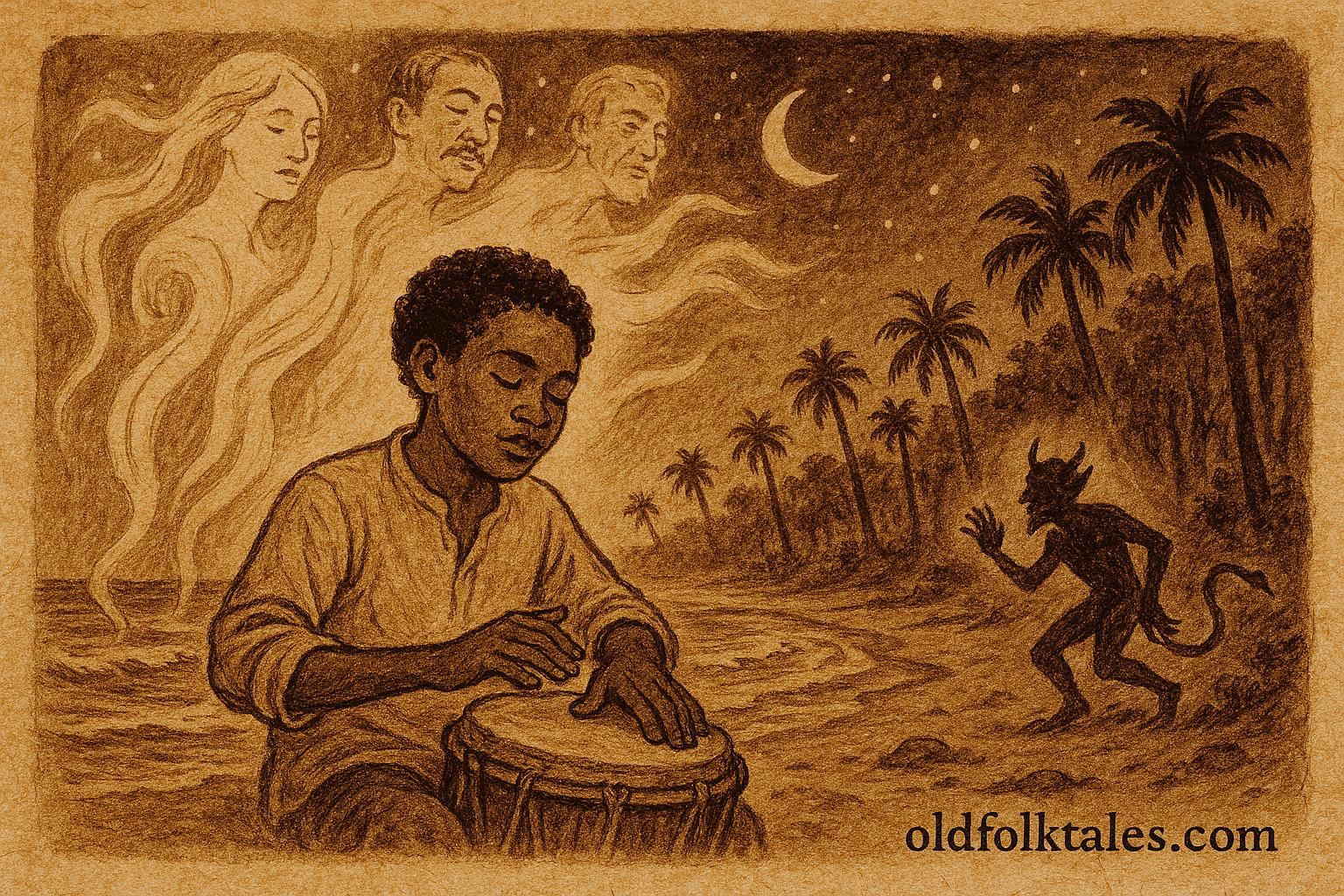
One night, unable to sleep, the boy carried his drum to the edge of the village. The moon hung low, silvering the palm leaves, and the ocean whispered steadily nearby. Sitting alone, he began to play, not for entertainment, but from the heart. His hands struck the drum with respect, shaping rhythms meant to honor those who came before him.
The sound traveled far into the darkness.
Before long, a figure emerged from the shadows. Tall, dark, and smiling with cruel amusement, the Devil approached. He praised the boy’s skill, saying such talent deserved a great reward. In exchange for his gift, the Devil demanded only one thing, the boy’s soul.
Fear gripped the drummer, but he remembered the elders’ teachings. He did not answer with words. Instead, he played.
His rhythm changed, becoming deeper and older. These were not ordinary beats, but sacred rhythms, known only to those taught by tradition. The sound rose and echoed, carrying power. The air grew heavy, and the forest seemed to listen.
With each beat, the presence of ancestors gathered. Their strength filled the rhythm, surrounding the boy like an unseen shield. The Devil recoiled, his confidence fading. The drum’s voice grew louder, purer, and stronger.
Unable to withstand the power of ancestral music, the Devil fled into the night, defeated not by force, but by faith. The boy stopped playing only when silence returned and the danger had passed.
From that night on, the village remembered: music, when rooted in tradition and reverence, is stronger than darkness.
Moral Lesson
This folktale teaches that ancestral faith and sacred music protect against evil. When tradition is honored, spiritual strength overcomes fear and darkness.
Knowledge Check
1. Where does The Devil and the Drum originate?
It comes from Afro-Colombian coastal folklore.
2. Who is the main character in the story?
A young drummer trained in ancestral rhythms.
3. Why does the Devil approach the boy?
He is drawn by the powerful nighttime drumming.
4. How does the boy defeat the Devil?
By playing sacred rhythms that summon ancestral protection.
5. What does the drum symbolize in the story?
Spiritual power, memory, and connection to ancestors.
6. What cultural belief does this folktale reflect?
That music and tradition protect communities from evil.
Source: Afro-Colombian coastal folktale
Tradition: African diasporic drum rituals
Cultural Origin: Afro-Colombian folklore (Caribbean coast of Colombia)