Long ago, along the rugged coastlines and deep waters of what is now Western Canada, there lived a man whose life was deeply connected to the sea. He had been a skilled fisherman in his youth, able to read the subtle shifts in tides and the movements of the wind, but misfortune had overtaken him. Slowly, his eyesight failed, until the world around him became nothing but darkness.
Blindness changed his life entirely. Once confident and independent, he struggled to navigate the forests, rivers, and rocky shores he had known since childhood. He could hear the waves, the cries of birds, and the rustling of fish beneath the water, yet he could not see their patterns. Daily tasks became dangerous, and even familiar paths were riddled with uncertainty. Though his community helped him when they could, he felt himself becoming a burden. Shame and loneliness weighed heavily on his heart.
One morning, determined to reclaim his independence, the man set out alone in his canoe, believing he could follow the rhythm of the sea by feel. The fog hung low, and the currents tugged at his canoe, carrying him farther from shore than he realized. The waves whispered around him, but he could not see their shapes or anticipate their strength. Exhaustion set in, and fear began to creep into his mind.
Journey into the rhythm, wit, and wonder of Caribbean storytelling — from Haiti to Jamaica
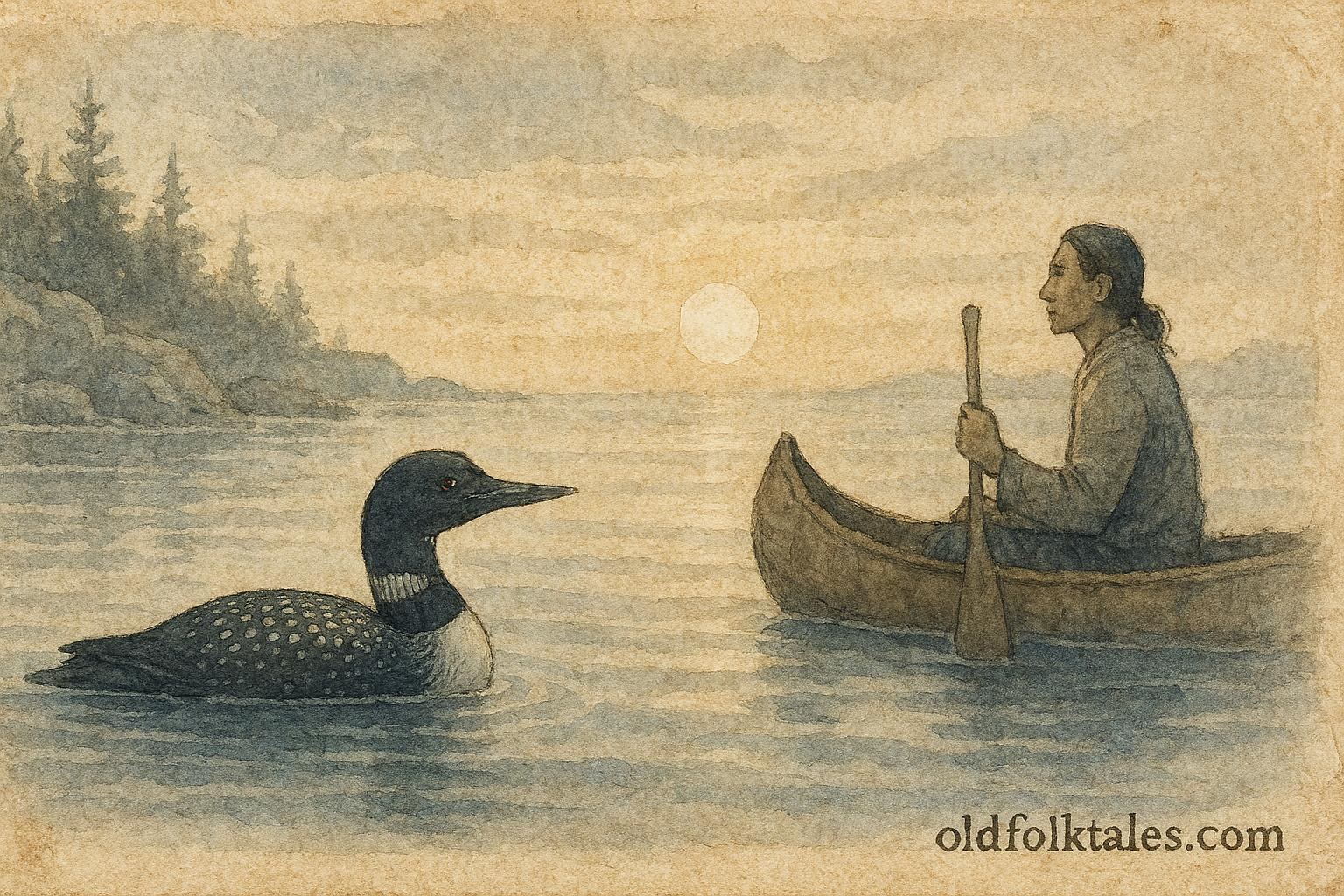
Suddenly, a strange, mournful call echoed across the water. It was neither threatening nor friendly, but filled with deep presence. The sound circled the canoe, drawing nearer with each echo. The man listened closely and realized the call came from a large loon. Its dark body sliced silently through the water, and though he could not see it clearly, he felt the bird’s deliberate movements beside him.
The man spoke softly, telling the loon of his blindness and his fear of never finding his way home. He did not demand help; he only shared his sorrow, speaking honestly from his heart. The loon listened silently, its presence calm yet alert. After a long pause, it disappeared beneath the waves. The man feared it had abandoned him, but soon the bird surfaced again, holding something small and smooth in its beak.
It was placed gently into the man’s hands. The object felt warm, alive, and unlike anything he had ever touched. Almost immediately, a strange sensation filled his body. Light returned to his eyes. Colors, shapes, and the flowing waves of the sea appeared before him in astonishing clarity. The man gasped as he realized he could see again. He looked at the loon, its feathers dark against the shimmering water, and felt a deep surge of gratitude.
Overwhelmed, he wept and thanked the loon repeatedly. Without words, the bird guided his canoe safely back toward the shore, moving with quiet confidence through the now-familiar currents. When land appeared, the loon dove beneath the water and vanished for a brief moment.
The man returned to his village and recounted the miraculous event. Villagers listened in awe as he described the bird, the gift, and the restoration of his sight. But he felt he must repay this kindness in a meaningful way. He searched his home for something sacred, something worthy of the loon’s generosity.
At last, he chose a cherished necklace, passed down through generations. Made of polished shells and dark stones, each piece carried deep meaning—respect, connection, and gratitude. He returned to the shore where he first met the loon and called out to it. The mournful cry returned, and the bird appeared, floating gracefully on the waves.
With great reverence, he placed the necklace around the loon’s neck. As soon as it touched its feathers, the necklace fused with the bird’s body, forming a permanent white band against the dark plumage. The loon cried out, a haunting yet gentle sound, and dove beneath the water, emerging moments later transformed.
From that day on, loons bore the mark of the sacred necklace. Their white throat band became a symbol of gratitude, kindness, and the unbroken bond between humans and the natural world. The man, now fully restored in sight and spirit, lived the remainder of his life honoring animals, waters, and all living beings that shared the land and sea. He told the story of the loon and the sacred necklace to his children, who shared it with their own children, ensuring the lesson endured through generations.
The story became a timeless reminder: acts of kindness return, gratitude strengthens relationships, and the natural world responds to respect and care. Even today, when a loon calls across the water, it is said to remind humans of compassion, gratitude, and the sacred connections that shape life.
Moral Lesson
Gratitude must be expressed through thoughtful action. Kindness given freely returns in unexpected ways, and respect for the natural world strengthens bonds between humans and animals.
Knowledge Check
- Why did the man travel alone despite his blindness?
Answer: He wanted to remain independent and not burden others. - Which animal helped restore the man’s sight?
Answer: A loon. - How did the loon restore the man’s sight?
Answer: By giving him a sacred object that healed his eyes. - What gift did the man give to the loon in gratitude?
Answer: A sacred necklace passed down through generations. - What physical feature of the loon does the story explain?
Answer: The white marking around its neck. - What lesson does the story teach?
Answer: Kindness and gratitude create lasting bonds and must be expressed through action.
Source: National Film Board of Canada; Native-Languages.org
Cultural Origin: Tsimshian and Northwest Coast First Nations — Western Canada