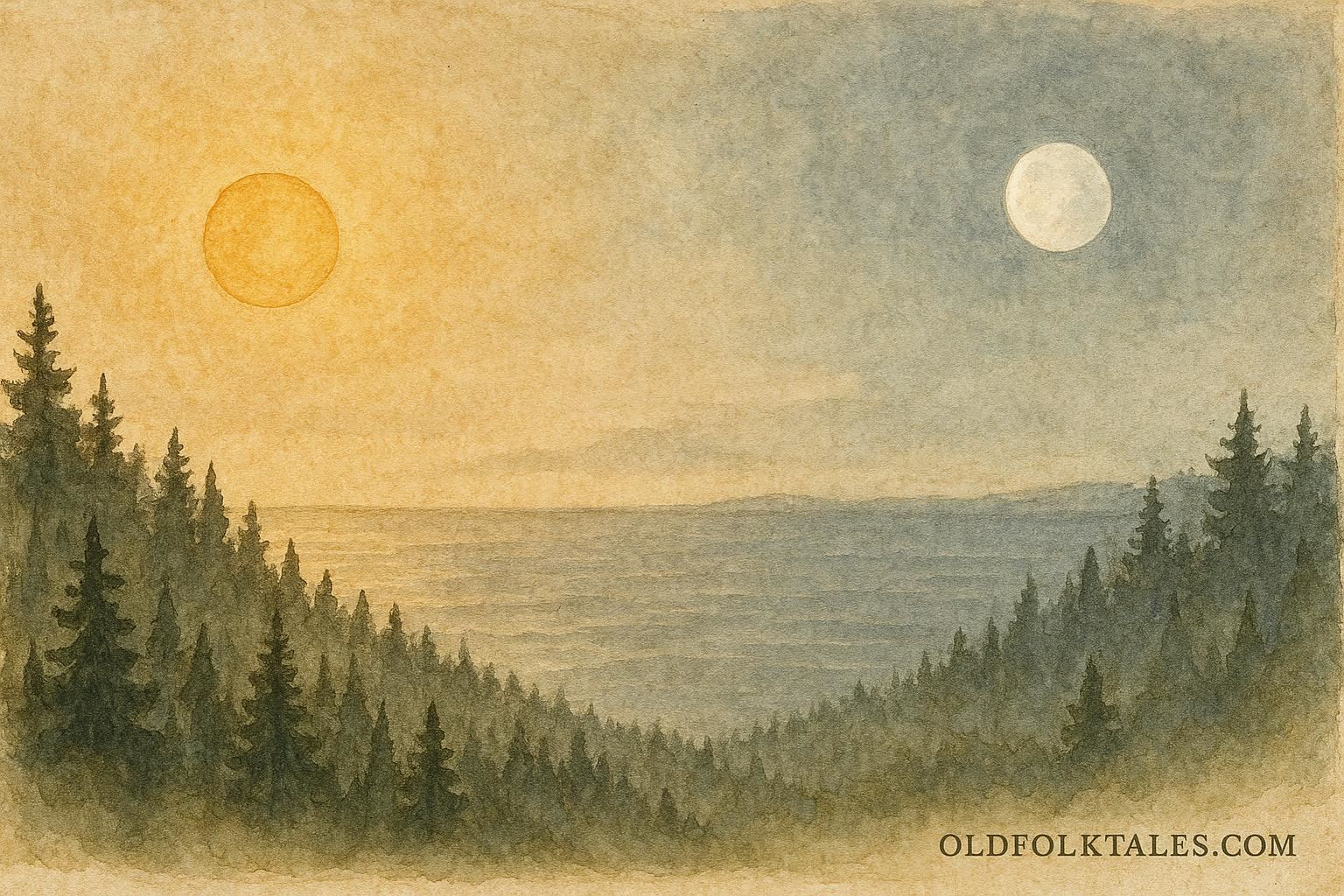
Long ago, before the sky followed a steady rhythm, the world existed in a state of confusion. In those early days, the Sun and the Moon shared the sky without agreement or order. Each believed they alone were best suited to rule above the earth. Their disagreement shaped the lives of humans, animals, and plants, who struggled to survive beneath an unpredictable sky.
The Sun was powerful and proud. He shone with great heat and brilliance, lighting the forests, rivers, and mountains of the Pacific Northwest. When he traveled across the sky, shadows disappeared and the land warmed. Crops grew quickly, and animals were active. The Sun believed his strength made him the rightful ruler of the sky.
The Moon, however, was calm and observant. She cast a gentle glow across the land, guiding travelers, tides, and dreams. Her light soothed restless spirits and allowed creatures of the night to move safely. She believed her wisdom and patience made her the better guardian of the sky.
Explore the land of La Llorona, trickster coyotes, and magical realism in Mexican folklore
At first, the Sun and Moon tried to share the heavens without rules. Sometimes the Sun refused to leave, burning the land for too long. Rivers dried, plants withered, and animals hid in exhaustion. Other times, the Moon lingered endlessly, wrapping the world in darkness. People stumbled through the forests, unable to hunt or gather, and fear spread through the villages.
The people prayed for balance, but the sky remained unsettled.
One day, the Sun confronted the Moon directly. He accused her of weakness, claiming the world needed his fire to survive. The Moon responded calmly, saying that too much heat brought suffering and that rest and darkness were just as important as light. Their argument echoed across the sky, shaking clouds and stirring the winds.
As their quarrel grew louder, chaos followed. Storms raged without warning. The ocean tides surged unpredictably. Animals lost their sense of time, and humans could no longer plan their lives. Elders noticed that children grew restless, crops failed, and the natural order weakened.
Seeing the harm they caused, the animal spirits gathered to discuss the matter. Eagle, known for his sharp vision, spoke of the need for clear order. Raven, clever and curious, suggested that no single being should control the sky alone. Bear, strong and patient, reminded them that balance was the foundation of life.
The animal spirits approached the Sun and Moon and asked them to listen.
Reluctantly, the Sun agreed to pause his journey. The Moon also slowed her movement. Together, they heard the concerns of the earth below. The spirits explained that neither light nor darkness alone could sustain life. Growth required warmth, but rest required coolness. Sight required light, but dreams and reflection required darkness.
At first, the Sun resisted. He feared losing his power. The Moon, though gentler, also hesitated, worried she would be overshadowed forever. The spirits then proposed a solution rooted in cooperation rather than dominance.
They suggested that the Sun rule the sky during part of the time, bringing warmth, energy, and growth. The Moon would follow, ruling the sky during the other part, offering rest, reflection, and guidance through darkness. Neither would dominate completely, and both would be honored equally.
The Sun and Moon fell silent.
For the first time, they considered the world beyond themselves. They looked down and saw tired animals, struggling plants, and confused humans. Slowly, they understood that the sky was not meant to serve their pride but the balance of life below.
The Sun agreed to travel across the sky during the day, providing light and warmth. The Moon agreed to follow during the night, offering calm and guidance. They promised never to rule together again in conflict, but to take turns in harmony.
When the agreement was made, the sky changed.
The Sun rose in the morning and set in the evening, allowing the land to cool. The Moon appeared at night, watching over the sleeping world. The tides settled into rhythm, seasons began to form, and animals regained their natural patterns. Humans learned when to work, when to rest, and when to gather.
The elders taught the people that day and night were born from cooperation, not victory. They explained that neither the Sun nor the Moon was superior. Each had a purpose, and only together could they maintain order.
Even now, when the Sun sets and the Moon rises, the Salish people remember the ancient quarrel and the lesson it taught. Balance is not achieved through control, but through respect. Power must be shared, and harmony must be maintained.
And so, the sky continues its rhythm, reminding all who live beneath it that order comes from cooperation and that life depends on balance.
Moral Lesson
True order comes from balance and cooperation, not dominance. When opposing forces respect each other’s roles, harmony is restored and life thrives.
Knowledge Check
- Why did the Sun and Moon quarrel?
Answer: Each believed they should rule the sky alone. - How did their conflict affect life on earth?
Answer: It caused environmental chaos, confusion, and suffering. - Who helped resolve the quarrel?
Answer: The animal spirits, including Eagle, Raven, and Bear. - What solution was proposed?
Answer: The Sun and Moon would take turns ruling the sky. - What did the Sun represent?
Answer: Warmth, growth, and energy. - What lesson does the story teach?
Answer: Balance and cooperation create harmony.
Source: Native-Languages.org; First Nations Astronomy Archives.
Cultural Origin: Salish First Nations — Pacific Northwest, Canada.