In the quiet heart of Guadalajara during colonial times stood the Monastery of San Diego, a grand yet solemn structure of thick adobe walls, arched cloisters, and echoing corridors scented with candle wax and incense. Its bell tolled faithfully at dawn and dusk, calling both friars and townsfolk to prayer. Among the monks who lived within was one known simply as Brother Mateo, a man of quiet devotion and spotless reputation.
He spent his days tending the monastery gardens, teaching prayers to orphans, and lighting candles before the Virgin’s altar. His life seemed wholly devoted to humility and service, yet beneath this calm exterior stirred a storm of forbidden feeling.
Click to read all South American Folktales — timeless stories from the Andes to the Amazon.
Each day as he walked through the market to beg alms for the poor, Brother Mateo would see a young woman named Isabel, daughter of a local merchant. Her gentle voice and kind eyes lingered in his mind long after he returned to the monastery’s silence. Though he resisted, praying for strength, his heart betrayed him. Soon his prayers became whispers of confusion, between divine love and human longing.
For weeks, he avoided her path. But fate, or perhaps temptation, drew them together one evening as he distributed food to the needy. Isabel thanked him with a warm smile, and their eyes met beneath the lamplight. That moment sealed his torment.
Back in his cell, Brother Mateo knelt before the crucifix, trembling. “Forgive me, Lord,” he wept. “I am unworthy of your robe, for I have allowed my heart to wander.”
He fasted, scourged himself, and spent long nights in the chapel, seeking forgiveness through penance. Yet the more he tried to erase his feelings, the deeper they seemed to grow. Isabel, too, had fallen silent and sad, sensing the weight of his struggle.
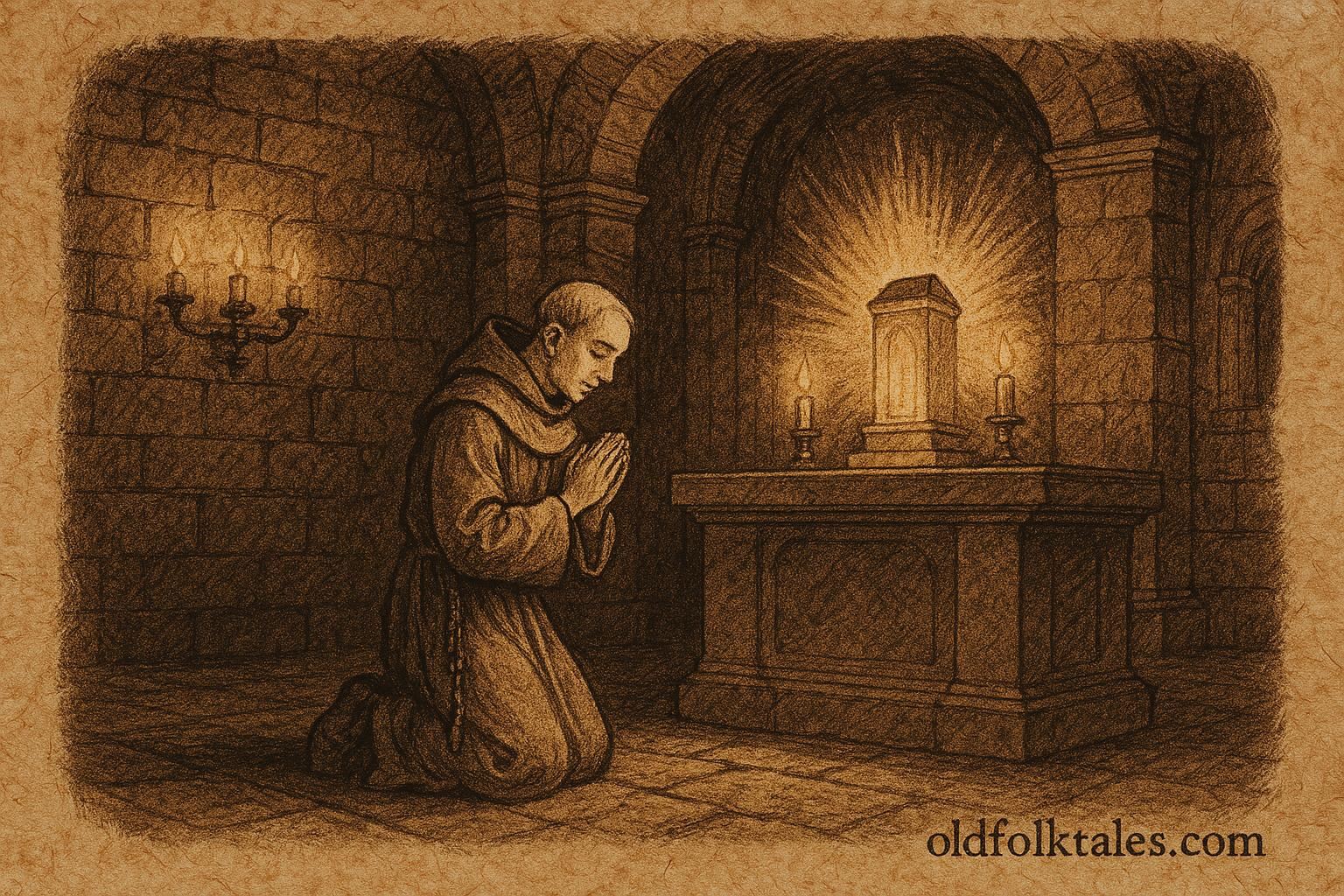
One stormy night, the chapel was empty except for the flickering glow of candles. Rain whispered against the stained glass, and thunder rolled over the monastery’s domes. Brother Mateo knelt before the altar, tears streaming down his face. “I have failed both Heaven and myself,” he murmured. “Let my punishment cleanse my soul.”
When the morning bells rang, the other monks found him lifeless before the Virgin’s image, his rosary clutched tightly in one hand, his face serene as though he had finally found peace.
News of the tragedy spread quickly through Guadalajara. The townsfolk wept, for Brother Mateo had been beloved by all. Yet strange tales began to surface not long after his burial.
It was said that at midnight, when the moonlight touched the chapel’s stone floor, a pale figure in a brown robe appeared before the altar. He would kneel in prayer, whispering the Ave Maria again and again, his voice echoing softly through the monastery halls.
Those who entered the chapel at that hour swore that the air grew cold, yet peaceful, as if Heaven itself hovered near. One widow, who came to pray for her late husband, said she felt a hand rest gently on her shoulder and heard the monk’s voice whisper, “Repentance brings mercy.”
The monks came to believe that Brother Mateo’s spirit lingered not out of punishment but penance, praying eternally for souls burdened by guilt, just as he once was. The monastery elders forbade nighttime visits, yet many devout believers continued to come quietly at midnight, seeking the monk’s intercession for forgiveness.
Over time, his ghost became a symbol of compassion and repentance. It was said that when someone prayed sincerely at San Diego with a contrite heart, the ghost of Brother Mateo would appear, not to frighten, but to comfort.
Even now, the story endures. In Guadalajara, locals speak softly of the Monk of San Diego, whose eternal prayer reminds the living that love, even when forbidden, is part of being human, and that redemption awaits those who seek it in humility.
Explore the land of La Llorona, trickster coyotes, and magical realism in Mexican folklore
Moral Lesson
The tale of the Monk of San Diego teaches that guilt and forbidden desires can torment even the most devout heart, but true repentance brings peace. It warns against letting hidden emotions lead to despair, emphasizing faith, forgiveness, and the enduring mercy of the divine.
Knowledge Check
1. Who was the Monk of San Diego in the Mexican folktale?
He was a Franciscan monk in colonial Guadalajara who struggled between his religious vows and forbidden love.
2. What moral lesson does “The Monk of San Diego” teach?
It teaches the importance of repentance, forgiveness, and the human struggle between faith and emotion.
3. What symbolizes the monk’s eternal penance in the story?
His ghost praying at midnight represents the soul’s continued search for redemption.
4. What is the setting of the folktale?
The story is set in 18th-century Guadalajara, Mexico, within the Monastery of San Diego.
5. How does this Mexican folktale blend cultural beliefs?
It combines Spanish Catholic values of sin and redemption with Indigenous ideas of spirits and the afterlife.
6. Why is the monk’s ghost seen as benevolent rather than frightening?
He appears to guide those who seek forgiveness, symbolizing divine mercy and compassion.
Source: Adapted from Folktales of Mexico by Américo Paredes (Smithsonian Institution) and Leyendas de Guadalajara Colonial (Jalisco Archives).
Cultural Origin: Mexico (Colonial Mexican Folklore)