In the vast open plains of Venezuela, known as Los Llanos, where the grass sways like an ocean of green and the horizon stretches endlessly, people tell an eerie story that rides on the wind. It is the legend of El Silbón, The Whistler, a restless spirit doomed to wander the night. His whistle pierces the silence, carrying both sorrow and warning.
This is not just a ghost story. It is a moral tale about the price of arrogance, disobedience, and violence within one’s own family, a story whispered to children to keep them from straying too far, and to adults as a reminder that cruelty always calls back.
The Disobedient Boy of the Llanos
Long ago, in a humble farmhouse near the edge of the plains, there lived a boy with his parents and an old grandfather. The boy was handsome but wild, bright but disrespectful. From his earliest days, he had been spoiled and disobedient, refusing to listen to the kind words of his parents.
Discover the blend of magic and wisdom that defines the folktales of the Caribbean islands
His father worked hard tending cattle beneath the scorching sun, while his mother cooked and cleaned, keeping their modest home in order. The grandfather, bent with age and wisdom, often tried to warn the boy.
“Child,” he would say, “respect is worth more than gold. The day you forget that, misfortune will follow.”
But the boy only laughed. He did as he pleased, ignoring every word of advice.
As the boy grew older, his arrogance deepened. He would shout at his mother when displeased, mock his father’s humility, and scoff at his grandfather’s lessons. His temper became a storm that no one could calm.
The Unforgivable Act
One evening, when the air was thick with the scent of rain and the songs of frogs echoed through the fields, the boy and his father quarreled. What began as harsh words turned to rage. In a blind fit of fury, the boy struck his father—and when the rage subsided, his father lay lifeless on the ground.
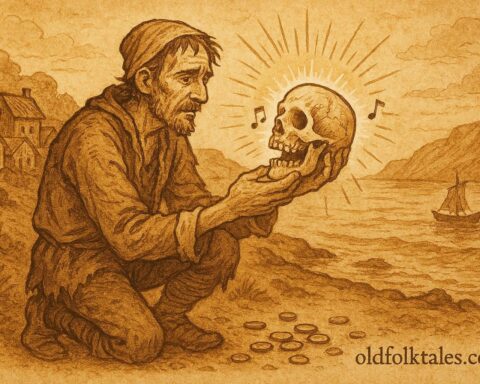
Silence fell over the house. The boy, trembling with disbelief, realized what he had done. Fear twisted into denial, and denial into something darker. Some say he brought his father’s remains home and, in madness, asked his mother to cook them. Others say he hid the body beneath the ceiba trees. But whichever version you hear, all end with horror when the grandfather discovered the truth.
The old man’s cry of anguish pierced the night. He wept not only for his son’s death but for the terrible corruption of his grandson’s soul. And then, when his tears were spent, he gathered his strength, took up his whip, and declared justice.
“You will pay for this,” he said, his voice trembling with divine wrath. “Your soul will wander until the end of time.”
He tied the boy to a post, lashed him until his back bled, rubbed chili peppers into his wounds so the pain would burn through eternity, and then set his dogs upon him. Before turning away, he pronounced the curse that sealed the boy’s fate:
“For killing your father, you will carry his bones forever.
Your whistle will haunt the living as a warning to all who forget respect.”
Thunder rolled across the plains as the old man spoke. When the storm cleared, the boy was gone. Only the sound of a faint, haunting whistle drifted on the wind.
The Birth of El Silbón
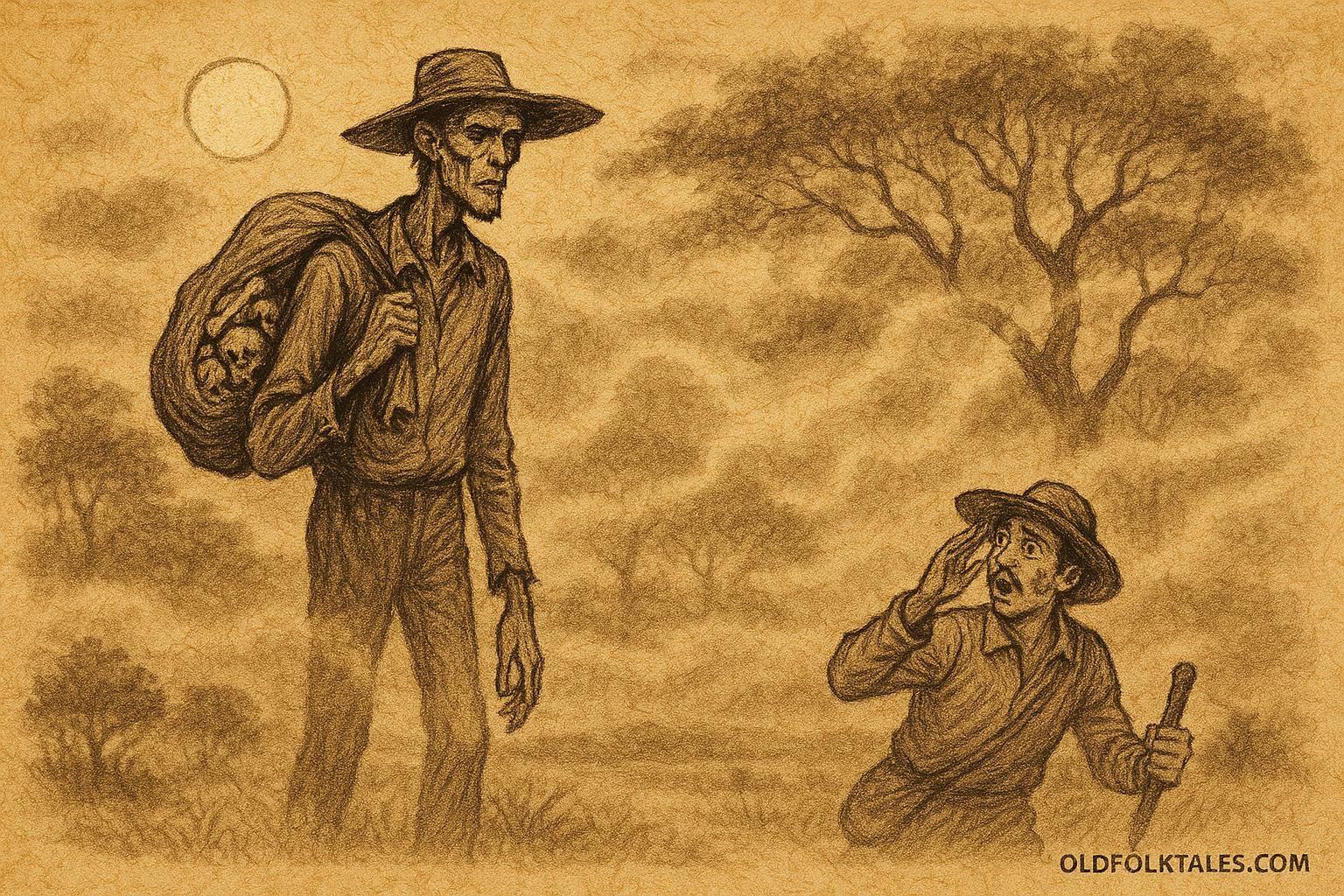
From that night onward, travelers in the Llanos began to whisper about a shadowy figure that roamed the open fields after dark. They spoke of a tall, gaunt man with hollow eyes, his back bent beneath a heavy sack. Inside that sack, they said, were the bones of his father, the burden of his crime.
He became known as El Silbón, The Whistler.
His whistle follows a strange rule of terror: if you hear it close, he is far away; but if it sounds faint and distant, he is already near. Those who hear it may never see another sunrise.
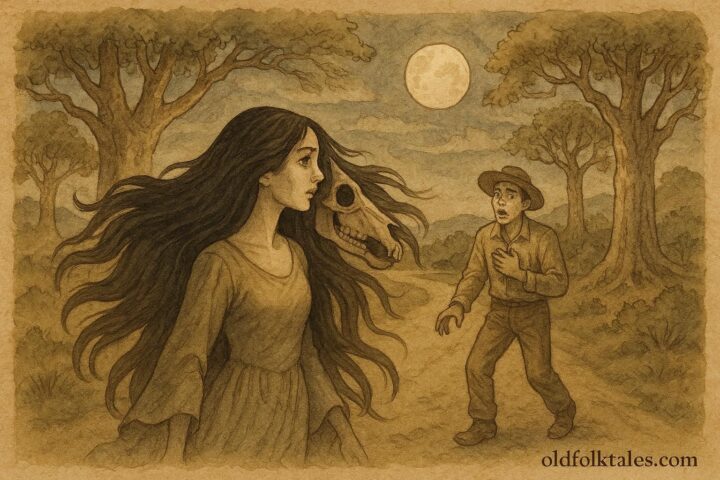
El Silbón is said to appear on nights of heavy fog or after great storms, walking the paths between villages, the moonlight glinting off his long, skeletal fingers. His breath smells of decay, his steps are silent, and the air turns cold when he passes.
He hunts those who resemble what he once was, drunkards, cruel men, womanizers, and the disobedient. Sometimes he enters homes quietly, scattering bones across the floor before disappearing again.
But not all who speak of him do so in fear alone. Some say his whistle is the voice of remorse, that each note he blows into the night is a cry for forgiveness that will never come.
The Warning in the Wind
On the Llanos, when the wind rises and the dogs begin to bark without reason, the people still say: El Silbón is nearby. They cross themselves and clutch their rosaries, praying for protection.
Those who live wisely have nothing to fear. Only the guilty—those who wrong their families or act without conscience—should listen closely to the sound that follows the wind.
For El Silbón walks not to kill, but to remind. His curse is a mirror of the worst in the human heart, carried forever on the plains that once knew his name.
Moral Lesson
The story of El Silbón teaches deep lessons about respect, repentance, and the destruction that comes from disobedience and cruelty. To harm one’s family or act in rage is to invite a haunting that never ends. Through his eternal suffering, El Silbón reminds us that true peace begins in humility, forgiveness, and love.
Knowledge Check
1. Who is El Silbón in Venezuelan folklore?
El Silbón, meaning “The Whistler,” is a cursed spirit doomed to wander the Llanos, carrying the bones of his murdered father.
2. What moral lesson does the story of El Silbón teach?
The tale warns against disobedience, disrespect toward parents, and violence, teaching respect and repentance.
3. What does El Silbón’s whistle symbolize?
His whistle represents eternal guilt, a spiritual warning to those who repeat his sins.
4. How can one protect themselves from El Silbón?
Folklore says dogs’ barking, prayer, or a rosary can keep him away.
5. What happens if you hear El Silbón’s whistle nearby?
If the whistle sounds close, he is far away; but if it sounds faint and distant, he is very near.
6. Where does the legend of El Silbón originate?
It comes from Venezuela’s Llanos region and is also known in parts of Colombia.
Source: Adapted from Venezuelan oral folklore and field collections (University of Southern California Folklore Archives).
Cultural Origin: Venezuela (Llanos Folklore)