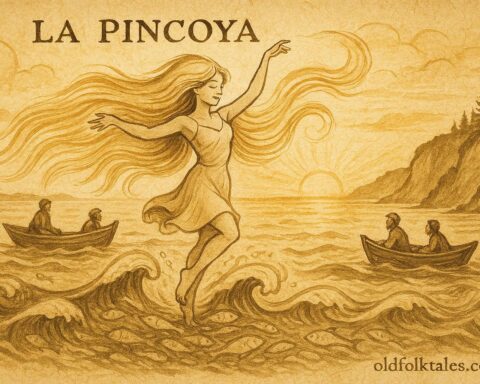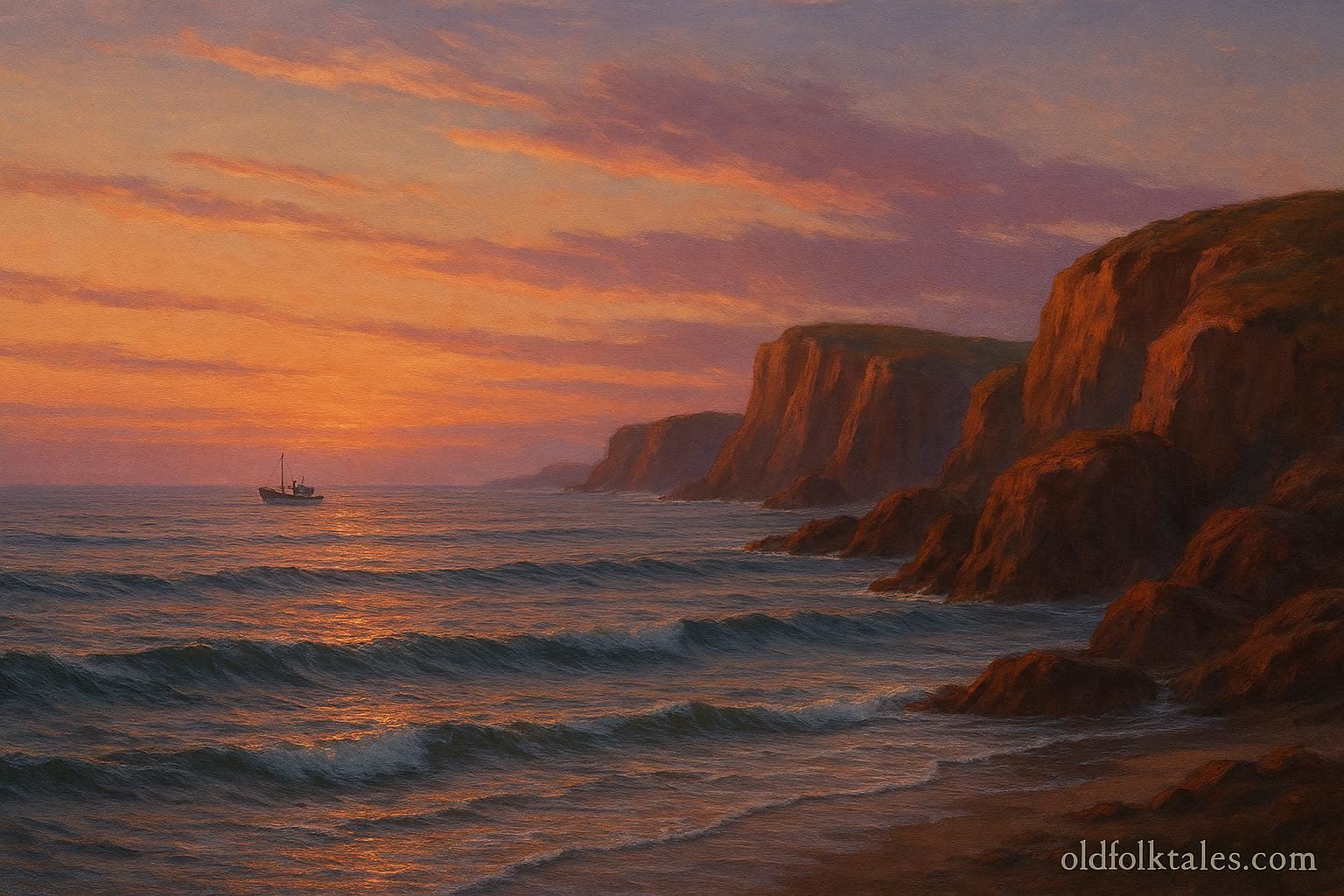
Far out in the shimmering blue waters of the Gulf of St. Lawrence lies a small chain of islands known as the Îles de la Madeleine. The wind there moves restlessly across the dunes, shaping the sand into golden hills that rise and fall like waves turned to stone. Fishermen who live on those islands know that the sea is beautiful but never tame. They say it can turn from calm to chaos in the blink of an eye, and that the ocean keeps secrets older than time itself. Among the oldest and most mysterious of those secrets is the legend of the Mermaid of the Magdalenes.
It is said that on still summer nights, when the tide is gentle and the moon hangs bright over the gulf, the mermaid rises from the deep. Her hair shimmers like strands of wet seaweed, green and gold beneath the moonlight. Her eyes are dark as tide pools, and her voice drifts across the waves like a lullaby. Those who have heard her song say that it sounds like the wind through the reeds or the hum of the sea itself. The people of the islands whisper that she appears not to harm, but to remind mortals that the ocean is alive and must be respected.
Long ago, before radios and engines, the fishermen of the Magdalenes relied only on the stars and their own courage. One of them, a young man named Pierre, was known for his strong arms and fearless heart. He loved the sea and often stayed out longer than anyone else, chasing the largest catch or rowing beyond the horizon when others turned back. His mother often warned him to be careful, for pride at sea was a dangerous thing. But Pierre laughed and said that the ocean was his friend.
Discover the blend of magic and wisdom that defines the folktales of the Caribbean islands
One night, when the moon was full and the air was still, Pierre rowed out farther than ever before. The water lay like glass, and the reflection of the sky was so clear he could almost believe he was floating among the stars. As he set his nets, he heard a sound unlike any he had ever known. It was soft and beautiful, like a song without words, rising and falling on the wind. He looked around, expecting to see another boat, but there was only the wide sea. Then, out of the silver light, he saw her.
The mermaid rested on a rock not far from his boat. Her hair fell around her shoulders, gleaming green in the moonlight. Her skin glowed pale as the inside of a shell. She watched him with eyes both kind and sorrowful. Pierre felt his heart stir with wonder and fear. She smiled, and her song grew sweeter, filling the air like perfume. The young fisherman found himself rowing toward her without thinking. The closer he came, the stronger the song grew, until he felt as though his arms moved of their own accord.
Just as he was about to reach the rock, a sudden gust of wind swept across the sea. The water rippled, and the mermaid’s voice broke. Pierre blinked and saw that he had drifted far from shore. The islands were only faint shapes behind him. Panic seized him. He pulled at the oars, but the tide had turned, and the waves now pushed him farther away. For hours he fought against the current, until at last, exhausted, he whispered a prayer and let the boat drift. When dawn came, the wind shifted again, and he found his way home.
From that day, Pierre changed. He spoke little of what he had seen, but he no longer boasted of the sea as his friend. He worked with patience and respect, always leaving an offering of his first catch to the water before returning home. The other fishermen noticed that his nets never came up empty again, and they began to do the same. They said that the mermaid had not tried to drown him, but to warn him against pride and carelessness.
Over time, others claimed to see the mermaid. Some said she appeared before storms, her song carrying over the water as a sign for sailors to return to shore. Others said she was a guardian spirit, protecting the fishermen who honored the sea. There were stories of those who ignored her and found their boats overturned or their nets torn apart. There were also stories of those who followed her song and found themselves lost for days, only to be washed ashore with no memory of where they had gone.
The elders of the Magdalenes teach that the mermaid is not a creature of evil or temptation, but of balance. She reminds the people that the sea is not theirs to conquer but to live alongside. The fishermen believe that as long as they show gratitude and restraint, the mermaid’s song will bring them home safely. On calm nights, when the tide sighs against the rocks and the moonlight shivers on the waves, they say her voice can still be heard, faint but clear, singing for those who listen with respect.
For generations, the story of the Mermaid of the Magdalenes has been passed from one family to another. Mothers tell their children not to whistle at sea or mock the ocean, for the mermaid listens, and she remembers. When a fisherman is lost to the waves, they say she carries his spirit to the depths, wrapping him in seaweed and coral, laying him gently in the quiet heart of the gulf. Her legend lives on not only as a tale of wonder but as a law of the sea itself: to take only what is needed and never forget the ocean’s power.
Moral Lesson
The legend of the Mermaid of the Magdalenes teaches that nature must be treated with humility and care. The sea gives life and takes it away, and those who forget its power risk losing everything. The mermaid’s song is a reminder that beauty and danger dwell side by side and that respect for nature ensures harmony and survival.
Knowledge Check
1. Where does the Mermaid of the Magdalenes appear?
She appears off the shores of the Îles de la Madeleine in the Gulf of St. Lawrence.
2. What does the mermaid’s song represent in the story?
It represents the voice of the sea, reminding humans to respect nature’s balance.
3. How did the mermaid change Pierre’s life?
After his encounter, he became humble and respectful toward the sea, always giving thanks before fishing.
4. What happens to those who ignore the mermaid’s warning?
Their nets come up empty, or they lose their way, suffering misfortune for their disrespect.
5. Why do the islanders leave offerings to the sea?
They believe the mermaid will protect them and ensure a safe and fruitful journey.
6. What is the main moral of this folktale?
The story teaches that humans must live in harmony with nature and never allow pride to blind them to its power.
Source: Adapted from Canadian Wonder Tales by Cyrus Macmillan, Dundurn Press, 1922.
Cultural Origin: Canada (Québec / Gulf of St. Lawrence Maritime folk tradition).