Monthly archive

January 2026

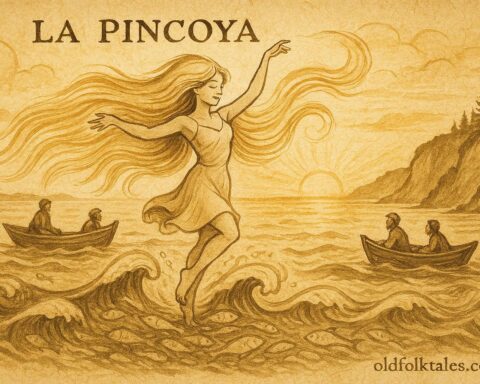
Parchment-style illustration of La Pincoya dancing over waves, Chilote legend, Chilean sea spirit.

La Pincoya: Chilote Sea Spirit Folktale

January 8, 2026
Along the windswept coasts of Chiloé, where waves crash against jagged cliffs and sea mists weave through the pine forests, fishermen tell a tale older than the villages themselves: the story of La Pincoya. She is not an ordinary sea spirit. Her form is that of a luminous, mermaid-like being,
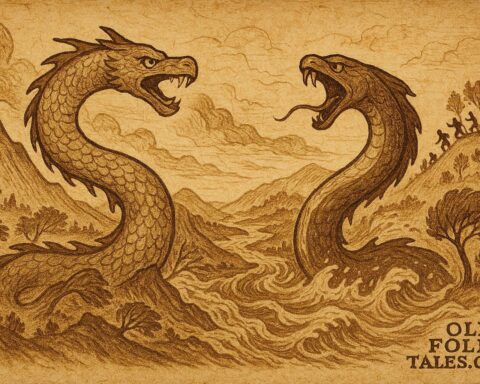
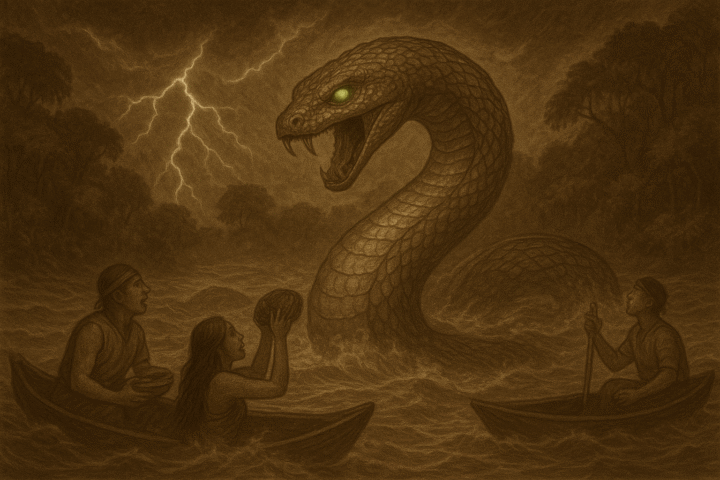
Parchment-style artwork of Trentren Vilu and Caicai Vilu battling, Mapuche legend, Chilean landscape.

Trentren Vilu and Caicai Vilu

January 8, 2026
Long ago, when the world was young and the lands of southern Chile were still being formed, the Mapuche people tell that two colossal serpents shaped the earth and seas through a battle of cosmic proportions. These were Trentren Vilu, the serpent of the land, and Caicai Vilu, the serpent
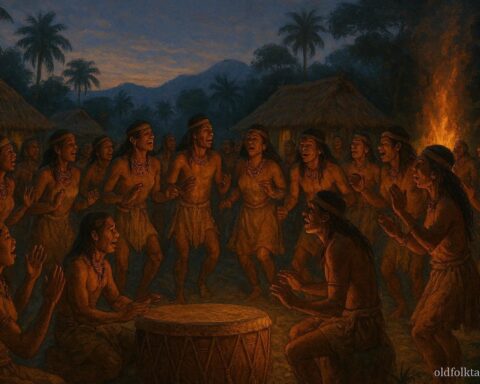
A Taíno ceremonial drum surrounded by dancers singing in a village clearing at dusk

The First Areíto Drum

Before the islands carried the weight of many histories, the Taíno remembered everything with their voices. Stories were not written. Laws were not carved in stone. Memory lived in breath, gesture, and sound. Elders spoke. Children listened. Songs carried the names of ancestors and the boundaries of rivers. But time
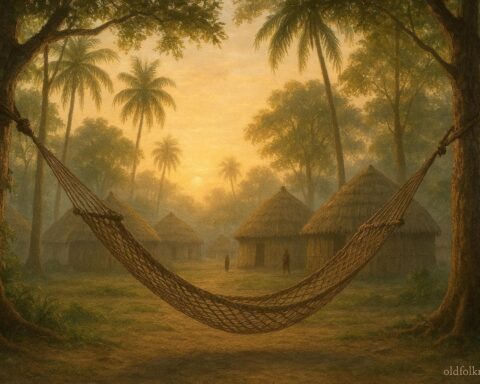
A woven hammock suspended between two trees in a Taíno village at dawn, symbolizing rest and balance

The First Hammock

In the early age of the islands, when people still learned directly from the land and the spirits walked close to human homes, the Taíno lived with tireless hands. They farmed from sunrise to dusk, fished through long tides, and built villages that grew with every generation. Work was praised,
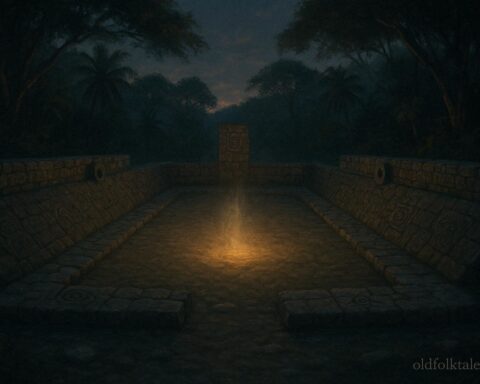
An ancient stone ball court surrounded by forest, with a spiritual atmosphere suggesting unseen ancestral presence.

The Spirits Beneath the Ball Court

Long before written laws shaped the islands and before chiefs ruled by decree alone, the Taíno people believed justice did not belong solely to the living. Beneath the earth, within stone and soil, the ancestors remained alert. They listened to the words of the living, watched their actions, and intervened

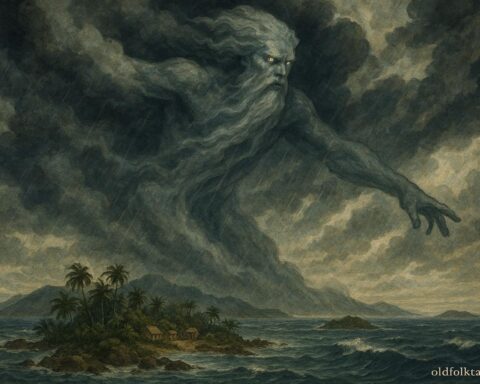
Juracán, Lord of the Storm

Before the islands learned the patience of the tides and before the forests learned how to bend without breaking, the people believed the sky was silent unless called upon. They cut trees without asking, fished beyond hunger, and built their homes as if the earth beneath them were endless and
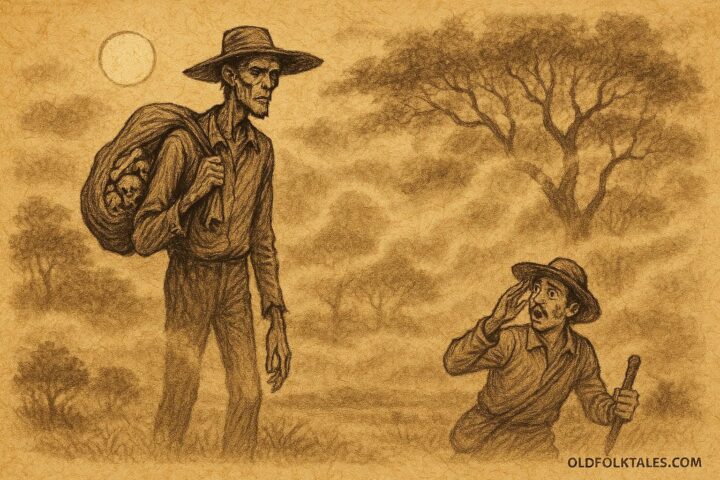
Parchment-style illustration of El Duende whistling on a colonial road in Nicaragua.

El Duende del Camino Real

January 8, 2026
Duende is the name travelers whisper along the old Camino Real, the colonial road that once carried traders, messengers, and families across the heart of Nicaragua. Long before paved highways existed, this road wound through forests, fields, and villages, and it was here that stories of El Duende took root.
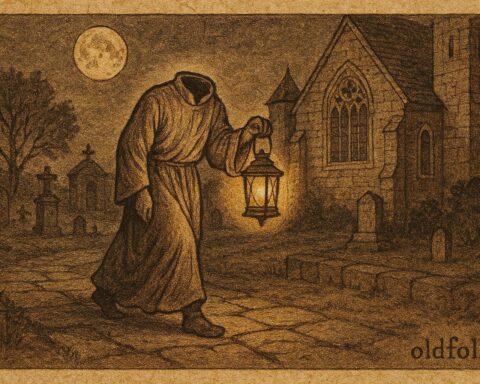
Parchment-style illustration of El Padre sin Cabeza carrying a lantern in León, Nicaragua.

El Padre sin Cabeza

January 8, 2026
Padre is the name whispered with unease in the old city of León when the streets grow silent and the church bells have long ceased their tolling. Long after midnight, when doors are bolted and lanterns extinguished, there are those who claim to see him moving through the shadows. He
Guahayona departing by canoe from a Taíno village after breaking a sacred covenant, symbolizing betrayal and separation

Guahayona and the Broken Covenant

Long before the islands of the Caribbean were separated by wide and restless waters, the Taíno people believed the land and sea listened carefully to human promises. Words spoken before elders, rivers, and the sky were not merely sounds. They were bonds. These bonds shaped how villages lived together and
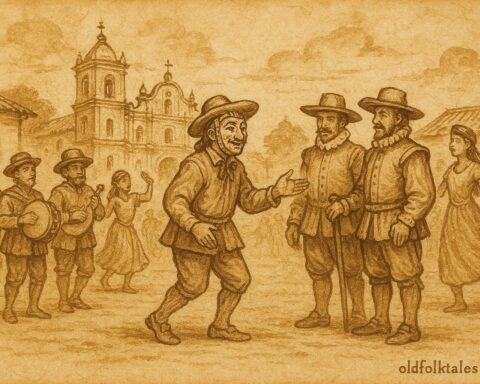
Parchment-style illustration of El Güegüense confronting colonial officials, Nicaraguan folktale scene.

The Clever Defiance of El Güegüense

January 8, 2026
Gueguense was already an old man when his name became a whisper of quiet resistance across the towns of western Nicaragua. Known formally as El Güegüense, and mockingly as Macho Ratón, he was an indigenous merchant who traveled the dusty colonial roads with mules, goods, and a sharp tongue hidden
1 2 3 17

Popular

Go toTop